Archive
Explore Ghazi Rabihavi’s writing, editions, biography, recordings, literary events and cited sources in one searchable archive.
All 824 public records are listed below. Use your browser’s Find command to locate a title, year or credited name.
Anthology contribution · 2025
Khodkameh Story Miscellany 1
Persian · Spring 1404 · first printing. David · printed pages 21–23. The first Khodkameh story miscellany brings together fifteen contributions by Iranian and international writers. Its original contents identify Rabihavi’s David on pages 21–23.
Anthology contribution · 2019
The Southern Window
Persian · 1398/03/13 · retailer-listed first printing. Sorsoreh · Slide (retained contents reference). A collective volume of 48 Khuzestan writers’ stories, accompanied by criticism from Kourosh Asadi and Gholamreza Rezaei. Nimaj’s announcement explicitly names Rabihavi among its contributors.
Anthology contribution · 2009
Um Bom Escritor É Um Escritor Morto
Portuguese · October 2009 · retailer listing. Rabihavi’s censorship narrative · individual title not established. A Portuguese anthology edited by Nahid Mozaffari, with Rabihavi among its postrevolutionary writers. A contemporary review discusses his censorship narrative and distinguishes this fiction selection from the broader English anthology.
Anthology contribution · 2020
Marthiyat al-Hawa
Arabic · 19 June 2020 · retailer listing. An unnamed story in the antiwar first section. An Arabic anthology compiled and translated by Hossein Tarafi Alavi, published by Shahryar in Basra. Rabihavi contributes to its antiwar first section; a second section concerns contemporary life.
Anthology contribution · 2020
Tavlan
Swedish · 2020. Hålan · pages 21–29. A Swedish anthology of thirteen postrevolutionary Persian stories, edited by Forogh Hashabeiky. Rabihavi contributes Hålan in Hashabeiky’s translation, on pages 21–29.
Anthology contribution · 2005
Strange Times, My Dear
English · 2005 · first edition. White Rock · Prose: Part Three. A collective English-language volume of Iranian prose and poetry, edited by Nahid Mozaffari, with Ahmad Karimi Hakkak as poetry editor. Institutional contents identify Rabihavi’s White Rock in Prose: Part Three.
Anthology contribution
Eight Stories by New Iranian Writers
Persian · Original publication date not established. Hofreh · The Hollow. A collective Persian volume by eight writers, with an introduction by Houshang Golshiri. Contributor Naser Zeraati identifies Rabihavi’s Hofreh, catalogued here as The Hollow, among its stories.
Biography chapter
Where the stories began.
A southern city, two languages, and a mother reading by lamplight.
Biography chapter
A voice before a page.
Palm-grove tales and the beginnings of theatre.
Biography chapter
Workers, children, a bookshop.
Writing close to the lives around him.
Biography chapter
Back to a city under siege.
The witness and the difficulty of describing war.
Biography chapter
The story and the accusation.
A writer remembers the circulation of a story and its consequences.
Biography chapter
Keeping a room for literature.
The association, the Thursday meetings, and stories in print.
Biography chapter
Words made visible.
Different responsibilities behind the moving image.
Biography chapter
Between a manuscript and a reader.
The long practical history of getting a book into print.
Biography chapter
Leaving, without a clean break.
New places and the continuing presence of earlier ones.
Biography chapter
A voice across the stage.
A playwright, and the companies that carry the work.
Biography chapter
Lives inside the longer form.
Displacement, intimacy and relations that resist easy answers.
Biography chapter
The concentration of a story.
A short form with many routes to its reader.
Biography chapter
A book meets another language.
The translators and the editions belong in the story.
Biography chapter
The work in other hands.
Recognition, selection and the continuing life of a book.
Biography chapter
Speaking beyond the book.
Public statements and a writer’s hopes for freedom.
Biography chapter
What the reader can discover.
Restraint, difficult characters, and room for uncertainty.
Literary event · 2026
Escaping Voices
15 September 2026 · 7 pm · The Sekforde · London · Advertised programme. Exiled Writers Ink lists Rabihavi for an evening of poetry, prose and conversation with writers from Syria, Afghanistan and Iran. The retained September programme supports the announced appearance; it does not establish completed attendance.
Literary event · 2024
Anti-war literature: realism vs. idealism
30 November 2024 · University of British Columbia · Vancouver & online · Recorded discussion. The Department of Asian Studies and Persian Literature Reading Club announced a discussion of From This Place. The university’s published recording description identifies Rabihavi as guest speaker and states that the presentation was delivered in person and online via Zoom.
Literary event · 2023
A multilingual recital
9 April 2023 · 5–6:30 pm · Palais du Gouvernement · Nancy · Room 1 · Advertised programme. The Livres d’Ailleurs programme lists Rabihavi alongside Ali al-Muqri, Nedim Gürsel, Khosraw Mani and Prajwal Parajuly for a multilingual recital by Mathieu Stoeckel. It records the invitation and scheduled session, rather than a transcript or an attendance report.
Literary event · 2023
Voyages en Iran
9 April 2023 · 11 am–noon · Palais du Gouvernement · Nancy · Room 1 · Advertised programme. The Sunday programme names Chahla Chafiq, Nedim Gürsel and Rabihavi for a discussion moderated by Kenza Sefrioui. The publisher places it within the 7–9 April Livres d’Ailleurs festival.
Literary event · 2023
Corps intimes et corps politiques
8 April 2023 · time not established · Palais du Gouvernement · Nancy · Advertised programme. Rabihavi, Hyam Yared and Fadi Zaghmout are named for a discussion of how political violence enters intimate life, and how desire and love can offer resilience. The retained page places the session on Saturday but its displaced time line does not establish an unambiguous start time.
Literary event · 2022
An evening of prose in Bremen
4 October 2022 · 7:30 pm · Theater am Leibnizplatz · Bremen · Advertised programme. The announcement accompanying Emma Rotermund’s conversation with Sujet publisher Madjid Mohit lists Rabihavi reading Söhne der Liebe and Nava Ebrahimi reading from Der Cousin and Das Paradies meines Nachbarn. It establishes the advertised programme, rather than completed attendance or a recording of the evening.
Literary event · 2021
Red Carnation International Festival
30 April 2021 · programme 8 pm–midnight, London time · London programme · venue not specified · Advertised programme. Baang’s 27 April announcement names Rabihavi among the second-night readers at the two-day poetry festival. The published timetable gives an evening programme from 8 pm to midnight in London time; it does not give a separate start time for his reading. The announcement supports the invitation, without establishing attendance or which text he read.
Literary event · 2020
Les Mots à la bouche
1 October 2020 · time not stated · Les Mots à la bouche bookshop · Paris 75010 · Advertised programme. Philippe Brenot’s 20 August review of Les Garçons de l’amour announces Rabihavi at this Paris bookshop on 1 October. It gives the date and district, without a start time, transcript or confirmation that the appearance took place.
Literary event · 2020
Utopiran
3 October 2020 · time not stated · Utopiran bookshop · Paris 75015 · Advertised programme. The same August review advertises a second Paris bookshop appearance, at Utopiran on 3 October. This separate scheduled date is retained as an invitation; attendance and the text discussed or read are not established by the announcement.
Literary event · 2020
Festival VO–VF
4 October 2020 · session time not stated · Gif-sur-Yvette · France · Advertised programme. Brenot’s announcement also places Rabihavi at Festival VO–VF on 4 October. The source prints the town as “Gyf-Sur-Yvette”; the familiar place-name is shown here as Gif-sur-Yvette. No particular session, translator, recording or completed participation is inferred from this short notice.
Edition
Incident at the Central Workshop
Incident at the Central Workshop · Winter 1358 (1979–80) · Persian · Damoon
Edition
Memoirs of a Soldier
Memoirs of a Soldier · Autumn 1360 (Iranian calendar) · Persian · Qoqnus
Edition
Palm Tree and Gunpowder
Palm Tree and Gunpowder · Summer 1359 (Iranian calendar) · Persian · Damoon
Edition
Al-Nakhil wa-al-Barud
Palm Tree and Gunpowder · 2022 · Arabic · Ebjed
Edition
From This Place
From This Place · 1369 [1990] · Persian · Mina
Edition
Gisu
Gisu · [13]72 [1993] · Persian · Q. Rabihavi
Edition
Gisu
Gisu · 1398 [2019] · Persian · Mina
Edition
Gisu
Gisu · 2020 · Persian · Goethe & Hafis
Edition
Gisu
Gisu · Publication year not stated · Persian · Pendaar
Edition
Maryam’s Smile
Maryam’s Smile · 1996 / 1997 (catalogue difference) · Persian · Afsane
Edition
Maryam’s Smile
Maryam’s Smile · 2011 · Persian · Mardumak
Edition
Maryam’s Smile
Maryam’s Smile · 2020 / 2021 (alternative catalogue dates) · Persian · Goethe & Hafis
Edition
Le Sourire de Mariam
Maryam’s Smile · 19 August 2022 · French · Serge Safran Éditeur
Edition
Le Sourire de Mariam
Maryam’s Smile · 19 August 2022 · French · Héliopoles – Fonds Serge Safran
Edition
Maryam’s Smile
Maryam’s Smile · 1403 (2024–25) · Persian · Naakojaa
Edition
Maryam’s Smile
Maryam’s Smile · Publication year not stated · Persian · Pendaar
Edition
Boys of Love
Boys of Love · April 2010 · Persian · BaghDarBagh
Edition
Boys of Love
Boys of Love · 2011 · Persian · Gardoun
Edition
Boys of Love
Boys of Love · [2011] · Persian · Gardoon Verlag
Edition
Boys of Love
Boys of Love · 2019 · library catalogue record · Not established · Pendaar Publications
Edition
Boys of Love
Boys of Love · Winter 1400 / 2022 · Persian · Mehri Publication
Edition
Boys of Love
Boys of Love · 1404 [2025] · Persian · Pendaar
Edition
Les Garçons de l’amour
Boys of Love · 20 August 2020 · French · Serge Safran Éditeur
Edition
Les Garçons de l’amour
Boys of Love · 20 August 2020 · French · Héliopoles – Fonds Serge Safran
Edition
Les Garçons de l’amour
Boys of Love · 8 June 2022 · French · Le Livre de Poche
Edition
Söhne der Liebe
Boys of Love · 2022 · first edition · German · Sujet Verlag
Edition
Söhne der Liebe
Boys of Love · Spring 2023 · second edition · German · Sujet Verlag
Edition
Söhne der Liebe
Boys of Love · 2022 · German · Sujet Verlag
Edition
Boys of Love
Boys of Love · July 2024 · English · University of Wisconsin Press
Edition
Boys of Love
Boys of Love · July 2024 · English · University of Wisconsin Press
Edition
Daniel and His Father
Daniel and His Father · 2022 · Persian · Goethe & Hafis
Edition
The Tragedy of a Monarchy
The Tragedy of a Monarchy · 2022 · Persian · Goethe & Hafis
Edition
The Tragedy of a Monarchy
The Tragedy of a Monarchy · February 2024 · retailer states second printing · Persian · Pendaar
Edition
Iranian Four Seasons
Iranian Four Seasons · 1374 [1995 or 1996] · Persian · Nidā
Edition
The Iranian Four Seasons
Iranian Four Seasons · 2019 · library catalogue record · Not established · Pendaar Publications
Edition
Iranian Four Seasons
Iranian Four Seasons · 2023 · Persian · Goethe & Hafis
Edition
Iranian Four Seasons
Iranian Four Seasons · Publication year not stated · Persian · Pendaar
Edition
Iranian Four Seasons
Iranian Four Seasons · 2024 · retailer states second printing · Persian · Pendaar
Edition
A Ballad of Love
A Ballad of Love · Autumn 1371 [1992] · Persian · Mina
Edition
A Ballad of Love
A Ballad of Love · Publication year not stated · Persian · Pendaar
Edition
Wet Journey
Wet Journey · Summer 2012 · Persian · BaghDarBagh
Edition
Mordad, at the Foot of the Kilns of the South
Mordad, at the Foot of the Kilns of the South · Autumn 1358 (Iranian calendar) · Persian · Yashar
Edition
When the Smoke of War Was Seen in the Sky
When the Smoke of War Was Seen in the Sky · Autumn 1359 (Iranian calendar) · Persian · Yashar
Media source
Truth in the Mirror · YouTube version
Video · Mani Shirazi · BBC Persian. The channel rendition lasts 26:34.301; the native BBC rendition lasts 25:29.498. Their editorial relationship is not established.
Media source
Truth in the Mirror · BBC page version
Video · Mani Shirazi · BBC Persian. The native BBC MP4 is 25:29.498; do not label it an identical copy of the longer YouTube version.
Media source
The Wound · Peyrang feed version
Audio · Persian Media Production · story by Ghazi Rabihavi. Critical programme notes are not a verbatim transcript. The earlier SoundCloud upload has a different publication date.
Media source
The Wound · Peyrang SoundCloud version
Audio · Persian Media Production · story by Ghazi Rabihavi. The primary publisher page embeds this track. Its 2017 upload predates the 2019 feed release; the programme is not dated solely by its later distribution feed.
Media source
Hofre · Sedakhoneh
Audio · Baha’oddin Morshedi · story by Ghazi Rabihavi. The publisher identifies the selector and performer; the episode introduction is not its complete spoken text.
Media source
Hofre · Kourosh Ranjbar
Audio · Kourosh Ranjbar · story by Ghazi Rabihavi. A separate performance of Hofre by Kourosh Ranjbar, published on his SoundCloud account.
Media source
Hofre · Naser Zeraati
Audio · Naser Zeraati · story by Ghazi Rabihavi. A story reading presented with a video container. Eight Stories is a multi-author anthology.
Media source
Gisu · in the author’s voice
Audio · Ghazi Rabihavi · published by Baang. A short author reading, not the complete novel or the complete first Baang–Nava programme.
Media source
The Tragedy of a Monarchy · an excerpt
Audio · Shapour Salimi · play by Ghazi Rabihavi. A performed portion of the play, rather than a full production.
Media source
A biographical account · Baang–Nava
Audio · Baang–Nava · narrator not credited. A separate biographical track; the source does not credit its narrator.
Media source
Hasti’s Bangles · web-story asset 1
Video · Ghazi Rabihavi · published by Baang. The first of four separate video assets in Baang’s web story. Read and watch the sequence at its original publication.
Media source
Hasti’s Bangles · web-story asset 2
Video · Ghazi Rabihavi · published by Baang. The second of four separate video assets in Baang’s web story. This segment is silent.
Media source
Hasti’s Bangles · web-story asset 3
Video · Ghazi Rabihavi · published by Baang. The third of four separate video assets in Baang’s web story. Read and watch the sequence at its original publication.
Media source
Hasti’s Bangles · web-story asset 4
Video · Ghazi Rabihavi · published by Baang. The fourth of four separate video assets in Baang’s web story. Read and watch the sequence at its original publication.
Media source
The Last Cry · a talking head
Video · Ghazi Rabihavi · presented by Pedram Ansari; editing by Abed Golnam. A short filmed presentation; the full recording has not been transcribed.
Media source
Hejleh · a photograph becomes a narrative
Video · Kaveh Golestan · story by Ghazi Rabihavi; published by Tableau Mag. The channel upload date does not establish the film’s original production date.
Media source
Boys of Love · Paludes
Audio · Nikola Delescluse · Paludes / Radio Campus Lille. The Rabihavi segment is 13:09.433; the surrounding scheduled programme slot is one hour.
Media source
Anti-War Literature: Realism vs. Idealism
Video · Guest Ghazi Rabihavi · hosts Hessam Dehghani and Farzan Sojoodi · UBC Asian Studies. The full event includes other speakers. The upload date is distinct from the event date.
Media source
Radio Nebeshteh · episode thirteen, feed version
Audio · Arash Dabestani · Ghazi Rabihavi; Keyhan Khanjani; Tamila Pashai and Bahareh Abdi. A full mixed programme, not 97 minutes of Ghazi alone. The feed rendition is 97:45.960; Shenoto’s version is longer.
Media source
Radio Nebeshteh · episode thirteen, YouTube version
Video · Arash Dabestani · Ghazi Rabihavi; Keyhan Khanjani; Tamila Pashai and Bahareh Abdi. The channel describes the same episode, with its several segments. This video upload is later than the 2020 feed publication.
Source for Radio Nebeshteh · episode thirteen, YouTube version
Media source
Radio Nebeshteh · episode thirteen, Shenoto version
Audio · Arash Dabestani · Ghazi Rabihavi; Keyhan Khanjani; Tamila Pashai and Bahareh Abdi. The native MP3 is 104:43.680, longer than the feed and YouTube renditions. The cause and editorial relationship are not established; entry creation is not a recording date.
Source for Radio Nebeshteh · episode thirteen, Shenoto version
Media source
Special Interview · podcast version
Audio · Iran International · guest Ghazi Rabihavi; interviewer not credited in episode notes. The podcast lasts 24:02.377; the channel video lasts 24:02.341.
Media source
Special Interview · channel video
Video · Iran International · guest Ghazi Rabihavi. Video presentation of the interview; retain alongside its separately distributed podcast version.
Media source
Bibi’s First Kisses
Video · Ghazi Rabihavi · writer; Sima Polit · performer; Mohammad Heidari · recording; Abd · editing. A filmed story reading. The source separately credits the writer, performer, recording and editing.
Media source
Censorship · final part, video
Video · Nasim Masoumi · host; guests Ghazi Rabihavi, Shiva Ebrahimi, Maryam Boubani and Abdolreza Kahani · IIFMA. A panel programme with four guests; it is not a solo Ghazi interview. The source page separately credits producer/editor Kamran Malek Motiee, writer/expert Amir Pouria and teaser maker Somayeh Hagh Negahdar.
Media source
Censorship · final part, podcast
Audio · Nasim Masoumi · host; guests Ghazi Rabihavi, Shiva Ebrahimi, Maryam Boubani and Abdolreza Kahani · IIFMA. Official IIFMA podcast-feed counterpart to the multi-guest video. The two measured runtimes are close, but no byte-identical-cut claim is made.
Media source
Cinema’s Blood
Video · Ghazi Rabihavi · filmmaker; uploaded by Tribune Zamaneh. A 100-second short film credited to Rabihavi and uploaded by Tribune Zamaneh. The upload date does not establish a production date.
Media source
Eight Stories · anthology, part 1
Audio · Naser Zeraati · reader; a multi-author anthology. An anthology-context recording containing other authors. No verified chapter timestamps assign a Rabihavi passage to this part; use the separately authenticated Hofre reading for a direct author-specific listening route.
Media source
Eight Stories · anthology, part 2
Audio · Naser Zeraati · reader; a multi-author anthology. An anthology-context recording containing other authors. No verified chapter timestamps assign a Rabihavi passage to this part; use the separately authenticated Hofre reading for a direct author-specific listening route.
Media source
Aparat · Extras discussion
Video · Ghazi Rabihavi and Nasrollah Sheibani · BBC Persian / Aparat. Rabihavi appears as a panel guest in a discussion of the film. This source identifies the full programme, which is distinct from its separate 30-second trailer.
Media source
Aparat · Taxi discussion
Video · Ghazi Rabihavi, Ziba Mir-Hosseini and Farid Esmaeelpour · BBC Persian / Aparat. Rabihavi appears as a panel guest in a discussion of the film. This source identifies the full programme, which is distinct from its separate 30-second trailer.
Media source
Aparat · Kami’s Party discussion
Video · Ghazi Rabihavi, Nazi Akbari and Farid Esmaeelpour · BBC Persian / Aparat. Rabihavi appears as a panel guest in a discussion of the film. This source identifies the full programme, which is distinct from its separate 30-second trailer.
Media source
Aparat · Niloufar discussion
Video · Ghazi Rabihavi, Nazi Akbari and Farid Esmaeelpour · BBC Persian / Aparat. Rabihavi appears as a panel guest in a discussion of the film. This source identifies the full programme, which is distinct from its separate 30-second trailer.
Media source
Aparat · A Whale in a Fishbowl discussion
Video · Ghazi Rabihavi, Omid Shams and Mohammad Reza Haj Rostam Beigloo · BBC Persian / Aparat. Rabihavi appears as a panel guest in a discussion of the film. This source identifies the full programme, which is distinct from its separate 30-second trailer.
Media source
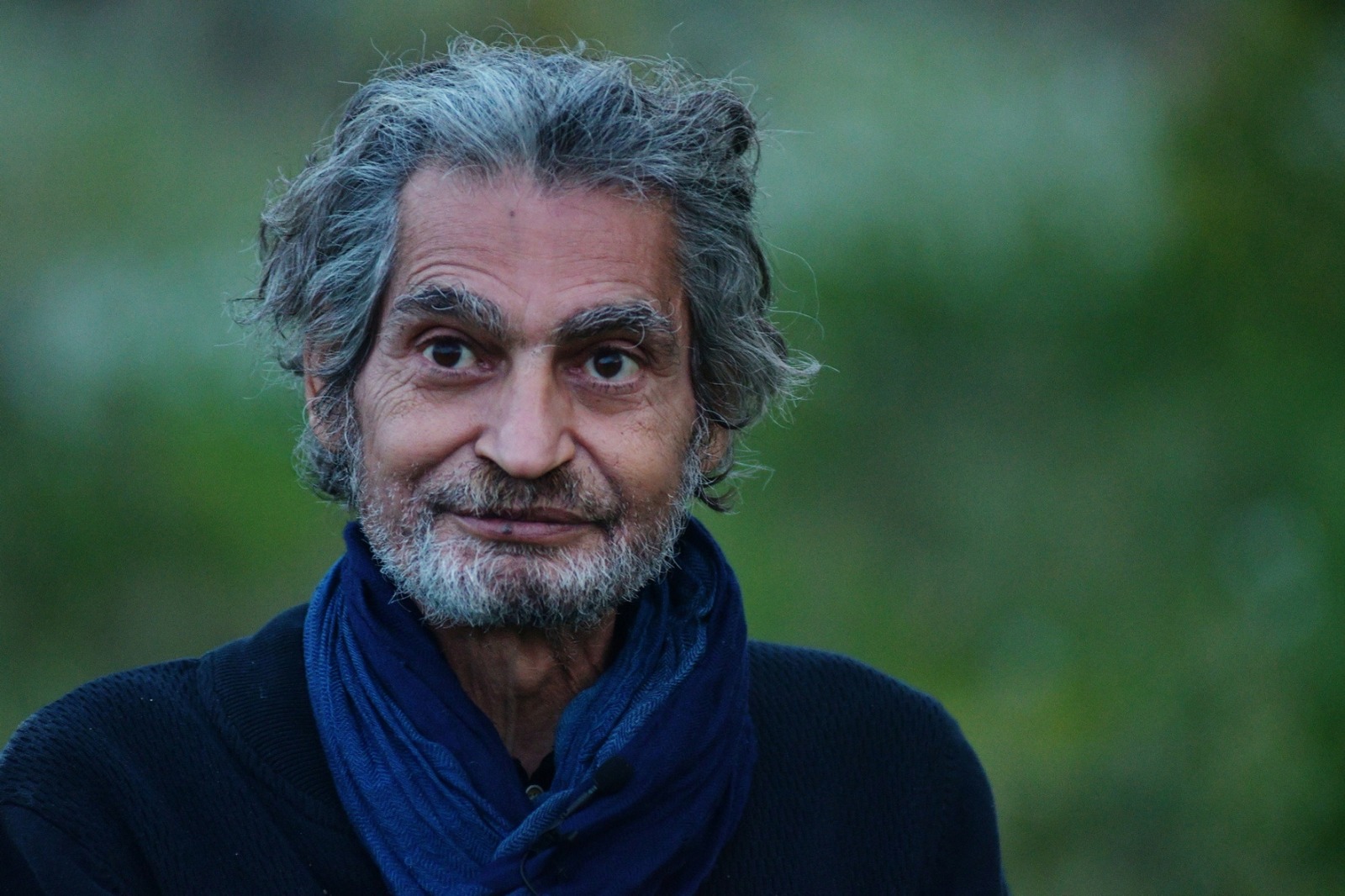
A portrait in a blue scarf
Photography · Claudio Longo. Musicaos identifies the author and explicitly credits Claudio Longo. The sitting date is unstated.
Media source
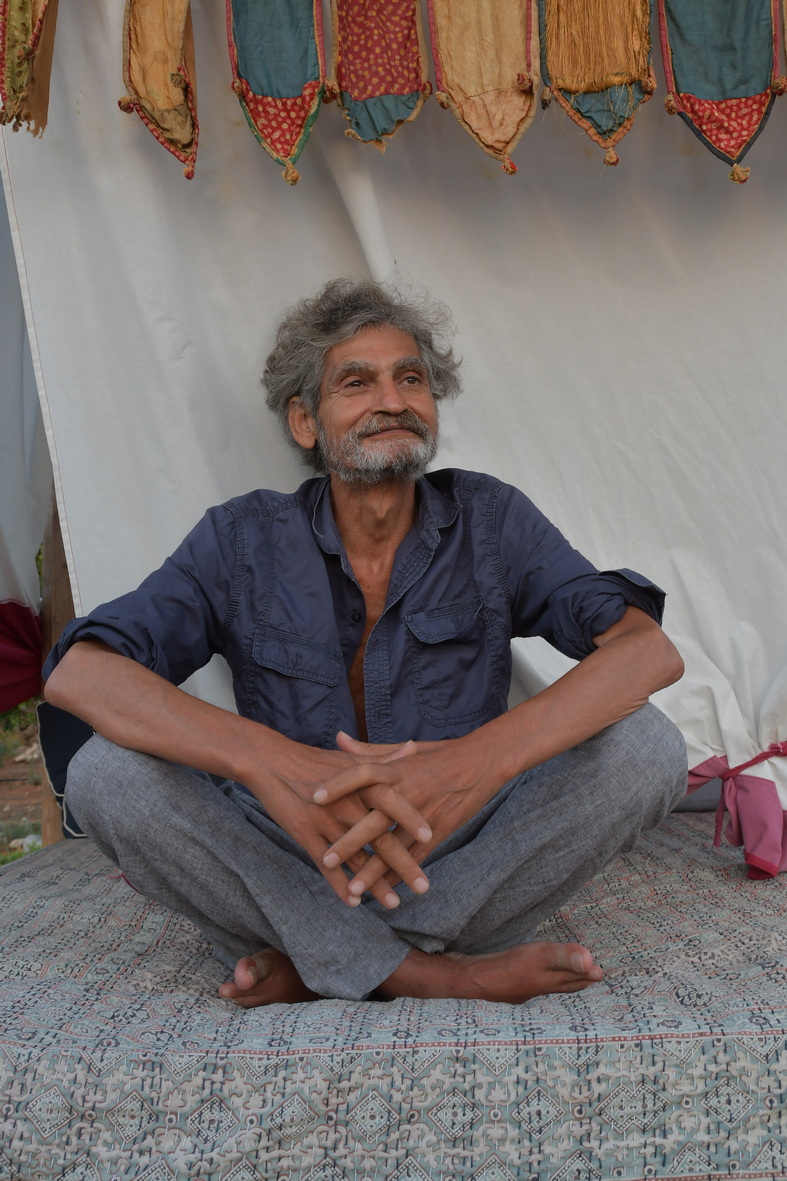
A second publisher photograph
Photography · Claudio Longo. Musicaos photo 02 shows Rabihavi seated cross-legged indoors, wearing a blue shirt and grey trousers. Publisher and filename credit Longo; the sitting date and location are unstated.
Media source
Asar: archived author image 762658
Photography · Photographer not identified. The filename names Rabihavi; no original caption identifies the sitter or occasion. The archived image shows a small black-and-white face crop. Treat the source identity as a filename attribution.
Media source
Asar: archived author image 782860
Photography · Photographer not identified. The filename names Rabihavi; no original caption identifies the sitter or occasion. The 782333 address returns identical bytes. A separate filename does not establish a second sitting.
Media source
Jen-o-Pari: one image, two addresses
Photography · Photographer not identified. The author-named legacy filename is the identity evidence. The archived image shows a small dark-haired, moustached colour portrait. June and October addresses return identical bytes.
Media source
An author image at Asre Nou
Photography · Photographer not identified. The author-named image address is retained without an original caption. The archived image shows a 70 × 100 colour headshot with a blue background; the sitting date is unknown.
Media source
Naakojaa: an archived author image
Photography · Photographer not identified. The author-named publisher image address is the identity evidence; no original caption is supplied. The archived image shows a black-and-white image with sunglasses and a telephone.
Media source
An editorial portrait by Sébastien Di Silvestro
Photography · Sébastien Di Silvestro. The photographer’s own editorial portrait gallery explicitly identifies Ghazi Rabihavi. He is seated in a dark blazer beside a warm red wall; no sitting date is established.
Media source
A portrait at a Paris window
Photography · Raphaël Gaillarde. Culture Papier identifies Ghazi Rabihavi, credits Raphaël Gaillarde and captions the portrait Paris, October 2020. This source caption is distinct from the article date.
Media source
A portrait with water behind
Photography · Photographer not identified. Kayhan London associates the photograph with Rabihavi. A grey-haired man in a white shirt and bag strap stands with blue water behind; no photography date or creator is printed in the retained lead.
Media source
A portrait before handwritten words
Photography · Photographer not identified. Radio Zamaneh identifies Rabihavi in the originating story context. The brown-tinted portrait includes chalk words behind him; the photography date is unstated.
Media source
A close portrait against green
Photography · Photographer not identified. Baang associates this face crop with Rabihavi. It shows grey hair, a light shirt and a green background; no sitting date or creator is established.
Media source
The UBC event portrait
Photography · Photographer not identified. UBC’s Anti-war Literature: Realism vs. Idealism event page names Rabihavi as a guest and supplies the image. The event context does not establish a photography date.
Media source
An image at Exiled Writers Ink
Photography · Photographer not identified. The author-named image belongs to Exiled Writers Ink’s Exiled Café page. It shows a grey-haired face in three-quarter view; the photography date is not inferred from the upload directory.
Media source
The BBC interview portrait
Photography · Photographer not identified. The BBC Persian interview page associates the image with Rabihavi. It shows a grey-haired man in glasses looking down; the source article’s 2011 date does not date the photograph.
Media source
The Ketabnak author profile image
Photography · Photographer not identified. Ketabnak’s profile explicitly names the author. This is a small colour head-and-shoulders portrait with a blue background; no original photography date or creator is established.
Media source
Lecce: an invitation to meet the writer
Posters · Poster designer not identified. The intact poster names Rabihavi and the Italian collection and announces the Lecce presentation. An invitation is not proof the event took place.
Media source
Presicce-Acquarica: a book presentation
Posters · Poster designer not identified. The intact Italian poster names Rabihavi and the collection and announces a Presicce-Acquarica presentation. It contains a portrait and cover as part of the source design.
Media source
Novoli: the Italian collection
Posters · Poster designer not identified. The intact poster names Rabihavi, Ostello Novello and the collection. The source supplies the intact poster.
Media source
Naakojaa: a Mariam book meeting
Posters · Poster designer not identified. The bookshop’s event page names a meeting with Rabihavi and the Mariam book. The small red poster includes a portrait and Persian lettering; the event date is not established in this record.
Media source
Naakojaa: Tragedy of a Monarchy
Posters · Poster designer not identified. The bookshop’s event page names a discussion with Rabihavi about Tragedy of a Monarchy. The small yellow poster includes covers and a portrait; the event date is not established in this record.
Media source
Baang: a portrait and lettering
Graphics · Graphic creator not identified. Baang’s author-related pages supply this composite portrait and Persian lettering. It is an editorial graphic, rather than a clean photograph.
Media source
Baang: the monarchy discussion graphic
Graphics · Graphic creator not identified. Baang supplies a dark-shirt portrait with surrounding Persian lettering in the Tragedy of a Monarchy discussion. It is a source graphic; the design creator is unstated.
Media source
Baang: an illustrated author portrait
Graphics · Illustrator not identified. Baang associates this blue, black and white illustrated face with the author. It is editorial artwork, not documentary photography.
Media source
Look, Europe!: a programme cover
Documents · Programme designer not identified; copy hosted by Ian Louis Harris. The programme cover is supplied by an attendee journal, whose image caption names Look, Europe!, Rabihavi and the Almeida visit. The journal date does not establish the printing date.
Media source
A Le Monde des Livres clipping
Documents · Le Monde des Livres; clipping hosted by Serge Safran Éditeur. The publisher-hosted clipping visibly prints the heading Une passion contre and 21 August 2020. This source record does not transcribe the review.
Media source
ReOrient 2001: the programme
Documents · Golden Thread Productions. The programme lists Rabihavi’s Stoning in Series One. Its printed dates are source evidence, not a newly supplied performance recording.
Media source
Masculine Law: the announcement
Documents · Silver Lining Theatre Company / Theatre Alive. The one-page announcement names the play and prints 23–28 March without a year. No year is inferred from the file address or a separate notice.
Media source
The Oak Tree in the Zurich programme
Documents · Arab Film Festival Zurich. The 2018 programme lists The Oak Tree on printed pages 40–41. It is a festival programme, not a downloadable copy of the film.
Media source
Arzhang 19: a captioned group photograph
Documents · Arzhang; photographer not identified. PDF page 104, printed page 103, identifies Rabihavi in a group-photo caption, first row from the right, Tehran 1365. That image date differs from the issue’s publication date.
Media source
Arzhang 2: writers gathered together
Documents · Arzhang / Navide Now; photographer not identified. PDF page 41 has a distinct group photo; the accompanying Mohammad Mohammad Ali passage recalls a 1366 gathering and names Rabihavi third in the row from the right. It is not the Issue 19 photograph.
Media source
Exiled Ink: Issue 8
Documents · Exiled Writers Ink. The printed 2025 issue includes What I Am on page 21. This link makes the originating magazine accessible without reproducing the poem.
Media source
Avaye Tabeid 22 · Fitneh
Documents · Avaye Tabeid · story by Ghazi Rabihavi; responsible editor Asad Seif. The recovered issue identifies Fitneh on printed pages 28–33 (PDF pages 29–34). Its closing 1372 marker is separate from the issue date. Cover artwork is credited to Arta Davari. The next contribution, Khoshchehr, belongs to Hossein Rahmat. Whole texts remain with the originating archive; different appearances have not been fully collated.
Media source
Apulée 8 · publisher contents for Les Lampions
Documents · Zulma · story by Ghazi Rabihavi; translation by Julie Duvigneau. The complete five-page contents document identifies Les Lampions and its translator, beginning on printed page 79 of the collective issue. This document is not the full 448-page volume or the complete literary contribution.
Source reference
A Ballad of Love · Princeton Library
The original returned object identifies Tasnīf-i yak ʻishq, Rabihavi, Tehran, Nashr-i Mina and 1371 [1992]. Its format is Book; no ISBN, pagination or precise literary subtype is supplied. The English title is a finding aid.
Source reference
A Ballad of Love · the Mina narrative · scanned Persian source
Tasnif-e yek eshq. A Ballad of Love · Mina edition. The scanned imprint names Mina, Tehran and first edition autumn 1371. The narrative’s closing dateline is autumn 1357, Abadan; composition and publication remain distinct. PDF pages 4–39. The English paragraphs are original editorial reading orientations, not reproduced or translated literary passages. PDF page 3 identifies Mina, Tehran and first edition autumn 1371. Actual front and back covers are PDF pages 1 and 41. The imprint refines the existing institutional 1371 [1992] record without supplying an ISBN or a precise literary subtype. Visually checked 4 October 2026.
Source reference
A Commemorative Photograph · publication
Incident at the Central Workshop · Damoon, Tehran. 1358 (1979–80) · scanned collection. Persian. By Ghazi Rabihavi. The story heading dedicates it to the author’s brother Hamid. A refinery worker detained for bringing a camera explains his wish to photograph the workers beside the installation they built. The website paragraphs are editorial orientation to this source. Musa occupies PDF pages 37–44, between Incident at the Central Workshop and A Commemorative Photograph. The title page gives Damoon, Tehran and 1358; its discrepant colophon does not settle a precise printing season. The printed and web versions have not been collated in full. The collection’s title page names Rabihavi, Damoon, Tehran and 1358. The same-named story begins on PDF page 25 and is followed by Musa on PDF page 37. The print and web versions have not been collated in full. Bolandi-ha-ye atash. Incident at the Central Workshop. The title page names Damoon, Tehran and 1358. A conflicting colophon names Heights of Fire; this record identifies the actual first story, rather than inferring a separate book. PDF pages 4–14. The English paragraphs are original editorial reading orientations, not reproduced or translated literary passages. Gadayi be-nam-e Khalil. Incident at the Central Workshop. The collection’s title page names Damoon, Tehran and 1358. The volume’s colophon discrepancy is documented in its edition notebook. PDF pages 15–24. The English paragraphs are original editorial reading orientations, not reproduced or translated literary passages. PDF page 2 prints Central Workshop, Ghazi Rabihavi, Damoon, Tehran, 1358. Page 3 names Heights of Fire, with first edition winter 58; Heights of Fire is also the first story heading on page 4. This colophon discrepancy cannot establish the collection’s edition number or winter date. The five story headings occur on PDF pages 4, 15, 25, 37 and 45. The last story, A Commemorative Photograph, occupies PDF pages 45–54 and is dedicated to the author’s brother Hamid. PDF and printed page numbers differ; printed pages 49 and 52 are PDF pages 47 and 50. The online Border Workshop label differs from the printed title. Pages 1 and 55 supply covers. All 55 pages visually reviewed for headings, 4 October 2026; only selected passages close-read.
Source reference
A letter about the Fajr festival · Radio Farda
Report published 23 December 2019 names Rabihavi among artists and writers asking Romeo Castellucci and Eugenio Barba to cancel their announced festival appearances. The report does not establish the response or subsequent attendance. Report published 23 December 2019. Names Rabihavi among signatories addressing Romeo Castellucci and Eugenio Barba; it does not establish their subsequent response or attendance.
Source reference
A writer of a rare generation · Baang
Editorial profile, 10 December 2023: early refinery-worker fiction, reporting, periodicals and literary meetings. Its departure date, 1375, differs from other accounts. Career profile dated 10 December 2023. Describes the five refinery-worker stories in Incident at the Central Workshop; its career chronology remains attributed.
Source reference
A writer’s influences · Culture Papier
Interview, 2 November 2020: Hemingway, Faulkner, Camus, Duras, Pinter and Beckett. Repeated page variants do not provide independent confirmation. Unsigned French questions and answers, 2 November 2020, followed by a separate Culture Papier appraisal. A shorter URL variant carries the same article.
Source reference
ActuaLitté · second Médicis selection
Antoine Oury, 5 October 2020. The article lists the seven foreign novels and retains the French translation credit.
Source reference
Adabiyat-e Dastani 10 · Dastan-e khub bayad…
Database record: Mordad 1372 / July–August 1993, pages 2–5, four pages. Rabihavi is listed with Bozorg Alavi, Ebrahim Hassan Beigi, Razieh Tajjar and Mohammad Keshavarz under the reporter/rapporteur field. The retained page requires sign-in for the article body.
Source reference
Against the death penalty · collective statement
Tribune Zamaneh, 3 December 2013. The original signatory list names Rabihavi; its internal Persian and Gregorian datelines disagree. A listed endorsement does not establish campaign leadership. Published 3 December 2013. Original collective appeal and signatory list, including Rabihavi. Its internal Persian and Gregorian datelines disagree; the page date is retained separately.
Source reference
Al-Araby Al-Jadeed · Ahmad Heidari’s translator notebook
Arabic interview, 1 March 2023. Heidari discusses his interest in Rabihavi; the passage gives no completed Rabihavi translation title or imprint.
Source reference
Al-Nakhil wa-al-Barud · Ebjed
Publisher record and cover identify an Arabic story collection by Rabihavi, translated by Hanaa Mah Tab, printing year 2022, ISBN 9789922676272. Title and translator name are given in Latin transliteration. The publisher does not identify a particular Persian source edition. Publisher record and cover identify an Arabic story collection by Rabihavi, translated by Hanaa Mah Tab, printing year 2022, ISBN 9789922676272. The announcement is dated 13 May 2022; that posting date is not treated as the printing date. The Arabic title and translator name are rendered here in Latin transliteration. No particular Persian source edition or complete contents equivalence is identified.
Source reference
Ali Sedighi · Heidelberg festival
Asre Nou, 1 February 2013. The Rabihavi passage discusses Avar-e Eshq. The audience award in the headline belongs to a different play adapted by Majid Fallahzadeh from Fugard. Ali Sedighi, 1 February 2013: Avar-e Eshq by Rabihavi, directed and performed by Soudabeh Farrokhnia.
Source reference
Ali Zokaei · war machines and nomads
Persian theoretical essay, 23 August 2023, also posted on Tribune Zamaneh. The two presentations constitute one critical contribution.
Source reference
Amir Moosavi · A defense destined to be sacred?
Middle Eastern Literatures, published online 3 August 2026. The bibliographic record and abstract support this orientation; the complete article has not been read here.
Source reference
Anti-war language and peace · BBC Persian
Amir Payam’s broadcaster introduction to a filmed conversation, visibly updated 30 January 2011. Its military-service account and reported anti-Vietnam-war participation are not a full transcript or independently recovered service documentation. Amir Payam’s broadcaster article introducing a video excerpt. Page metadata records creation on 22 January 2011; the visible update is 30 January 2011. The captured text is not a speech transcript.
Source reference
Anti-war literature: realism vs. idealism · UBC
Institutional announcement for a 30 November 2024 reading-club discussion of From This Place. Evidence of the announced discussion, not an award or a claim of attendance. Originating event page identifies the 30 November 2024 From This Place discussion, guest Rabihavi and hosts Hessam Dehghani and Farzan Sojoodi. It explicitly says the session is in Persian. The Department of Asian Studies and Persian Literature Reading Club announced a discussion of From This Place. The university’s published recording description identifies Rabihavi as guest speaker and states that the presentation was delivered in person and online via Zoom.
Source reference
Aparat · A Whale in a Fishbowl discussion · BBC Persian
BBC full-programme publication · 2018-05-03. 16:37. Ghazi Rabihavi, Omid Shams and Mohammad Reza Haj Rostam Beigloo · BBC Persian / Aparat. Rabihavi appears as a panel guest in a discussion of the film. This source identifies the full programme, which is distinct from its separate 30-second trailer.
Source reference
Aparat · Extras discussion · BBC Persian
BBC full-programme publication · 2019-09-26. 25:53. Ghazi Rabihavi and Nasrollah Sheibani · BBC Persian / Aparat. Rabihavi appears as a panel guest in a discussion of the film. This source identifies the full programme, which is distinct from its separate 30-second trailer.
Source reference
Aparat · Kami’s Party discussion · BBC Persian
BBC full-programme publication · 2018-05-25. 34:35. Ghazi Rabihavi, Nazi Akbari and Farid Esmaeelpour · BBC Persian / Aparat. Rabihavi appears as a panel guest in a discussion of the film. This source identifies the full programme, which is distinct from its separate 30-second trailer.
Source reference
Aparat · Niloufar discussion · BBC Persian
BBC full-programme publication · 2018-07-26. 18:48. Ghazi Rabihavi, Nazi Akbari and Farid Esmaeelpour · BBC Persian / Aparat. Rabihavi appears as a panel guest in a discussion of the film. This source identifies the full programme, which is distinct from its separate 30-second trailer.
Source reference
Aparat · Taxi discussion · BBC Persian
BBC full-programme publication · 2018-05-17. 32:17. Ghazi Rabihavi, Ziba Mir-Hosseini and Farid Esmaeelpour · BBC Persian / Aparat. Rabihavi appears as a panel guest in a discussion of the film. This source identifies the full programme, which is distinct from its separate 30-second trailer.
Source reference
Apparition · Avaye Tabeid 30
The contents identify Rabihavi’s story. The cover says issue 30, Autumn 1401; the inner masthead contains inconsistent issue and seasonal text.
Source reference
Apparition · earlier Baang page
Persian appearance dated 10 May 2023. The story is distinguished from dossier material inserted into the page. Earlier Baang appearance, 10 May 2023. Original source 307, complete fiction 77–91; dossier caption81 excluded. The later Baang 15780 record is retained separately as the existing principal source. Accounts of a miracle and the birthmark are character claims. The website sections are original English editorial orientations; literary passages are not reproduced.
Source reference
Apparition · publication
Baang · also Radio Zamaneh and Avaye Tabeid. 29 August 2023 · earlier appearance 2012. Persian. By Ghazi Rabihavi. A plumber appeals to an image on a damp wall after his repair work becomes entangled with a neighbourhood’s belief in a miracle. The website paragraphs are editorial orientation to this source.
Source reference
Apparition · Radio Zamaneh
Earlier Persian story appearance dated 4 July 2012, with Rabihavi named and the same central monologue.
Source reference
Apple Podcasts · Peyrang episode five
The same episode, dated 4 October 2019. The displayed 16-minute length rounds the feed’s 15:43.
Source reference
Apple Podcasts · Radio Nebeshteh episode 13
Distribution record for the same episode: 20 April 2020. This publication date does not date every later upload or establish when the conversation was recorded.
Source reference
Apple Podcasts · Sedakhoneh: Hofre
The same episode, 10 January 2021. The displayed 21-minute length rounds the feed’s 20:33. The description introduces the story, rather than transcribing its reading.
Source reference
Arab Film Festival Zurich · 2018 programme
The Oak Tree appears on printed pages 40–41 with 2017 and 23 minutes; the schedule on page 4 says 37 minutes. This guide retains that unresolved difference. Official festival programme. Printed pages 40–41 give Oak Tree as 2017/23 minutes and name the creative team; the schedule on page 4 instead gives 37 minutes. A confirmed version history has not resolved the difference.
Source reference
Arash Dabestani · Radio Nebeshteh on YouTube
Channel upload, 30 June 2023, of episode thirteen; complete public stream measures 1:37:46.001. This distribution date is separate from the episode’s 2020 feed publication.
Source reference
Aroos · Adineh 52 · publication
Adineh 52 · recorded in Avaye Tabeid 31. Khordad 1368 · later bibliography Winter 1401 (2023). Persian · bibliographic record. By Ghazi Rabihavi. The later bibliography names the author and issue. The original Adineh contribution has not been inspected. A prison-literature bibliography records Aroos by Rabihavi in Adineh 52, Khordad 1368. The website paragraphs are editorial orientation to this source. The bibliography in issue31, Winter 1401 (2023), lists Gisu by Rabihavi, author-published in Tehran in autumn 1372, on printed page 110 (PDF 111). This later bibliographic statement corroborates the early author-published library record but is not an inspected original colophon. The same bibliography separately lists Aroos in Adineh 52.
Source reference
Artists’ collective statement · Tribune Zamaneh
4 January 2018: public statement lists him among 59 artists. It is user-published material, not the broadcaster’s editorial position. IranWire material republished on the user-contributed platform, 4 January 2018. The retained list names Rabihavi as signatory 22.
Source reference
Asad Seif · revolution, war and exile
Deutsche Welle Persian guest essay, 3 April 2024. Asre Nou’s 4 April republication is the same essay. Interpretations are Seif’s; the catalogue independently establishes literary forms and editions. Deutsche Welle Persian guest essay, 3 April 2024, also republished by Asre Nou on 4 April. Seif specifically names Tahereh and supplies a synopsis. His brief description establishes a reported play identity, not an inspected script, edition or completed production.
Source reference
Asar · archived photograph address 762658
The recovered 11 June 2016 archive copy contains a 186 × 200 black-and-white face crop. An earlier pointer names a 23 May 2013 capture. Neither dates the sitting; the filename is the identity evidence and no photographer or original caption is supplied.
Source reference
Asar · archived photograph address 782333
Image address captured on 23 May 2013. Its original publication context and reproduction rights are not established.
Source reference
Asar · archived photograph address 782860
Recovered archive image, captured on 13 October 2013: 90 × 97 pixels. The 782333 address returns identical bytes. A different filename does not establish another photograph or sitting; no original caption or photographer is supplied.
Source reference
Asre Nou · author photograph address
Retrieved and inspected literary-site image: a 70 × 100 colour headshot against a blue background. The author-named image address is retained without an original caption, photographer credit or sitting date.
Source reference
Astragali Teatro: book presentation and Fairy Lights
Organiser’s listing for 12 June 2024. Describes Fairy Lights as filmed by Kaveh Golestan and realised with Ghazi Rabihavi. This is an announced screening, not a 2024 production date or complete credit sheet.
Source reference
Avaye Tabeid 22 · Baang announcement
The contributor announcement leads to the publisher’s original Ava22_c.pdf address. That address failed during the current check; the Iran Archive copy supplied the actual issue, contents and contribution pages.
Source reference
Avaye Tabid · issue 18 · The soldier who meets himself
Avaye Tabid 18, Spring 1400 [2021]. Essay on printed pages 97–107; Hofre analysis printed pages 99–100/PDF pages 100–101, visually checked. Essay date line: February 2021; issue and essay dates are distinct.
Source reference
Avaye Tabid · issue 32 · Nightmares shape the novel
Unsigned new-books notice, printed pages 247–248/PDF pages 248–249 of Avaye Tabid 32, Winter 1401 (2023). Both printed pages visually checked. Issue editors are not assigned authorship of this unsigned notice.
Source reference
Azadi-b · December statement and full numbered list
Republication dated 22 Azar 1399 / 12 December 2020. The statement and the numbered signatory list place Rabihavi at entry 506; repeated page blocks are not additional endorsements.
Source reference
Baang · A bookseller’s work around the novels
21 May 2021. Original source publication; this guide summarises the specifically identified Rabihavi material and preserves its attribution.
Source reference
Baang · A critic speaks about a generation
6 December 2025. Original source publication; this guide summarises the specifically identified Rabihavi material and preserves its attribution.
Source reference
Baang · A new route to Persian books
31 January 2022. Original source publication; this guide summarises the specifically identified Rabihavi material and preserves its attribution.
Source reference
Baang · A publisher brings books into a campaign
13 January 2023. Original source publication; this guide summarises the specifically identified Rabihavi material and preserves its attribution.
Source reference
Baang · Bibi’s First Kisses
Publication of 17 September 2026, with Persian prose and a linked talking-head video. Credits writing to Ghazi Rabihavi, performance to Sima Polit, recording to Mohammad Heidari and editing only as Abd.
Source reference
Baang · Bibi’s First Kisses video
Baang’s channel. Primary player metadata gives 323 seconds and publication at 06:39:33 UTC on 17 September 2026; the raw timestamp uses the preceding Pacific date. A playback sample and Persian caption option were checked on 4 October 2026. Caption accuracy and full-recording alignment remain unverified.
Source reference
Baang · Gisu in the author’s voice
Author reading uploaded 7 October 2020; page runtime 3:49. The description introduces a forthcoming German-published Persian reissue, rather than dating the novel’s first publication.
Source reference
Baang · Love against inherited taboos
24 November 2020. Source publication; the guide identifies the specific Rabihavi passage and keeps its voice attributed.
Source reference
Baang · notice of the Paris bookshop encounter
Staff announcement published 4 November 2023, referring to the 12 November Naakojaa event.
Source reference
Baang · Sujet’s German translation announcement
News report, 13 March 2022, quoting Sujet manager Madjid Mohit on the translation being near completion and an anticipated autumn release. Its proposed timetable does not establish the publication date of an individual printing.
Source reference
Baang · text of the first Baang–Nava programme
Published Persian programme text, 21 November 2020. Credits Amin Ansari and Mahnoush Rad and ends with a Gisu introduction and an author-reading cue. The cue does not reproduce the spoken extract.
Source reference
Baang · The Last Cry
Published 18 August 2026. Credits presentation by Pedram Ansari and editing by Abed Golnam, and prints the Persian inner monologue separately from editorial commentary.
Source reference
Baang · The Last Cry video
Channel upload dated 18 August 2026, page runtime 2:53. A separate written monologue is available on the journal’s publication page.
Source reference
Baang · Tragedy of a Monarchy published by Payam
Publication announcement, 11 July 2022, naming Payam in Bonn and manager Jalal Rostami Gooran. The descriptive claims are those of the announcement, rather than a new independent review or a performance record.
Source reference
Baang–Nama · Hasti’s Bangles
Publication page, 18 December 2022, links a web story and separate written story. Four native MP4 assets were verified on 4 October 2026; three carry audio and one is silent. They are not presented as a complete audiobook.
Source reference
Baang–Nama · Hasti’s Bangles web story
The original web-story page supplies four native MP4 assets measuring 16.100, 8.967, 81.500 and 18.952 seconds. The second has no audio stream. The assets were inspected as separate files, without creating a new combined recording.
Source reference
Baang–Nava · a biographical account
Track title identifies a biographical account of Rabihavi. Original metadata dates its upload to 9 July 2022; its public stream measures 3:55.031. The narrator remains uncredited. Linked from Baang’s separate 12 July journal feature.
Source reference
Baang–Nava · separate programme announcement
The originating post metadata dates this announcement to 12 January 2021. Its body says Tuesday 23 Dey / 12 January and links the first programme’s text at 2856 and the historical baang-1-3.mp3. The linked text page has its own earlier 21 November 2020 metadata date. These are distinct dated pages, not two programmes or proof of a recording date.
Source reference
Baang–Nava · Shapour Salimi performs The Tragedy of a Monarchy
Publication page dated 12 July 2022. Identifies an excerpt from the two-act play and also links a separate biographical recording.
Source reference
Baang–Nava · The Tragedy of a Monarchy audio
Separate track credits Shapour Salimi’s performance of a portion of the play. Original track metadata dates its upload to 9 July 2022, and its public stream measures 4:56.123. Neither field establishes the recording day.
Source reference
Badri’s Night · publication
Avaye Tabeid 20. Summer 1400 / 2021. Persian. By Ghazi Rabihavi. Beside the river, a mother and son wait differently for a man whose bloodstained shirt returned without his body. The website paragraphs are editorial orientation to this source. Avaye Tabeid 20, Summer 1400/2021. Original source 293, complete story 4454–4768, printed 71–75 / PDF 72–76 (the contents points to the preceding fiction-divider page70), dedication to Nassim Khaksar. The concluding dateline is Spring 1358, not an established first-publication date; an encyclopedia’s pre-revolution description does not override it. The website sections are original English editorial orientations; literary passages are not reproduced.
Source reference
Bagh dar Bagh · literary weblog · A friend remembers the pace
Excerpt posted · 9 September 2010. Original source publication; this guide summarises the specifically identified Rabihavi material and preserves its attribution.
Source reference
Bahman Panjali · war, anti-war and idealism
Persian critical essay, 17 August 2018, in Radio Zamaneh’s thirty-years-since-the-war dossier. Its distinctions between epic, melodrama and realism are the critic’s argument.
Source reference
Baran 19–20 · a story appearance · publication
Asar · Baran quarterly announcement. Publication date not stated in the announcement. Persian · publication announcement. By Ghazi Rabihavi · named story contributor. The announcement names four short-story writers but gives no individual story titles or page ranges. The backdated blog URL is not used as the publication year. An announcement of Baran’s combined nineteenth and twentieth issue names Rabihavi in its fiction section. The website paragraphs are editorial orientation to this source.
Source reference
Baru · earlier issue-six version
The earlier Persian issue-six presentation of Kamali’s essay. Its summer 2021 issue label remains separate from the later site’s 2022 date.
Source reference
BBC Persian · Tamasha: Truth in the Mirror
BBC Persian upload, 6 June 2014; page runtime 26:34. Its description credits filmmaker Mani Shirazi. Player furniture is not a transcript.
Source reference
BBC Persian · Tamasha’s author profile
Broadcaster article published 11 June 2014, five days after the video upload. Its native recording measures 25:29.498, shorter than the channel’s 26:34.301 version. Their editorial relationship is unverified; the article is not a transcript.
Source reference
Biographie · Sujet Verlag
Publisher account of the move to Tehran, Iranian Writers’ Association, Thursday meetings, cinema and London. Departure dated 1995; repeated URL variants are one source.
Source reference
Boys of Love · 2010 electronic imprint
Retained Persian PDF, title/credits page: BaghDarBagh, Sweden, first electronic edition April 2010. The original resource is linked without its transient access token; live availability is unconfirmed. No literary text is reproduced here.
Source reference
Boys of Love · BaghDarBagh publisher post
Publisher post of 8 May 2010 records a first edition in April 2010. The retained Persian PDF separately identifies the first electronic edition, BaghDarBagh, Sweden, April 2010. A later page-modification date is not a new publication date.
Source reference
Boys of Love · BiblioVault
University of Wisconsin Press record: career biography, PEN anthology inclusion and the 2024 English edition translated by Poupeh Missaghi. University of Wisconsin Press biography accompanying Boys of Love records a contribution to the 2005 PEN anthology. The Library of Congress contents supply the White Rock title and placement. No contribution-level translator is inferred. Publisher-supplied English edition and translator record. It supplies the established permanent reading path already used by the website.
Source reference
Boys of Love · Harvard Library
Corroborates the 2022 Mehri Persian novel and ISBN 9781915029263. Its 316-page description differs from the publisher’s 324 pages; no page count is selected here.
Source reference
Boys of Love · K10plus · Gardoon record
Original MARC record DE-627/1816926825 identifies a Persian novel, Gardoon Verlag, [2011], ISBN 9781780830377 and an unspecified publication place. It is not merged with the Berlin Gardoun record carrying a different ISBN.
Source reference
Boys of Love · Mehri Publication
Named Persian edition: London, winter 1400 / 2022, ISBN 9781915029263, edited by Sara Tehrani. Its first-edition label belongs to the Mehri imprint; it does not replace the 2010 electronic history.
Source reference
Boys of Love · Princeton Library · Gardoun edition
Berlin, Nashr-i Gardoun, 2011, ISBN 9783938406564, corroborated by the original Libris record. A different 2011 Gardoon record has ISBN 9781780830377; the two records are kept distinct.
Source reference
Boys of Love · University of Wisconsin Press
July 2024 English translation by Poupeh Missaghi: paperback ISBN 9780299349042 and EPUB ISBN 9780299349080. The publisher’s story description is the source for Jamil and Naji’s introduction here.
Source reference
Brunel University London · The artist inside a documentary
Practice-based doctoral thesis, March 2025 title page. Rabihavi’s participation is explicit on printed pages 94–95 (PDF pages 95–96), visually checked against the preserved original; the full thesis is publicly linked by Brunel. No complete interview transcript is supplied. Vahid Keshavarz Sarkar’s practice-based thesis, March 2025 title page. Printed pages 94–95/PDF pages 95–96 explicitly identify Rabihavi as someone interviewed for Colours of Exile; both pages visually checked. The thesis supplies a link to its final film version.
Source reference
Ceasefire · Lecce announcement
Leccenews24 announced an Italian premiere on 14 April 2022 at Museo Sigismondo Castromediano, crediting Rabihavi as director. An announcement is not proof the screening took place. Contemporary event report, 11 April 2022. Announces a 14 April screening at the Castromediano Museum, names Rabihavi as director and describes three episodes. It does not document that the event occurred.
Source reference
Censorship · final part, video · IIFMA
Channel upload · 27 December 2024; publisher page · January 2025. 58:47. Nasim Masoumi · host; guests Ghazi Rabihavi, Shiva Ebrahimi, Maryam Boubani and Abdolreza Kahani · IIFMA. A panel programme with four guests; it is not a solo Ghazi interview. The source page separately credits producer/editor Kamran Malek Motiee, writer/expert Amir Pouria and teaser maker Somayeh Hagh Negahdar.
Source reference
Censorship · final part, video · publisher introduction
The originating programme page supplies the credits and introduction. Publication and upload dates describe their own appearances. Podcast and channel programme · December 2024; publisher page · January 2025. 58:47. Nasim Masoumi · host; guests Ghazi Rabihavi, Shiva Ebrahimi, Maryam Boubani and Abdolreza Kahani · IIFMA. Official IIFMA podcast-feed counterpart to the multi-guest video. The two measured runtimes are close, but no byte-identical-cut claim is made.
Source reference
Censorship and self-censorship · Zamaneh
Page dated 15 February 2011. Author replies on early books, Gisu and narrative technique. A later republication gives a different original date; the introductory chronology also contains an apparent error. Persian questions and answers from Daftar-e Khak. The page prints 15 February 2011; the later Baang republication gives a different original-publication date. Page dated 15 February 2011. Author replies identify Memoirs as a story collection and discuss licences for Gisu, From This Place, Maryam and Iranian Four Seasons. The introductory chronology contains an apparent error.
Source reference
Centre national du livre · 2020 literary-prize selections
Official CNL seasonal reading page. Its retained body places Les Garçons de l’amour under the second Médicis selection and names Rabihavi, translator Christophe Balaÿ and Serge Safran. The page’s 17 September 2020 publication label predates later results also present in its updated body; it is not used as the second-selection announcement date.
Source reference
Childhood, language and remembered lives · Aasoo
Maryam Foumani interview, 10 December 2024. Author testimony about Abadan, his mother’s storytelling, school theatre and life between London and Italy. Persian conversation with Maryam Foumani, published 10 December 2024. Childhood, regional language, labour, theatre and the distance of memory. Published 10 December 2024. Author testimony about the kiln reporting, Mordad and Palm Tree and Gunpowder; no publication date is inferred from a date of writing.
Source reference
Cinema credits · Soureh Cinema
Filmography separates assistant directing, screenwriting and initial story treatments. Original-language credits were checked in the retained capture.
Source reference
Cinema Ideal · from ISNA / Cinema Museum · A director remembers the first story
12 September 2021. Original source publication; this guide summarises the specifically identified Rabihavi material and preserves its attribution. 12 September 2021 ISNA/Cinema Museum interview with Sadr Ameli by Fereydoun Jeyrani, republished by Cinema Ideal. The director recalls a story by Rabihavi that was developed into the screenplay; retrospective testimony is distinct from the film’s production-year records.
Source reference
Cinema Iranica: Shadows of Sorrow
Institutional cinema record. Names Shapur Gharib and Ghazi Rabihavi as writers, and gives 1988 and 94 minutes.
Source reference
Cinema of Noise: fiction-film production credits
The sound collaborator’s own filmography. Lists Oak Tree as 2017/37 minutes and Loophole as 2021/10 minutes. These entries document its listed production credits.
Source reference
Cinema’s Blood · en.radiozamaneh.com
Channel upload · 23 September 2025. 1:40. Ghazi Rabihavi · filmmaker; uploaded by Tribune Zamaneh. A 100-second short film credited to Rabihavi and uploaded by Tribune Zamaneh. The upload date does not establish a production date.
Source reference
Cinema’s Blood · publisher introduction
The originating programme page supplies the credits and introduction. Publication and upload dates describe their own appearances. Zamaneh Media English, 23 September 2025. Critical essay on Cinema’s Blood, with a separate Medium republication. The article’s account of the film is not an independently verified production credit sheet.
Source reference
Claudio Longo · author photograph 01
Publisher-hosted colour portrait. The same photograph is used on this website; no creation date or reproduction licence accompanies the image.
Source reference
Claudio Longo · author photograph 02
The original publisher-hosted photograph was retrieved and visually inspected on 4 October 2026: 787 × 1181 pixels. Rabihavi sits cross-legged in a blue shirt and grey trousers against a white fabric backdrop. Musicaos and the filename credit Claudio Longo; the photography date and location remain unknown.
Source reference
Commune · The lovers and the changing regime
31 December 2022 · modified 1 September 2023. Original source publication; this guide summarises the specifically identified Rabihavi material and preserves its attribution.
Source reference
Corriere Salentino · Lecce and Presicce programme
Francesco Oliva, 26 April 2024. Announces two distinct encounters on 27 and 29 April, with separate participants and interpretation credits.
Source reference
Corriere Salentino · Novoli after the presentation
Roberto Pagliara’s retrospective report, 10 January 2025. Its account of rights and censorship is distinct from earlier event publicity.
Source reference
critiquesLibres.com · A reader’s forbidden loves
30 April 2023. Original source publication; this guide summarises the specifically identified Rabihavi material and preserves its attribution.
Source reference
Crossref · Duvigneau’s article and reference list
Publisher-deposited DOI 10.1163/22138617-12340339 metadata, checked 4 October 2026. Records Julie Duvigneau, Oriente Moderno 104(1–2), pages 14–38 and a print-publication date of 30 May 2025. Its bibliography contains an undated underground Eight Short Stories entry credited to Rabihavi; it supplies no imprint or contents.
Source reference
Cry · publication
Baang. 26 January 2026. Persian. By Ghazi Rabihavi. A compact lyrical prose narrative; the linked page also refers to an author-voice recording. A dead speaker asks the living to open the body bag so that an unfinished declaration of love can be heard. The website paragraphs are editorial orientation to this source.
Source reference
Daniel and His Father · extract · publication
Baang. 9 May 2024. Persian. By Ghazi Rabihavi. A disturbing dream opens a novel fragment in which a narrator observes Daniel, his father and the fragile routines of neighbours and care. The website paragraphs are editorial orientation to this source. Baang, 9 May 2024. Original source 332, literary body paragraphs 79–557; the dossier caption at 265 and illustration credit at 387 are excluded. Paragraph 77 identifies an extract supplied by publisher Jalal Rostami. All observations concern this fragment, rather than the complete novel. The website sections are original English editorial orientations; literary passages are not reproduced.
Source reference
Daniel and His Father · Harvard Library
Catalogue record for the Persian Goethe & Hafis edition, Bonn, 2022, ISBN 9783949715211. A German parallel title is not evidence of a German translation. Persian novel, Goethe & Hafis, Bonn, 2022, ISBN 9783949715211. Danial und sein Vater is an added parallel title. Harvard and DNB disagree on pagination, which is omitted.
Source reference
David · Index on Censorship · publication
Index on Censorship 26(2). March 1997. English · bibliographic record. By Ghazi Rabihavi. Pages 186–188; DOI 10.1177/030642209702600244. No translator is identified in the inspected metadata. An English periodical appearance with its own date, page range and source record, separate from the German and later Persian publications. The website paragraphs are editorial orientation to this source.
Source reference
David · publication
Baang · taz. 22 July 2022 · German appearance 7 May 1997. Persian · also published in German. By Ghazi Rabihavi. The German newspaper page does not name a translator. A censor’s deferential report to a ruler turns restrictions on art into an increasingly elaborate monologue. The website paragraphs are editorial orientation to this source. Baang, 22 July 2022. Original source 311: authored publication recollection 77; complete satire79–109; Tehran 1372 dateline 111. The claim about Takapu’s final issue is attributed to the author’s recollection rather than treated as independently established causation. The website sections are original English editorial orientations; literary passages are not reproduced.
Source reference
David · taz
German story published 7 May 1997 under Rabihavi’s name. The inspected newspaper text names no translator.
Source reference
David Alamouti · Ghazi Rabihavi
The filmmaker’s retained page gives 2013 and 25 minutes, and BBC World Service commissioning and broadcast. The relationship to UAL’s differing date and runtime is not established. Filmmaker’s own page. Gives 2013 and 25 minutes, with BBC World Service commissioning and broadcast. Its relationship to UAL’s 2016/30-minute record remains unresolved.
Source reference
Davud · Avaye Tabeid 10
Persian story on printed pages 41-42. A Spring 1397 cover conflicts with the Summer 1397 (2019) masthead. Faraj Sarkohi’s separate criticism is not authored by Rabihavi.
Source reference
DIV.cz: Hejleh
Czech community film database. Lists 1989, direction by Kaveh Golestan and Rabihavi as narrator. Its year is separate from Tableau’s 2013 upload; no relationship between particular cuts is established.
Source reference
Dojensgara · From inherited images to equal lovers
17 April 2017. Original source publication; this guide summarises the specifically identified Rabihavi material and preserves its attribution.
Source reference
Don Juan in Hell · BBC Persian
Mohammad Abdi, 15 September 2015: Rabihavi directed the London reading and played the Devil; the work is by Bernard Shaw, in Ebrahim Golestan’s translation. BBC Persian, 15 September 2015. Critical account of the London reading of Shaw in Ebrahim Golestan’s translation, including separately identified remarks by Rabihavi and Golestan. Mohammad Abdi, 15 September 2015: Shaw, Golestan translation, Rabihavi directing and playing the Devil.
Source reference
Eight Stories · anthology, part 1 · YouTube
Channel upload · 17 March 2020. 146:30. Naser Zeraati · reader; a multi-author anthology. An anthology-context recording containing other authors. No verified chapter timestamps assign a Rabihavi passage to this part; use the separately authenticated Hofre reading for a direct author-specific listening route.
Source reference
Eight Stories · anthology, part 2 · YouTube
Channel upload · 17 March 2020. 170:31. Naser Zeraati · reader; a multi-author anthology. An anthology-context recording containing other authors. No verified chapter timestamps assign a Rabihavi passage to this part; use the separately authenticated Hofre reading for a direct author-specific listening route.
Source reference
Eight Stories · Naser Zeraati’s participant account
Alireza Akbari’s interview with Naser Zeraati, published 6 July 2017, names Rabihavi’s Hofreh as one of the eight stories and discusses the Thursday sessions. This is participant testimony, not an inspected original anthology colophon. Alireza Akbari’s interview with Naser Zeraati, 6 July 2017. A participant’s recollections of reading, revision and anthology publication. Alireza Akbari’s interview with participant Naser Zeraati, 6 July 2017, names Rabihavi’s Hofreh in the anthology. This is not an inspected original print colophon.
Source reference
Eight Stories by New Iranian Writers · publication
Ketabnak · anthology listing. Original publication year not established. Persian · anthology record. By Ghazi Rabihavi · one of eight contributors. Introduction by Houshang Golshiri. A later participant account identifies Rabihavi’s Hofreh, The Hollow, as his contribution. A collective short-story volume from the Thursday sessions, with Rabihavi’s contribution connected to The Hollow. The website paragraphs are editorial orientation to this source. The retained listing names eight contributors and an introduction by Houshang Golshiri. Its 6 August 2025 electronic upload is not an original publication year; the original imprint, ISBN and exact cover remain unestablished.
Source reference
Ein weißer Stein · publication
taz. 29 March 1995. German. By Ghazi Rabihavi. No translator is named in the inspected newspaper text. The German newspaper story follows children watching a photographer and the assembly of gallows beside a white stone. The website paragraphs are editorial orientation to this source.
Source reference
Encyclopaedia Iranica · Children’s Literature
Children vii, volume V, fascicle 4, pages 417–423, published 15 December 1991 and updated 23 June 2015. The entry is compiled from information supplied by L. Ayman, M. Kianush, M. Sanati and A. Yamini-Sharif. Its brief Rabihavi passage names three early books; adjacent awards concern other writers and illustrators.
Source reference
Escaping Voices · Exiled Writers Ink
The retained September 2026 programme advertises Rabihavi for 15 September, 7 pm, at The Sekforde in London, hosted by Tamanna Easar and Katy Belyani. This monthly page changes; its older website creation date is not the event date, and the announcement is not an attendance record. Exiled Writers Ink lists Rabihavi for an evening of poetry, prose and conversation with writers from Syria, Afghanistan and Iran. The retained September programme supports the announced appearance; it does not establish completed attendance.
Source reference
Esfandiar Kusheh · Daniel and His Father
Persian review, 23 January 2023. Reads the novel through impending catastrophe, fatherhood, migration and changing narrative expectations.
Source reference
Esfandiar Kusheh · The Tragedy of a Monarchy
Persian critical reading, 13 July 2022. Historical comparisons and the interpretation of the king remain attributed to Kusheh.
Source reference
Exiled Writers Ink · 2008 events
Organiser archive: The Hat on 4 February, and Mara Lockowandt directing a Rabihavi playlet on 4 August.
Source reference
Exiled Writers Ink · Eventbrite · Escaping Voices · a London invitation
Organiser’s Eventbrite listing captured 14 September 2026, before the announced event. Dates are programme dates, not a confirmed performance report. AllEvents and HappeningNext repeat this same invitation.
Source reference
Exiled Writers Ink · Love and Uprising
The organiser’s 2019 archive announces 2 December 2019 at 7.45 pm. A later page modification does not change the event date.
Source reference
Fairy lights · Iranian.com
English story credited to Rabihavi, 19 October 2005. No English translator is identified on the published page. Iranian.com. 19 October 2005. English. By Ghazi Rabihavi. No translator is named on the publication page. A woman waiting for a taxi speaks to a silent companion, moving between present arrangements and memories of family violence. The website paragraphs are editorial orientation to this source. Iranian.com, 19 October 2005. Original source 326, complete published English narrative 74–256. This orientation uses the posted English version and does not infer an uncredited translator or equivalence with every Persian or French appearance. The website sections are original English editorial orientations; literary passages are not reproduced.
Source reference
Faraj Sarkohi · fiction and war
Radio Farda, 12 September 2010, second part of a wider critical discussion. Its Rabihavi passage concerns war displacement and the transformation of ordinary lives.
Source reference
Filip Noubel · Asymptote
Boys of Love section of the 15 July 2024 New in Translation column. Noubel writes this review; Samantha Siefert writes the separate review of Carlos Labbé in the same column.
Source reference
Fitneh · Avaye Tabeid 22
The inspected issue 22 cover and colophon give Autumn 1400 (2021). The contents and story heading name Rabihavi; Fitneh occupies printed pages 28–33, PDF pages 29–34. A 1372 composition marker closes the story. The following page begins a separately credited story by Hossein Rahmat. Recovered and inspected on 4 October 2026. Cover and colophon identify issue 22, Autumn 1400 (2021). Fitneh by Ghazi Rabihavi occupies printed pages 28–33 (PDF pages 29–34). A 1372 marker closes the story. The adjacent Khoshchehr is by Hossein Rahmat. This archive copy is not a general reproduction licence.
Source reference
Fitneh · publication
Baang · also BaghDarBagh and Avaye Tabeid 22. 10 March 2025 · earlier traces 2010 and 2021. Persian. By Ghazi Rabihavi. A kiln worker’s night with Fitneh opens onto a landscape transformed by war, mourning and the passage of time. The website paragraphs are editorial orientation to this source.
Source reference
Fitneh · retained BaghDarBagh excerpt
The inspected originating category capture displays Fitneh, posted on 18 December 2010 by Khalil Paknia, with an excerpt attributed to the collection Iranian Four Seasons. Its archived item link is a separate 30 January 2014 capture. The visible excerpt and attribution establish an earlier web appearance; the complete linked version was not compared with the later issue or Baang text. Original retained source 334: 16 November 2010 post by Khalil Paknia, paragraphs 817–839; the short literary passage is 823. The post describes a November 2010 BaghDarBagh electronic appearance. Its claim of an Afsaneh 1990 first printing remains a listing claim and does not resolve other edition dates. No complete electronic book is republished here. Original retained source 334: 8 May 2010 post by Khalil Paknia, paragraphs 850–876; the short literary passage is 856. The post names an April 2010 BaghDarBagh electronic publication in Sweden and reserves the author’s reproduction rights. This guide covers the posted fragment, without republishing it or asserting identity with every later edition.
Source reference
Fitneh · Siah Mashq 19
NoorMags records a Rabihavi contribution with this Persian title in Siah Mashq 19, Winter 1399, pp. 80–86. This establishes an earlier named appearance, not textual identity with the 2025 Baang story.
Source reference
Five Short Narratives · publication
Baang. 20 April 2025. Persian. By Ghazi Rabihavi. Five compact narratives move from a refugee journey and a girl’s school dress to grief, animal resistance and an older woman’s remembered scene. The website paragraphs are editorial orientation to this source. Baang, 20 April 2025. Original source 298: editorial preface 77–78, dedication 80, five literary pieces 82–108. Individual boundaries: Mona’s Buds 82–84; My Most Beautiful Dress 86–88; Uncle Gholam 90–94; Protest 96–98; Watching the First Kisses 100–108. The five share the date of this grouped publication. The website sections are original English editorial orientations; literary passages are not reproduced. The Persian group of 20 April 2025 contains Watching the First Kisses as its fifth piece. Characters and scene correspond to the later Bibi appearance, but its title and prose differ. This source does not establish an original collection or a formal adaptation credit.
Source reference
Florian Benoit · Le Sourire de Mariam
Mare Nostrum, 27 August 2022. Benoit is credited in the contributor tag; the generic site-author field does not replace that credit.
Source reference
Flowers and Boots · publication
Baang. 8 January 2026. Persian. By Ghazi Rabihavi. A falling flowerpot interrupts a confrontation in the street, leading soldiers into a building and towards an elderly woman’s room. The website paragraphs are editorial orientation to this source. Baang, 8 January 2026. Original source 310: editorial preface 77–80; the complete fiction is paragraph 82. Its uncertain observations are not converted into confirmed events. The website sections are original English editorial orientations; literary passages are not reproduced.
Source reference
Four Persian books · Pendaar publisher catalogue
The publisher lists Persian-language books by Rabihavi: Gisu, Maryam’s Smile, A Ballad of Love and Iranian Four Seasons. It explicitly describes the latter two as story collections. No publication year, edition number or ISBN accompanies these four listings, so none is inferred. Its Boys of Love listing is not counted as an additional printing.
Source reference
From This Place · Open Library edition record
A Columbia MARC import records Persian short stories, Mina, Tehran, 1990 and a first-edition label. This is a named catalogue edition, not independent proof of every earlier publication claim.
Source reference
From This Place · Princeton Library
The original institutional response records Tehran, Mina, 1369 [1990]. Multiple holdings for the same title and imprint are not counted as extra works or editions.
Source reference
German National Library · Monarchy edition
Persian-language edition, Bonn: Goethe & Hafis, 2022, ISBN 9783949715167. The German title is a parallel catalogue title.
Source reference
Ghazi Rabihavi · Musicaos Editore
Publisher biography. Its 1994 exile date and account of imprisonment differ from other sources; they are not treated as a settled chronology. The publisher explicitly credits the author photograph to Claudio Longo. Its page date and the image upload path do not establish when the photograph was taken.
Source reference
Gisu · Asre Nou cover image address
A cover lead named for Gisu. The source supplies an image address, without verified edition, designer, original publication date or permission fields.
Source reference
Gisu · extract · publication
Baang. 25 September 2020. Persian. By Ghazi Rabihavi. Ardeshir’s walk is interrupted by a man whose imitation of a gun turns fear into an uncertain negotiation. The website paragraphs are editorial orientation to this source. Baang, 25 September 2020. Original source 333: publication introduction 75–95; complete supplied literary fragment 99–597. The guide’s contradictory accounts of Tuti remain character speech. No medical diagnosis or final outcome for the novel is inferred. The website sections are original English editorial orientations; literary passages are not reproduced. The introduction describes a newly released political prisoner seeking self and love. Its early-publication year, 1372, differs from the author’s recollection of permission in 1373. The linked extract is in Persian; no English literary translation is supplied here.
Source reference
Gisu · Libris
The actual returned record identifies Gisu/Gisso, Persian, Goethe & Hafis, Bonn, 2020 and ISBN 9783940762825. The extraction’s generic short-response warning does not negate these explicit fields.
Source reference
Gisu · Princeton Library · 1993 record
The returned record gives [Tehran?], Q. Rabihavi, [13]72 [1993]. The uncertain place and supplied date brackets remain visible. No ISBN or precise printing date is supplied.
Source reference
Gisu · Princeton Library · Mina edition
The returned record identifies Tehran, Nashr-i Mina, 1398 [2019], ISBN 9786005200294. It is a later edition record, not a settled first-publication date.
Source reference
Gol Khanum · Siah Mashq · publication
Siah Mashq 18 · Noormags index. Tir–Mordad 1399 / summer 2020. Persian · bibliographic record. By Ghazi Rabihavi. Indexed on pages 4–8. The accessible record does not supply the full literary text. A five-page contribution indexed under Rabihavi’s name in the eighteenth issue of Siah Mashq. The website paragraphs are editorial orientation to this source.
Source reference
Goodreads · Readers disagree about the odyssey
Community-review collection retained in September 2026, with sixteen displayed entries individually dated 2022–2025. Editorial paraphrases of contrasting named responses; no dynamic rating, full review republication or same-edition assumption.
Source reference
Gooya · related reporting of the theatre letter
23 December 2019 republication credited to Iran International. Reports the same letter and names Rabihavi; a circulation record rather than a second campaign.
Source reference
Gorji Marzban · Sujet Verlag
Publisher biography identifies him as a co-founder of the Persian collection at Vienna’s main library, among his literary and civic activities. Translator context rather than a role attributed to Rabihavi.
Source reference
Hadi Keykavousi · an Iranian birth in London
Independent Persian, 21 May 2023. A critical reading of Daniel and His Father, rather than a personal-life report about the author.
Source reference
HAL · Garreau’s postface record
Official repository metadata, checked 4 October 2026, identifies the 2024 book chapter, its French and English abstracts, author Laurent Garreau, publisher Utopiran and ISBN 978-2-36612-504-7. The later repository submission is distinct from the work’s year. The official document endpoint supplied the complete postface.
Source reference
Hålan in Tavlan · Uppsala University
Institutional anthology PDF: title/imprint identifies Uppsala, 2020; the Hålan contribution credits Rabihavi and translator Forogh Hashabeiky. Anthology and contribution are distinct records; no literary text is reproduced here. Tavlan · Uppsala University. 2020. Swedish · translated from Persian. By Ghazi Rabihavi. Translation credited to Forogh Hashabeiky. The Swedish translation begins with a dead soldier’s question about why nobody knows that he has become a martyr. The website paragraphs are editorial orientation to this source. Forogh Hashabeiky’s 2020 Swedish anthology, Studia Iranica Upsaliensia 37, ISBN 978-91-513-0751-0. The contents and story credit identify Hålan; rights are retained by the respective authors and translators. The 2020 Uppsala volume prints ISBN 9789151307510. Hålan, translated by Forogh Hashabeiky, occupies printed pages 21–29. The retained PDF supplies title and imprint pages, not an identified jacket.
Source reference
Hasti’s Bangles · publication
Baang. 18 December 2022. Persian. By Ghazi Rabihavi. Family voices remember Hasti’s delight in birthday bangles and the plans surrounding a day of prayer and play. The website paragraphs are editorial orientation to this source. Baang, 18 December 2022. Original source 312, complete fiction 77–157: grandmother 77–101, father 103–119, Niko 121–157. The third narrator’s account is distinct from the preceding family voices. The website sections are original English editorial orientations; literary passages are not reproduced.
Source reference
Honaronline · Nimaj’s Southern Window announcement
News item explicitly reproducing Nimaj’s public-relations announcement, 2 Mordad 1398. Names Kourosh Asadi and Gholamreza Rezaei as the volume’s compilers and critics, and Rabihavi among 48 short-story contributors. It names no individual Rabihavi story or page range. The dated announcement reproduces Nimaj’s public-relations material and explicitly names Rabihavi among the 48 contributing writers. Asadi and Rezaei compiled the stories and accompanying criticism. It does not identify Rabihavi’s individual title or supply a complete contribution.
Source reference
Hossein Ateshparvar · subject and object in Hofre
Persian close reading, 16 March 2023. Hofre is the Persian story also published in Swedish as Hålan; translation and publication histories remain separate.
Source reference
Hossein Imanian · affirming the remnants
Baang essay, 8 February 2022, centred on Hossein Atashparvar. A substantive comparative passage names Rabihavi among writers who carried forward earlier literary resources while developing their own forms of historical testimony.
Source reference
Hossein Noushazar · a recollection of Mansour Koushan
Interview and opening recollection republished by Baang on 8 August 2022. Noushazar recalls meeting Koushan at a London roundtable on war in contemporary Iranian literature, alongside Rabihavi and Jamshid Barzegar. No date is given for that meeting.
Source reference
Hossein Noushazar · agency and Mandanipour’s Scorpion Killing
Baang, 15 June 2021, presents the full text of Noushazar’s talk for the Jaleh Esfahani Foundation. Its survey identifies From This Place with the experiences of people displaced by war. The page date is not an independently established event date.
Source reference
Hossein Noushazar · censorship and self-censorship
Baang republication, 3 October 2023, of an earlier interview. The introduction gives 19 March 2010 as the original appearance; the retained Zamaneh page is dated 15 February 2011. Author replies recall three manuscripts, six years of seeking permission, an unsuccessful second printing and private story readings. Republished 3 October 2023. Hossein Noushazar’s introduction attributes the conversation to Daftar-e Khak and dates its first publication to 19 March 2010.
Source reference
Hossein Noushazar · From This Place
Radio Zamaneh’s Wandering in the Text strand, 20 September 2006. A critical introduction to the Persian collection and its displaced characters.
Source reference
Hula Hoop · publication
Avaye Tabeid 15. Summer 1399 / 2020. Persian. By Ghazi Rabihavi. A speaker recalls the beginning of war, salt gathering and an object found among wreckage, addressing a companion through memories of displacement. The website paragraphs are editorial orientation to this source. Avaye Tabeid 15, Summer 1399/2020. Original source 292, complete story 1611–1897, printed 25–29 / PDF 26–30; author’s note 1899–1909. The story’s Tehran 1371 dateline is separate from the magazine date. The website sections are original English editorial orientations; literary passages are not reproduced.
Source reference
Human Rights House · Look Europe!
Announcement published 13 October 2009 for a reading on 23 October at Amnesty UK.
Source reference
IBNA · Afraz publication plans
Unsigned agency report, 21 August 2010. The publisher describes books passing through publication stages, rather than supplying completed edition imprints.
Source reference
IBNA · Ahmad Dehghan on war writing
Mahrokh Ebrahimpour interviews Ahmad Dehghan, 12 November 2025. Rabihavi appears in the interviewer’s comparison; this is not an interview with him.
Source reference
IBNA · Ahmad Shakeri’s response
Signed polemical response, 14 November 2025, which names Memoirs of a Soldier. Its political and literary accusations are the critic’s judgments.
Source reference
IBNA · Ali Shoroughi on Arash Azarpanah’s book
Book review, 21 January 2026. It identifies a Rabihavi interview within Ruzi ke Ketab-baz Shodam, rather than reproducing that interview.
Source reference
IBNA · Non-fiction and memories of a literary life
Unsigned publication report, 29 December 2025. Names Rabihavi among the writers interviewed in the second section of Arash Azarpanah’s book. The available report contains no complete interview or its original recording date.
Source reference
IBNA · Rabihavi’s work discussed in Shiraz
Mohammad Hossein Nikoupour’s report, 13 January 2025, on a completed gathering. Hedieh Kazerouni’s assessments remain hers.
Source reference
IBNA · southern landscapes and fiction
Persian report published 23 Khordad 1404, 13 June 2025, at 11:26. Interviewee Seyed Kazem Qoreyshian-far names Rabihavi among Khuzestan writers who drew subjects from their region. The reporter is not individually credited in the checked body.
Source reference
il manifesto · Pinter and Look Europe!
Unsigned theatre brief in the 30 September 1997 edition; the archive’s later update is separate from the newspaper date.
Source reference
In the Plain, on the Way · publication
BaghDarBagh. 18 April 2007. Persian. By Ghazi Rabihavi. A family crosses a salt plain while fleeing a burning city, carrying water, grief and disagreement about the son left behind. The website paragraphs are editorial orientation to this source. Posted by Khalil Paknia, 18 April 2007. Original source 314: Paknia’s critical introduction 43–48; complete Rabihavi fiction 54–118 and composition marker 1359 at 120. Commentary and fictional speech are kept separate. The website sections are original English editorial orientations; literary passages are not reproduced.
Source reference
INALCO · Julie Duvigneau publication record
The university’s 2024–25 expert booklet, printed and PDF page 16, independently lists Duvigneau’s translation of Ghazi Rabihavi, Les lampions, in Apulée 8, Les Grandes espérances, 2023.
Source reference
Incident at the Central Workshop · Iran Archive
Book object identifying Rabihavi and winter 1358. The original record does not establish a publisher or ISBN. Retained capture: 14 September 2026.
Source reference
Incident at the Central Workshop · story · publication
Baang. 1 May 2026. Persian. By Ghazi Rabihavi. Ahmad visits the injured Teymur in hospital, with the encounter bringing the workshop accident and his own unease back into view. The website paragraphs are editorial orientation to this source. Baang republication, 1 May 2026. Original source 305, complete story cross-checked against original 841 post 15319, paragraphs B2–B71. Employment categories and medical events are details inside this story, not generalised author biography. The website sections are original English editorial orientations; literary passages are not reproduced.
Source reference
Independent publishing · Journalism Is Not a Crime
Mohammad Tangestani interview, 2 February 2018: publication refusals, distribution and film roles. Personal experience is distinguished from the feature’s introductory claims. Mohammad Tangestani’s article and interview, 2 February 2018. The body credits the conversation to IranWire and discusses censorship, publishers and distribution.
Source reference
Iran Book News Agency · A writer names his literary company
25 July 2025. Original source publication; this guide summarises the specifically identified Rabihavi material and preserves its attribution.
Source reference
Iran Book News Agency · Beyond epic, towards history
28 October 2025. Original source publication; this guide summarises the specifically identified Rabihavi material and preserves its attribution.
Source reference
Iran Book News Agency · Nowruz with Literary Adaptation · The restraint of a film character
25 March 2024 · retrospective article. Source publication; the guide identifies the specific Rabihavi passage and keeps its voice attributed.
Source reference
Iran International · Special Interview channel video
Broadcaster’s channel upload, 22 July 2024. Its complete video stream measures 24:02.341, alongside the separately distributed 24:02.377 podcast rendition. No new conversation or exact recording date is inferred.
Source reference
Iran International · Special Interview feed
The Rabihavi episode is dated 22 July 2024 and lasts 1,443 seconds. The title identifies a writer and theatre director; no interviewer or substantive spoken text is supplied.
Source reference
Iran International · Special Interview with Rabihavi
Originating publisher’s episode link. The archive’s Apple API discovery points to this same episode rather than a separate broadcast.
Source reference
Iranian Four Seasons · full German National Library record
Exact MARC record 1284320383 identifies a Persian first edition, Goethe & Hafis, Bonn, 2023, ISBN 9783949715310. The German subtitle reads Zwanzig Kurzgeschichten. That twenty-story subtitle is a recorded title field; the actual contents are not supplied in the response.
Source reference
Iranian Four Seasons · Harvard Library
Persian short stories, first-edition label, Nidā, [London?], 1374 [1995 or 1996]. The English parallel cover title and nine contents entries are recorded. Neither a precise Gregorian year nor certain publication place is inferred.
Source reference
Iranian Four Seasons · Naakojaa’s 2024 listing
The retained product description names Pendaar and a second printing in 2024, with SKU 9781912647163. The SKU is not promoted to a verified ISBN, and the description does not establish an inspected imprint or identical contents with another edition. Capture: 14 September 2026.
Source reference
Iranian Writers’ Association journal · issue 4 · publication
Ketabnak · journal listing. Issue publication date not established. Persian · contributor record. By Ghazi Rabihavi · listed contributor. The listing names sixteen contributors but does not identify Rabihavi’s individual contribution or its page range. A named contributor appearance in the fourth issue of the Iranian Writers’ Association’s journal. The website paragraphs are editorial orientation to this source.
Source reference
Jamileh Nedaei · London theatre festival
Shahrvand, 17 November 2016. Nedaei is named in the headline; the editorial posting account is separate. The Shirin passage is a strongly adverse production review. Jamileh Nedaei, 17 November 2016: Shirin production and credits.
Source reference
Jason Knight · Loophole
UK Film Review, 28 May 2021. Film criticism with synopsis, performance observations and a Rabihavi writing credit. Claims about drugs within the film remain part of the film’s account. Jason Knight’s review, 28 May 2021. Prints Rabihavi’s writing credit and the principal cast names. This is criticism, rather than a producer’s full credit sheet.
Source reference
Jen-o-Pari · June 2007 image capture
Retrieved archive copy captured on 17 June 2007: an 80 × 114 colour portrait. The June and October image addresses return identical bytes. The author-named filename is the identity evidence; no photographer or sitting date is supplied.
Source reference
Jen-o-Pari · October 2007 image capture
Retrieved archive copy captured on 17 October 2007. Its bytes match the June image, corroborating the shared archival digest; this is not evidence of a second portrait or sitting.
Source reference
Jen-o-Pari · Wayback image index
The retained index gives the same image digest for rabihavi.jpg and rabihavi01.jpg, with June and October 2007 captures. Those timestamps describe archival copies.
Source reference
Jérôme Cholet · Söhne der Liebe
German book review in Sonntagsblatt, 13 May 2023. The review date is separate from the book’s first and later edition statements.
Source reference
Julie Duvigneau · Iranian Freaks
Publisher abstract and bibliographic record, Oriente Moderno 104, issues 1–2, pages 14–38. The issue is labelled 2024; the publisher-deposited DOI metadata gives 30 May 2025. The complete article is not represented by the abstract.
Source reference
Julie Duvigneau · Les Lampions, opening preview
The translator’s author-posted preview is labelled début and identifies the original story as Cheraghani. The inspected preview includes printed pages 79–80, rather than the complete story. Text preceding Rabihavi’s heading belongs to an adjacent contribution and is excluded from this guide. The translator’s author-posted preview, labelled début, identifies Cheraghani as the original Persian story. The inspected opening occupies printed pages 79–80; it does not supply a checked ending.
Source reference
Julien · Les Garçons de l’amour
Culture déconfiture, 21 August 2025. The review is signed Julien and describes a mixed personal reading experience.
Source reference
Kayhan London · festival report, 2014
Retrospective report, 23 August 2014: Rabihavi directing and performing alongside Mohammad Heidari.
Source reference
Kayhan London: filmmaker Ethan Jahan interview
Ethan Jahan interview, 1 September 2021. Attributes Loophole’s initial concept to Rabihavi and describes development with the team and actors. Its Oak Tree discussion also describes their writing collaboration.
Source reference
Kelk · issues 11–12 / Noormags · From This Place in a reading column
Noormags article 280852. Kelk 11–12, Bahman–Esfand 1369, pages 250–253. The accessible record includes a site-produced extract; no full article reading or conclusions based on that extract are claimed.
Source reference
Ketab News · credited to Etemad · War remains a shared suffering
27 September 2023. Original source publication; this guide summarises the specifically identified Rabihavi material and preserves its attribution.
Source reference
Keyhan Khanjani · Bijan Najdi’s stories and collection titles
Baang essay, 20 November 2020. From This Place appears as a brief example in an argument about titles encompassing a collection rather than naming one constituent story. The separate Gisu advertisement is not part of that critical argument.
Source reference
Khodkameh Story Miscellany 1 · original imprint, contents and David
The provider’s free-download form supplied the inspected 166-page PDF. Imprint PDF page 5: Khodkameh, supervised by Mohammad Hayati and Hamed Hayati, Spring 1404, first printing 1404. Contents PDF page 6: David by Ghazi Rabihavi. Complete story printed pages 21–23 / PDF pages 22–24; composition dateline Tehran 1372 at its end. No ISBN or place is printed on the inspected imprint. The volume and cover are kept with the originating provider; the website supplies an original English publication orientation. The provider’s ordinary free-download form supplies a 166-page PDF. Its imprint on PDF page 5 names Khodkameh, supervision by Mohammad Hayati and Hamed Hayati, Spring 1404 and first printing 1404. Contents on PDF page 6 identify David by Ghazi Rabihavi on printed page 21. The complete contribution is printed pages 21–23 / PDF pages 22–24, ending with its separate Tehran 1372 dateline. No ISBN or place of publication is supplied. The matching provider cover is an actual volume cover, rather than a placeholder.
Source reference
Kourosh Ranjbar · Hofre on SoundCloud
The PAPA account’s track credits Kourosh Ranjbar’s performance. Original public track metadata dates its upload to 9 August 2016; the complete public audio stream measures 18:46.551. Upload date is not a recording date.
Source reference
Lady Rose · Iranian.com
English story credited to Rabihavi, 8 August 2005. No English translator is identified on the published page. Iranian.com. 8 August 2005. English. By Ghazi Rabihavi. No translator is named on the publication page. An exhausted narrator pursues police cars while remembering the woman whose disappearance has shaped his life. The website paragraphs are editorial orientation to this source. Iranian.com, 8 August 2005. Original source 323, complete published English narrative 75–404. Lady Rose’s account of finding the child, the narrator’s jealous interpretations and his inference from a newspaper photograph belong to different speakers and evidential levels. The website sections are original English editorial orientations; literary passages are not reproduced.
Source reference
Laurent Garreau · Des “Nouvelles Images” aux nouvelles pages
Inspected ten-page HAL deposit of the French postface to La Chouette et le Jardin. Its opening identifies Nasim Vahabi and Julie Duvigneau as the book’s principal authors and dates the postface’s writing to April 2024. PDF page 5 names Rabihavi and his two French novels. The repository cover gives Utopiran, 2024, ISBN 978-2-36612-504-7 and a submission date of 31 July 2026. Its CC BY 4.0 attribution notice concerns the deposited postface; this source note does not assign that licence to the complete book.
Source reference
Laurent Garreau · publication list
The author’s primary HAL CV lists this chapter in La Chouette et le Jardin. Panorama de la littérature iranienne en France, by Nasim Vahabi and Julie Duvigneau, Utopiran, 2024. It supplies publication context, not an additional Rabihavi-authored book.
Source reference
Le Nouvel Obs · first Médicis selection
Staff report, 11 September 2020. The foreign-novel list names Les garçons de l’amour, Christophe Balaÿ and Serge Safran.
Source reference
Le quattro stagioni iraniane · Musicaos Editore
Italian edition edited and translated from English by Benedetta Pati; distribution recorded from 10 May 2024. The Italian publisher credits Claudio Longo for the author photograph and Kaveh Golestan for the cover photograph. Benedetta Pati edited and translated this edition from English; distribution began on 10 May 2024. Italian 2024 book, edited and translated from English by Benedetta Pati, ISBN 9791280202697; distribution from 10 May. The publisher describes its stories but does not identify the Nidā edition as its source or establish identical contents.
Source reference
Le quattro stagioni iraniane · publisher cover image
The intact Italian edition cover names the author, title and Musicaos Editore. Its photographic subject is not identified here; the publisher credits the photograph to Kaveh Golestan.
Source reference
Le Sourire de Mariam · Kobo ebook record
The retained ebook details give French, EPUB 3, 19 August 2022, Héliopoles – Fonds Serge Safran and identifier 9791097594756. This electronic format has a different identifier from the print book. The matching IBS record’s English-language category is contradicted by Kobo’s explicit language field. Retail capture: 14 September 2026; no current commercial availability is asserted.
Source reference
Le Sourire de Mariam · Serge Safran éditeur
French edition, 19 August 2022, translated from Persian by Christophe Balaÿ. French edition dated 19 August 2022, translated from Persian by Christophe Balaÿ, ISBN 9791097594749. Its synopsis describes four alternating monologues and a fictional family displaced by war.
Source reference
Leaving Iran · Heidi.news
Profile/interview, 23 October 2020. The author recalls an airport interrogation before a censorship conference; the article dates departure to 1995. Salomé Kiner’s French article, 23 October 2020. The retained source contains an introductory excerpt and a subscription notice, rather than the complete conversation.
Source reference
Les garçons de l’amour · Kobo ebook record
The retained Kobo ebook details explicitly give French, EPUB 2, 20 August 2020, Héliopoles – Fonds Serge Safran and identifier 9791097594916. The matching IBS identifier corroborates the electronic format but its English-language label conflicts with Kobo’s explicit French field and is not adopted. Retail capture: 14 September 2026; present price, stock and lending availability are not asserted.
Source reference
Les Garçons de l’amour · Livre de Poche
Separate paperback dated 8 June 2022, ISBN 9782253106555. Its descriptive body credits Christophe Balaÿ and identifies Serge Safran as the original publisher; a conflicting structured given-name field remains a data-quality note.
Source reference
Les Garçons de l’amour · Serge Safran éditeur
French edition, 20 August 2020, translated from Persian by Christophe Balaÿ. Publisher biography records workshops, cinema, a 1994 publishing ban and departure in 1995. French edition dated 20 August 2020. Translation from Persian and presentation by Christophe Balaÿ; ISBN 9791097594978. This named edition’s date takes precedence over later retrospective references to 2021.
Source reference
Librairie Le Failler · literary blog · A bookseller follows the journey
25 August 2020. Original source publication; this guide summarises the specifically identified Rabihavi material and preserves its attribution.
Source reference
lilylit · Le Sourire de Mariam
Signed personal literary-blog review, 25 October 2022. The published pseudonym is retained; no real-name identity is inferred.
Source reference
Literature and war · Aasoo
Maryam Foumani interview, published 28 July 2023 after a conversation in summer 2022. Author recollections, including the siege, imprisonment and publication delays; paraphrased in English. Maryam Foumani’s Persian interview, published 28 July 2023. The publisher says the conversation took place in summer 2022 and publication was delayed. Published 28 July 2023, following a conversation in summer 2022. The author discusses early war books, displacement, Maryam and Boys of Love. Recollections are distinguished from edition imprints.
Source reference
Livres d’Ailleurs 2023 · publisher programme
Serge Safran’s invitation lists Rabihavi for Nancy’s 7–9 April 2023 festival, including the 8 April discussion of intimate and political lives and 9 April sessions. Programme listings are distinct from evidence of completed participation. The Livres d’Ailleurs programme lists Rabihavi alongside Ali al-Muqri, Nedim Gürsel, Khosraw Mani and Prajwal Parajuly for a multilingual recital by Mathieu Stoeckel. It records the invitation and scheduled session, rather than a transcript or an attendance report. The Sunday programme names Chahla Chafiq, Nedim Gürsel and Rabihavi for a discussion moderated by Kenza Sefrioui. The publisher places it within the 7–9 April Livres d’Ailleurs festival. Rabihavi, Hyam Yared and Fadi Zaghmout are named for a discussion of how political violence enters intimate life, and how desire and love can offer resilience. The retained page places the session on Saturday but its displaced time line does not establish an unambiguous start time.
Source reference
London theatre and the Golestan family · remembered friendship
KhabarOnline, 4 September 2024, republishes Rabihavi’s recollections attributed to Etemad; Aftab carries the same account the following day. Shared theatre visits, Ashraf Esfandiari and the olive planted for Kaveh are his testimony, not separate interviews or a verified family chronology.
Source reference
Look Europe! · Harold Pinter’s official archive
Retrospective stage record: Almeida Theatre reading, 5 October 1997, directed by Gari Jones; Harold Pinter played the tramp. Original retained via a 2004 archive capture. Official retrospective: Almeida reading on 5 October 1997, Gari Jones directing, with named cast.
Source reference
Mahdroo · The Southern Window printing record
Retailer record identifies Kourosh Asadi and Gholamreza Rezaei, Nimaj, first printing 1398, printing date 1398/03/13 (Iranian calendar), 708 pages, paperback and ISBN 9786003674547. These are attributed listing fields; the original colophon has not been acquired. Its generic image placeholder is excluded as a cover source. The matching retailer lists first printing 1398, printing date 1398/03/13 (Iranian calendar), paperback, 708 pages and ISBN 9786003674547. The year remains in its original calendar; the announcement establishes circulation in 2019 without supplying an exact printing day.
Source reference
main tenant · CanalBlog / Paperblog republication · Four voices in one bed
5 September 2022. Original source publication; this guide summarises the specifically identified Rabihavi material and preserves its attribution.
Source reference
Malu Halasa · Nilou Mobasser’s translating life
Retained obituary republication. Halasa identifies Mobasser as translator of Look Europe! in 1997 and remembers her participation in a Southbank Centre freedom-of-expression discussion with Rabihavi and other writers. English obituary hosted by Abdolkarim Soroush’s website, 21 March 2012, with a printed correction dated 28 March. Retained republication of Halasa’s obituary. Attributes the 1997 translation of Look Europe! to Mobasser and connects it with that year’s Almeida presentation. This is an obituary attribution, separate from the official archive’s acting and directing credits.
Source reference
Margarida Santos Lopes · a different view of Iran
Portuguese anthology review in Relações Internacionais 25, March 2010, pages 151–154. Reviews the 2009 Nova Vega anthology edited by Nahid Mozaffari. Its header lists Luís Oliveira Santos and Manuel Abrantes under translation; its closing appraisal distinguishes Santos’s translation from Abrantes’s revision of the translation. The review identifies Rabihavi among the contributors, Nahid Mozaffari as editor, Nova Vega, Lisboa, 2009, and 216 pages. Its header credits both Luís Oliveira Santos and Manuel Abrantes for translation; the body differentiates Santos’s translation from Abrantes’s translation revision. The Portuguese selection is not assumed identical to the English anthology.
Source reference
Marie Corcelle · love and dramatic representation
French reported conversation in Fild. The reporter names Mon beau garçon and describes a mother and son. Page date: 31 December 2020; separate rights line: 20 November 2020. No original script, edition or production date is established. Marie Corcelle’s French reported conversation. The page prints 31 December 2020 and a separate 20 November 2020 rights line; those labels are preserved separately. A reported conversation names a Rabihavi play under this French title and supplies a mother-and-son synopsis in the reporter’s narration. Page date: 31 December 2020; separate rights line: 20 November 2020. No inspected script, edition, writing date, performance or equivalence to another work is established by this article. Marie Corcelle’s French article names the play and supplies a brief synopsis in the reporter’s narration. The retained page prints 31 December 2020 and a separate 20 November 2020 rights line. Neither establishes when the play was written or performed; its original title, publication and relationship to other works remain unresolved.
Source reference
Marthiyat al-Hawa · Arabic anthology · publication
IBNA · interview with the anthology translator. Interview published 6 September 2020. Arabic · reported anthology appearance. By Ghazi Rabihavi · anthology contributor. The interview names Hossein Tarafi Alavi as compiler and translator and Shahryar in Basra as publisher. It does not name Rabihavi’s individual story. The translator reports a Rabihavi story in the antiwar section of a fourteen-writer Arabic anthology published in Basra. The website paragraphs are editorial orientation to this source. Hossein Tarafi Alavi identifies this Arabic anthology, Shahryar in Basra and Rabihavi’s contribution to its antiwar first section. The interview does not name Rabihavi’s individual story or establish an original print date.
Source reference
Marthiyat al-Hawa · Neelwafurat edition and cover
The matching retailer lists Arabic, Shahryar, first edition, 19 June 2020, ISBN 9789922617145, 176 pages and 21 × 14 cm. These are retailer statements rather than an inspected original colophon. Its cover identifies the title and translator.
Source reference
Maryam and Mona · later appearance
The story reappears in a commemorative page dated 22 October 2024. The accompanying poem is Farhad Sheybani’s, a separate work.
Source reference
Maryam and Mona · multimedia announcement
Announcement dated 1 January 2023 of a multimedia treatment. The announcement supplies context; recording playback and a transcript were not verified.
Source reference
Maryam and Mona · publication
Baang. 5 December 2022. Persian. By Ghazi Rabihavi. A mother gives Maryam repeated instructions to hold her younger sister’s hand on the way to school, turning care into an urgent refrain. The website paragraphs are editorial orientation to this source. Baang, 5 December 2022. Original source 309, complete fiction 77–187; multimedia insertion 103–105 excluded. Statements by armed men, witnesses and the final woman are retained as voices inside the story, separate from the site’s real-world framing. The website sections are original English editorial orientations; literary passages are not reproduced.
Source reference
Maryam rewritten · Baang
Published 14 May 2021. Describes a rewritten Goethe & Hafis edition and carries the author’s discussion of earlier self-censorship; this publishing context does not settle Harvard’s 2020 catalogue year.
Source reference
Maryam’s Smile · full German National Library record
Exact MARC record 1229110909 identifies a Persian first-edition-labelled book, Goethe & Hafis, Bonn, 2021, ISBN 9783940762870. Its note explicitly preserves 2020 as an alternative publication date. This fuller record explains the catalogue difference without proving two printings or selecting a single physical-imprint date.
Source reference
Maryam’s Smile · Harvard Library
Persian revised edition, Goethe & Hafis, Bonn, ISBN 9783940762870. Harvard records 2020; DNB records 2021 for the same ISBN. Pagination and parallel title do not resolve the year difference.
Source reference
Maryam’s Smile · Naakojaa
The publisher’s record names Rabihavi, Naakojaa, Persian literature, paperback and publication year 1403. It prints no ISBN or more precise publication date. Retained capture: 14 September 2026.
Source reference
Maryam’s Smile · Open Library · Mardumak edition
The returned record explicitly identifies a Persian novel, Mardumak, [U.K.], 2011, ISBN 9781780830315 and a second-edition label. Its imported MARC sources include the Library of Congress, Columbia and Harvard; the parallel English title does not change the recorded language.
Source reference
Maryam’s Smile · Princeton Library · Afsane edition
Afsane, Uppsala, ISBN 9789197292603, dated 1996. Libris dates the same ISBN 1997. The year difference is retained as an unresolved catalogue conflict.
Source reference
Maryam’s Smile · Princeton Library · Mardumak edition
Persian title with an English parallel title, [U.K.], Mardumak, 2011, ISBN 9781780830315. The parallel title and English novel label do not establish an English translation.
Source reference
Masoud Kadkhodaei · the Shah in Rabihavi’s play
Persian review of The Tragedy of a Monarchy, 4 September 2022. Discussion of the printed play does not establish a staged production.
Source reference
Médicis 2020 · first selections
Livres Hebdo, 11 September 2020: Les Garçons de l’amour in the foreign-novel selection. Selection, not a prize win. Isabel Contreras, 11 September 2020. The printed list separates 15 French novels from 13 foreign novels and credits the translator and publisher.
Source reference
Médicis 2020 · second selections
Livres Hebdo, 2 October 2020: the novel remains in the second foreign-novel selection. This is not a final prize result. Isabel Contreras and Nicolas Turcev, 2 October 2020. Rabihavi’s novel appears among seven titles in the foreign-novel selection.
Source reference
Mehdi Tahmasebi · early war stories
Shahrekord University journal record e116756, DOI 10.22034/pmlj.2026.15220.1109. The current article and issue list assign it to volume 4, issue 2, Esfand 1404. Current metadata gives 20 February 2026; the earlier accepted-article capture gave an August online date. These changing fields do not establish one settled publication day. The checked page supplies Persian and English abstracts and an XML record, without a full-paper PDF.
Source reference
Mehrak Kamali · fiction and power
Persian critical essay in Baru, issue six. This site labels the article February–March 2022; the earlier issue site labels issue six June–August 2021. These are publication labels for the same essay.
Source reference
Mehrak Kamali · literature after the revolution
Persian critical essay, republished on Tribune Zamaneh on 5 April 2014 and credited to Kamali and Radio Zamaneh. The contributor account is not the essay’s author.
Source reference
Mehran Rezaei · between two worlds
Persian review of Daniel and His Father, published 23 March 2024. The page’s later modification date is separate from publication.
Source reference
Memoirs of a Soldier · Qoqnus imprint
The original scan’s page 3 identifies Qoqnus and a first edition in autumn 1360 (Iranian calendar). The later library upload is not the publication date. Masjed. Memoirs of a Soldier. The scanned colophon identifies Qoqnus and first edition autumn 1360. This is the first of the volume’s five stories. PDF pages 6–16 · printed pages 5–15. The English paragraphs are original editorial reading orientations, not reproduced or translated literary passages. Jasad. Memoirs of a Soldier. The scanned colophon identifies Qoqnus and first edition autumn 1360. The story carries a memorial dedication. PDF pages 17–27 · printed pages 16–26. The English paragraphs are original editorial reading orientations, not reproduced or translated literary passages. Yek ruz-e meh-gerefteh. Memoirs of a Soldier. The scanned colophon identifies Qoqnus and first edition autumn 1360. The third story takes place during Bahman, an Iranian winter month. PDF pages 28–38 · printed pages 27–37. The English paragraphs are original editorial reading orientations, not reproduced or translated literary passages. Dar kamp-e anha. Memoirs of a Soldier. The scanned colophon identifies Qoqnus and first edition autumn 1360. This is the fourth story in the collection. PDF pages 39–49 · printed pages 38–48. The English paragraphs are original editorial reading orientations, not reproduced or translated literary passages. Movajeheh. Memoirs of a Soldier. The scanned colophon identifies Qoqnus and first edition autumn 1360. The fifth story ends before the publisher’s advertisements on PDF page 69. PDF pages 50–68 · printed pages 49–67. The English paragraphs are original editorial reading orientations, not reproduced or translated literary passages. PDF page 3 identifies the author, Qoqnus and a first edition in autumn 1360, with printing rights reserved. The five-entry contents on PDF page 4 have been checked against the story headings on PDF pages 6, 17, 28, 39 and 50. Pages 1 and 70 supply genuine front and back covers. Visually checked 4 October 2026; the website upload date is not the printing date.
Source reference
Mohammad Abdi · Boys of Love
Radio Farda, 7 August 2020. Kodoom’s same-date syndication omits the individual byline; the originating article credits Abdi.
Source reference
Monireh Baradaran · war’s destructive face in literature
Baang essay, 17 April 2026. The originating body identifies Rabihavi as an Abadan-born writer who experienced war and reflected its destructive face in fiction. It does not name a particular story or book by him.
Source reference
Mordad at the Southern Kilns · Yashar imprint
The original scan’s page 3 names Yashar and autumn 1358 (Iranian calendar). No edition number or precise literary subtype is inferred. Mordad, pay-e kureh-ha-ye jonub. Mordad, at the Foot of the Kilns of the South. The scanned colophon names Yashar and autumn 58. The closing page gives Abadan without a separate composition year. PDF pages 5–39. The English paragraphs are original editorial reading orientations, not reproduced or translated literary passages. PDF page 3 names Yashar and the author, and prints autumn 58, retained as autumn 1358 in the book’s context. No first-edition wording is visible. Pages 1 and 41 supply front and back covers. Visually checked 4 October 2026.
Source reference
Motherly and the moving image · Kayhan London
Interview, 3 May 2020: theatrical text adapted during pandemic restrictions, with Eitan Jahan and Susan Farrokhnia; earlier video work with Kaveh Golestan is the author’s recollection. Unsigned Persian interview, 3 May 2020. Rabihavi explains the theatre text, its video adaptation and the collaborators’ different contributions. Rabihavi interview, 3 May 2020. Describes adaptation of his theatre text, Sousan Farrokhnia’s reading and Ethan Jahan’s editing, image and production contribution. The nurse’s gender is deliberately unspecified.
Source reference
Musa · publication
Baang. 28 January 2024. Persian. By Ghazi Rabihavi. News of Musa’s death reaches workers waiting for a military governor’s speech, interrupting their uncertain conversation. The website paragraphs are editorial orientation to this source. Baang, 28 January 2024. Original source 303, cross-checked against complete original 841 post 17787, paragraphs B2–B66. The narrative’s questions about intention and death remain open; its account of sounds does not establish a medical diagnosis. The website sections are original English editorial orientations; literary passages are not reproduced.
Source reference
My First Lovemaking · publication
Baang. 14 July 2025. Persian. By Ghazi Rabihavi. A first-person encounter in a guarded garden is told through sensory detail, desire and the danger of discovery. The website paragraphs are editorial orientation to this source.
Source reference
Naakojaa · archived author photograph address
Retrieved archive copy captured on 27 April 2015: a 223 × 330 black-and-white image showing sunglasses and a telephone. The author-named publisher address is the identity evidence. The capture date is not a photography date or reuse licence.
Source reference
Naakojaa · Maryam’s Smile Paris invitation
Organiser’s event page: 12 November 2023, 17:00–19:30, at 11 Rue Edmond Roger, Paris. The page carries no publication date.
Source reference
Naakojaa · Monarchy discussion and extract
Organiser announcement: Paris book discussion and short staged extract on 24 February 2024.
Source reference
Naser Zeraati · Hofre from Eight Stories
Narrator’s channel, upload 24 February 2020, page runtime 23:12. Eight Stories is an anthology context, not a claim that all eight stories are Rabihavi’s.
Source reference
Nasim Khalili · Maryam Naseri’s Domino
Baang review, 11 December 2025. Khalili distinguishes Naseri’s historical perspective from that of earlier war writers, expressly including Rabihavi. This is a comparison within a review of Naseri’s book.
Source reference
Nasim Khalili · science, workers and a photograph
Baang essay, 15 August 2026. Its substantive Rabihavi passage discusses A Commemorative Photograph and cites Incident at the Central Workshop, 1358, pages 49 and 52. The originating article body is retained in Baang’s complete post record.
Source reference
Nasim Khalili · Zakarya Hashemi and war writing
Baang review, 19 February 2026, of Zakarya Hashemi’s Open Eye and Open Ear. Its comparison names Rabihavi’s critical treatment of war; it does not identify a particular Rabihavi title.
Source reference
Neda Haffari · The Wound
Peyrang literary group. The visible date is 7 June 2021; metadata gives publication 5 June and modification 7 June. The article includes separately attributed author remarks.
Source reference
Nikola Delescluse · Les garçons de l’amour
Dedicated audio segment linked by the Paludes programme, uploaded 4 September 2020. Its complete public stream measures 13:09.433; the programme’s one-hour slot is a separate duration.
Source reference
No! · publication
Baang. 28 May 2026. Persian. By Ghazi Rabihavi. Lyrical antiwar prose; classified here as an essay, not a documented speech. An antiwar address measures destruction through trees, fish, flowers and the forms of life that people inherit. The website paragraphs are editorial orientation to this source.
Source reference
Noushin Shahrokhi · a woman’s soliloquy
Shahrzad News review, dated 8 November 2008 and republished on Shahrokhi’s literary site. It names Seda-ye Zang-e Mahbub. Equivalence with another earthquake-play title has not been established. Detailed Shahrzad News review, 8 November 2008, retained on the critic’s literary site. It names the text and credits Rabihavi, but supplies no cast, venue or performance date. Its similar earthquake setting does not prove equivalence with Avar-e Eshq.
Source reference
Original festival announcement and timetable · Red Carnation International Festival
Baang’s 27 April announcement names Rabihavi among the second-night readers at the two-day poetry festival. The published timetable gives an evening programme from 8 pm to midnight in London time; it does not give a separate start time for his reading. The announcement supports the invitation, without establishing attendance or which text he read.
Source reference
Palm Tree and Gunpowder · Arabic story · publication
Al-Araby Al-Jadeed · earlier Avaye Tabeid appearance. 15 February 2025 · earlier appearance Summer 2023. Arabic · translated from Persian. By Ghazi Rabihavi. Translation credited to Mohammad Hamadi. Asif cycles through moonlit palm groves under the threat of patrols while his wife waits awake for his return. The website paragraphs are editorial orientation to this source.
Source reference
Palm Tree and Gunpowder · Avaye Tabeid 34
Arabic story on printed pages 226-230 in Summer 2023, with a named translation credit and Abadan 1980 dateline. The translator’s name is also romanised Mohammad Hammadi.
Source reference
Palm Tree and Gunpowder · original imprint and contents
Retained Persian scan: Damoon, first edition summer 1359, PDF page 3. The five-entry contents page and each corresponding story heading were visually checked, on printed pages 5, 43, 50, 59 and 71. This is an imprint and index inspection, rather than a complete literary reading. Original PDF mirror. Makineh. Palm Tree and Gunpowder. Damoon’s colophon identifies first edition summer 1359. The first story closes with an Abadan 57 dateline; its footnote identifies makineh as a water pump. PDF and printed pages 5–42. The English paragraphs are original editorial reading orientations, not reproduced or translated literary passages. Etesab. Palm Tree and Gunpowder. The second story in Damoon’s first edition closes with Tehran 58. That dateline is distinct from the volume’s summer 1359 publication. PDF and printed pages 43–49. The English paragraphs are original editorial reading orientations, not reproduced or translated literary passages. Goltaj va tanhayi-ye Isa. Palm Tree and Gunpowder. The third story closes with Abadan 56. Its heading reads Goltaj; it is not a separate collection or a biographical account. PDF and printed pages 50–58. The English paragraphs are original editorial reading orientations, not reproduced or translated literary passages. Nakhl va barut. Palm Tree and Gunpowder. This is the fourth story in the scanned Damoon first edition, with an Abadan 56 closing dateline. The volume and the individual story share a title. PDF and printed pages 59–70. The English paragraphs are original editorial reading orientations, not reproduced or translated literary passages. Palto. Palm Tree and Gunpowder. The fifth story closes with Abadan 58 on page 77. PDF page 78 is the publisher’s back cover and is outside the story. PDF and printed pages 71–77. The English paragraphs are original editorial reading orientations, not reproduced or translated literary passages. The retained Persian scan identifies Damoon and a first edition in summer 1359 on PDF page 3. The contents page and five corresponding story headings were visually checked: printed pages 5, 43, 50, 59 and 71. This establishes that edition’s sequence, rather than a complete reading or a translation of the stories. The link is the original external mirror.
Source reference
Paludes · broadcast 938
Nikola Delescluse’s Radio Campus Lille programme page, 4 September 2020. Lists the French Boys of Love edition and its dedicated recorded segment, alongside two other books.
Source reference
Paludes · Le Sourire de Mariam
Nikola Delescluse’s SoundCloud publication identifies a French radio review from Paludes, Radio Campus Lille. The source prints a release date of 16 September 2022 and credits Christophe Balaÿ’s translation, Serge Safran, 2022. It does not identify Rabihavi as a speaker or provide a transcript.
Source reference
Pendaar’s 2019 books · Library Hub records
The retained institutional results identify printed resources: Iranian Four Seasons, Pendaar, London, 2019, ISBN 9781912647071, paperback, with “various translators” in one record and a new-edition label in another; Boys of Love, Pendaar, London, 2019, ISBN 9781912647026, paperback. The extract gives no text-language field or individual translator names. These named catalogue publications are not conflated with undated Persian publisher entries or identified as English translations. Capture: 14 September 2026. Four originating detail links were inaccessible on 4 October 2026; current loan and purchase availability are not asserted.
Source reference
Persian Awards · Iran Festival programme · A programme entry for the repertoire
Programme pointer only. The captured page contains a specific title and 2025 programme label, followed by generic festival text. Empty host/guest fields and navigational award categories establish no attendance, award or recording.
Source reference
Persian editions · Libris catalogue records
The retained original MODS and JSON responses contain real edition fields: Afsane’s Persian Maryam, Gardoun and Pendaar Boys, and the 2023 Persian Four Seasons. Dates, first/second-edition labels and language codes are retained as catalogue evidence; they do not establish complete contents equivalence or German translations.
Source reference
Persian editions and parallel titles · German National Library
Captured DNB records identify Die Tragödie einer Monarchie as a Persian play in two acts, Goethe & Hafis, 2022. German parallel titles do not establish German translations. Söhne der Liebe is separately catalogued as German, dated 2023. Captured records identify four Goethe & Hafis books as Persian. Their German parallel titles do not establish German translations.
Source reference
Persian Media Production · The Wound
The publisher’s original page embeds its official SoundCloud track. That upload is dated 25 February 2017, separately from the 4 October 2019 feed release; both source renditions measure about 15:43.
Source reference
Persian Wikipedia · Children’s Book Council selected-book bibliography
A collaboratively compiled selected-book list naming two Rabihavi books with Yashar and the Iranian-calendar years 1358 and 1359. It is a secondary bibliography, rather than an originating jury announcement.
Source reference
Persian Wikipedia · reported dramatic titles
Undated encyclopedic entry captured 14 September 2026. It names Catwalk and Pesar-e Zibaye Man with synopses but gives no individual script, publication or production evidence. These are finding-aid leads, not established performance credits; equivalence of Pesar-e Zibaye Man with Fild’s Mon beau garçon remains unresolved.
Source reference
Peyrang · originating episode feed
Episode five, The Wound: 4 October 2019, 943 seconds. Credited producer Persian Media Production. Descriptions are critical notes, not a verbatim recording transcript.
Source reference
Philippe Brenot · Les Garçons de l’amour
Liberté, égalité, sexualité, Brenot’s blog hosted by Le Monde, 20 August 2020. A signed blog essay, rather than an unsigned newspaper editorial. Philippe Brenot’s 20 August review of Les Garçons de l’amour announces Rabihavi at this Paris bookshop on 1 October. It gives the date and district, without a start time, transcript or confirmation that the appearance took place. The same August review advertises a second Paris bookshop appearance, at Utopiran on 3 October. This separate scheduled date is retained as an invitation; attendance and the text discussed or read are not established by the announcement. Brenot’s announcement also places Rabihavi at Festival VO–VF on 4 October. The source prints the town as “Gyf-Sur-Yvette”; the familiar place-name is shown here as Gif-sur-Yvette. No particular session, translator, recording or completed participation is inferred from this short notice.
Source reference
Poli Biblio Museali press release: Ceasefire
Press release credited to Poli Biblio Museali, 11 April 2022. Announces the director, three-episode project and 14 April screening. Its unrelated biographical claims are not used for this record.
Source reference
Prisoners during the pandemic · collective appeal
Tribune Zamaneh’s HRANA republication, 25 March 2020, names Rabihavi as signatory 260 in a collective appeal for political and ideological prisoners to receive leave during the coronavirus crisis. This supports a listed endorsement, not authorship or a current health claim. HRANA material republished 25 March 2020. Introductory reporting is followed by the complete collective statement. The numbered list names Rabihavi as signatory 260.
Source reference
Puglia News 24 · Novoli advance programme
Staff notice, 8 January 2025, announces the 9 January presentation at Ostello Novello.
Source reference
Qazi Rabihavi · Världslitteratur.se
Swedish literature portal biography dates emigration to 1996, illustrating the unresolved disagreement between biographical accounts.
Source reference
Queere Vielfalt · library media recommendations
Inspected 34-page library-service PDF. The introduction explains a 100-title recommendation list assembled with cultural and queer community organisations in Mecklenburg-Vorpommern. Söhne der Liebe appears in the adult section on printed page 27, PDF page 28, with Sujet 2022, 490 pages, ISBN 9783962021016 and translators Gorji Marzban and Thomas Geldner. No publication date is printed; PDF creation/modification metadata give 20 December 2023, while its hosting path is grouped under 2024. The entry’s Ghazu spelling is not adopted.
Source reference
Radio Farda · a play from Ahmad Batebi’s letter
Bahman Bastani’s London report, 18 October 2001. A short summary of a Rabihavi interview names the play Bazdasht-e Durbin and reports its London performance.
Source reference
Radio Farda · London theatre festival, 2014
Mohammad Abdi, 31 July 2014: Kheimeh Shab Bazi as a loose adaptation of Pinter.
Source reference
Radio Farda · Mohammad Ghasemzadeh on war fiction
Unsigned broadcaster report, 27 September 2004, attributing its literary argument to researcher Mohammad Ghasemzadeh.
Source reference
Radio Farda · publishing beyond censorship
Amir Mosaddegh Katouzian’s report and conversation with Abbas Maroufi, 25 October 2011. Publisher remarks are attributed testimony.
Source reference
Radio Farda · Stoning in London
Shahran Tabari’s interview report, 22 August 2002. The item describes the broadcaster as Radio Azadi and summarises Rabihavi’s discussion of the play. Shahran Tabari interview, 22 August 2002. Rabihavi discusses writing and earlier performances.
Source reference
Radio Nebeshteh · episode 13
Publisher-hosted episode page with its title and 20 April 2020 publication date. Programme credits are supported separately by the feed and distribution description. Originating programme’s hosted episode. The publication date does not establish when the conversation was recorded.
Source reference
Radio Nebeshteh · episode feed
Programme feed: episode 13 published 20 April 2020. The episode description identifies Arash Dabestani’s conversation and Keyhan Khanjani’s literary commentary; it is metadata rather than a transcript. Published 20 April 2020, total programme duration 1:37:45. Describes Arash Dabestani’s interview, Keyhan Khanjani’s commentary and a further New Pen segment; these are not a transcript.
Source reference
Radio Nebeshteh · Shenoto version
The publisher’s entry was created 20 October 2020. Its native MP3 measures 1:44:43.680, longer than the 1:37:45.960 originating-feed rendition. The reason and editorial relationship are unverified.
Source reference
Radio Zamaneh · A literary journal away from the capital
10 February 2022. Original source publication; this guide summarises the specifically identified Rabihavi material and preserves its attribution.
Source reference
Radio Zamaneh · A novelist listens to a poem
18 February 2016. Original source publication; this guide summarises the specifically identified Rabihavi material and preserves its attribution.
Source reference
Radio Zamaneh · A southern landscape in words and pictures
27 December 2021. Original source publication; this guide summarises the specifically identified Rabihavi material and preserves its attribution.
Source reference
Radio Zamaneh · Bijan Bijari on the short story
Published 5 August 2016. The essay includes Rabihavi in a historical survey of Thursday sessions and Eight Stories; it does not rank his fiction in the titular selection.
Source reference
Reading, photography and film · Corriere Salentino
The notice dated 8 June 2024 connects the cover photograph with Golestan’s mid-1970s Shahr-e No reportage and announces a 12 June presentation. It is an announcement, rather than proof of a completed screening. Staff announcement, 8 June 2024, for 12 June at San Cesario di Lecce. Planned readings, a video message and Fairy Lights screening are programme contents. Contemporary event announcement, 8 June 2024. Names the venue, collaboration and story connection to the Italian book. It is not a post-event report.
Source reference
Release the imprisoned authors · public campaign
Campaign created 11 December 2020; the published collective statement lists his name. It establishes a listed endorsement, not organisational office or authorship. Campaign created 11 December 2020. Persian and English statement with an alphabetic selection of names including Rabihavi. The stated collective endorsement count is distinct from the platform’s petition counter.
Source reference
ReOrient 2000 · Golden Thread Productions
Company archive: Voices by Rabihavi, directed by Hal Gelb. Its synopsis centres on an answering machine and loneliness. Company archive: Voices, Hal Gelb directing, and the festival dates and venue.
Source reference
ReOrient 2001 · Golden Thread Productions
Company archive: Stoning, directed by Hal Gelb. Festival run: 27 September–14 October 2001. The 2001 author biography names Captured by Camera and describes its Ahmad Batebi subject. This related source does not establish an English-title equivalence with the Radio Farda report. The company’s historical festival archive identifies the 2001 context and Yugen-Noh Space in San Francisco. Company archive: Stoning and an announcement of Captured by Camera.
Source reference
ReOrient 2001 · programme
Production programme, printed pages 3 and 5: Stoning translation credited to Ana Bayat, Hal Gelb and Lucy Williamson. PDF. Golden Thread Productions programme. Printed page 3 places Stoning in Series One, 27–30 September, with translation and directing credits. The festival ensemble list does not assign every actor to Stoning. PDF page 3: Series One, 27–30 September, with translation and directing credits. Page 5 assigns eight actors to Stoning roles and prints author’s notes. Page 4 lists festival staff, whose credits retain that wider scope. Original pages 4–5 visually checked on 4 October 2026.
Source reference
Robert Pénavayre · L’amour en fuite
Culture 31, 27 October 2020. The same review appeared on ClassicToulouse on 26 October; the two dates belong to separate appearances of one review.
Source reference
Rouzbeh Jourkesh · displacement, memory and fear
Baang republication, 18 April 2023, of the 10 September 2020 Radio Zamaneh essay. The complete original body develops The Flowerpot through the retained bottle, memory and Bakhtiyar Ali’s account of fear. These are the critic’s readings, not a new story or a second independent critical contribution.
Source reference
Rouzbeh Jourkesh · living within catastrophe
Persian essay published 10 September 2020. Baang republishes it on 18 April 2023; that is a later appearance of the same critical argument.
Source reference
Rouzbeh Jourkesh · Tehran’s bombardments in Mohaq
Baang critical essay, 13 June 2022, about Mansour Koushan’s Mohaq. A comparative passage places Rabihavi’s stories among antiwar works shaped by their political and literary circumstances.
Source reference
Roza Ghaleh Dar · Tavlan
Swedish anthology review, 1 June 2020, also in Karavan 2/2020. The /en/ URL variant still carries the Swedish text; it is not an English translation.
Source reference
Salam Cinema: A Warm Day
Industry film record. Its director and writer fields print different names. Their identity relationship remains unconfirmed.
Source reference
Salam Cinema: Beside the Ponds
Industry film record. Credits Rabihavi as an assistant director and one of three writers.
Source reference
Salam Cinema: Chrysanthemums
Industry film record. Credits the initial story outline, screenplay and direction separately; the English title and Latin names are editorial guides to the original fields.
Source reference
Salam Cinema: Ey Iran
Industry film record. Nasser Taghvai is credited for direction and writing; Rabihavi is among the assistant directors.
Source reference
Salam Cinema: Hasrat-e Didar
Industry film record. Gives production year 1373, director Moharram Zeynalzadeh and writer Ghazi Rabihavi.
Source reference
Sedakhoneh · originating episode feed
Season one, episode five: Hofre, 10 January 2021, 20:33. The show identifies Baha’oddin Morshedi as selector and performer. Feed build dates do not date this episode.
Source reference
Serge Cabrol · Les Garçons de l’amour
Encres Vagabondes, 8 October 2020. A French literary review responding to Christophe Balaÿ’s translation.
Source reference
Shahrara News · Khadem on Iranian war fiction
Signed newspaper survey, 25 September 2023, with a dedicated passage on When the Smoke of War. Historical and award claims remain the reporter’s account.
Source reference
Shams Aghajani · Reza Baraheni’s workshop
Interview response republished by Baang on 28 March 2022. Aghajani names Rabihavi among invited guest readers at the monthly public meetings, separately from his list of workshop members. The republication date does not date the invitation.
Source reference
Shirin and theatre in exile · IranWire
Interview, 9 September 2016, around the advertised London festival production. Statements about actor training, costs and artistic aims are attributed to Rabihavi. Mohammad Tangestani’s Persian interview, 9 September 2016. The opening announces Shirin for 14–15 September; the conversation concerns theatre in exile. Mohammad Tangestani, 9 September 2016: interview and announcement of 14–15 September performances.
Source reference
Siah Mashq · issue 19 / Noormags · Fetneh · a journal reading
Bibliographic guide only: Noormags article 1735764, Siah Mashq 19, pages 87–90, Winter 1399. Full critical text was not delivered; metadata’s issue-start date is not treated as an exact day for the article.
Source reference
Siah Mashq · issue 19 / Noormags · White Stone · a critical article
Bibliographic guide only: Noormags article 1735765, Siah Mashq 19, pages 91–93. Full article body is unavailable in the source capture; its database access notices are not article text.
Source reference
Singulars · Love amid the autumn books
Singulars culture round-up; conflicting printed September/October dates are retained. One Rabihavi section among four authors; favourable judgments are the reviewer’s.
Source reference
Slide · an archived fragment · publication
BaghDarBagh · archived author category. 9 December 2010. Persian. By Ghazi Rabihavi. The title gives Tehran, 1363; the post is published by Khalil Paknia and dedicated to Mary Darsh. Only the visible fragment is used here. A short archived passage moves past a framed theatrical photograph into a disordered bedroom. The website paragraphs are editorial orientation to this source. Original retained source 296: 11 July 2012 post by Khalil Paknia, paragraphs 797–817; the short literary passage is 803. The accompanying notice labels Wet Journey a novel and names a first edition, BaghDarBagh, Stockholm, Summer 2012. The linked complete PDF was not independently inspected. The infant encounter resembles the opening of the later Daniel and His Father extract, but the resemblance establishes neither work identity nor a revision history. The retained publisher post of 11 July 2012 identifies a Persian novel and first edition, BaghDarBagh, Stockholm, summer 2012. Those fields come from the publisher archive, not an independently inspected PDF colophon. The archive reserves the author’s rights and requires written permission for reproduction and translation. No ISBN, pagination or English edition is established.
Source reference
Söhne der Liebe · DNB second-edition record
Exact MARC record 1265699038 explicitly states second edition, Bremen, Sujet Verlag, spring 2023, ISBN 9783962021016. German translation from Persian by Gorji Marzban and Thomas Geldner. The edition statement distinguishes it from the 2022 first edition; textual revision is not established. Exact MARC record 1265699038: second edition, Bremen, Sujet Verlag, spring 2023; German from Persian, translated by Gorji Marzban and Thomas Geldner, hardcover, ISBN 9783962021016. The explicit edition statement distinguishes it from the publisher’s first 2022 edition; textual revision is not established. Original archive and current response checked 4 October 2026.
Source reference
Söhne der Liebe · Onleihe ebook catalogue
The retained digital-library record explicitly gives German, 2022, Sujet Verlag, translators Gorji Marzban and Thomas Geldner, and ISBN 9783962026288. The matching IBS EPUB 2 and Google Books records corroborate the electronic identifier; IBS’s generic English category is not adopted. Capture: 14 September 2026. Loan eligibility, current availability and complete textual equivalence with a print edition are not inferred.
Source reference
Söhne der Liebe · Sujet Verlag
Publisher identifies the first hardcover edition in 2022, translated from Persian by Gorji Marzban and Thomas Geldner, ISBN 9783962021016. The separately cited DNB MARC record identifies a second edition in spring 2023 with the same ISBN.
Source reference
Söhne der Liebe · Sujet Verlag catalogue
English-language catalogue, printed pages 8–9: German first edition, 2022; translation from Persian by Gorji Marzban and Thomas Geldner. The separately cited DNB MARC record explicitly labels the spring 2023 appearance a second edition. PDF.
Source reference
Solent University: Ghazi Rabihavi documentary record
Retained institutional research-output record names David Alamouti, an English original language and a publication date of 15 March 2014. It links the same Vimeo film address. This catalogue field differs from the filmmaker’s 2013 entry and UAL’s 2016 record; it does not establish a separate cut.
Source reference
Soureh Cinema: Ghazi Rabihavi filmography
Historical Soureh filmography, archived 19 February 2015. Separates assistant direction, writing and initial story outlines. Printed years use the Solar Hijri calendar. The current registry endpoint was inaccessible during this review.
Source reference
Soussan Farrokhnia · retained performer CV
Undated personal CV. Under Earlier Professional Activities (1972–2000), Farrokhnia lists a Fairy Light reading by Rabihavi with Harold Pinter and Salman Rushdie for Index on Censorship at the Purcell Room, London. No exact event date, script or version identity is supplied.
Source reference
Stoning · University of Amsterdam theatre collection
Production catalogue: premiere on 17 January 1999 at Cosmic Theater, Amsterdam; author Rabihavi, translator Lucy Williamson, director Rob de Kuiper. Institutional catalogue: Cosmic production 129800017.021, premiere on 17 January 1999 and production credits.
Source reference
Strange Times, My Dear · Stanford catalogue
The retained institutional record identifies first edition, New York, Arcade Publishing, 2005; ISBN 9781559707657 / 1559707658; editor Nahid Mozaffari. Its contents list White Rock by Ghazi Rabihavi. No contribution-level translator or page range is supplied.
Source reference
Tableau Mag · Hejleh
Upload dated 18 September 2013, page runtime 15:47. Credits Kaveh Golestan’s work and a story by Rabihavi, and carries Rabihavi’s introductory explanation. Originating channel upload dated 18 September 2013. Description credits Golestan’s work and Rabihavi’s story and supplies his written introduction. Its 15:47 player runtime identifies this upload, not a first production date.
Source reference
Taryll Baker · The Oak Tree
UK Film Review, 3 May 2021. A named critical response to Ethan Jahan’s film, crediting Rabihavi’s writing; the review date is not the film’s production date. Taryll Baker’s review, 3 May 2021. Its publication date is separate from the film’s production and festival dates.
Source reference
taz · epd dispatch · The reading reaches a German news desk
7 October 1997. Original source publication; this guide summarises the specifically identified Rabihavi material and preserves its attribution.
Source reference
taz · Madjid Mohit on literature between cultures
Emma Rotermund interviews the Sujet publisher, 4 October 2022. The same page announces that evening’s Bremen reading. The announcement accompanying Emma Rotermund’s conversation with Sujet publisher Madjid Mohit lists Rabihavi reading Söhne der Liebe and Nava Ebrahimi reading from Der Cousin and Das Paradies meines Nachbarn. It establishes the advertised programme, rather than completed attendance or a recording of the evening.
Source reference
Têtu · Boys of Love conversation
Guillaume Perilhou’s French profile and reported author remarks, 30 December 2020. A second retained URL carries the same conversation.
Source reference
The Creative Independent · Poupeh Missaghi
Rebecca van Laer’s conversation, 31 October 2024. The introduction credits Boys of Love; the conversation primarily concerns Missaghi’s own writing and creative practice.
Source reference
The Hollow · Iranboom
Earlier Persian appearance dated 8 July 2012. HTTP and HTTPS addresses identify the same item; a separate blog also republishes the story.
Source reference
The Hollow · publication
Baang · earlier Iranboom appearance. 14 March 2023 · earlier appearance 2012. Persian. By Ghazi Rabihavi. A dead soldier speaks from the place where he was buried, imagining recognition by those who think he has disappeared. The website paragraphs are editorial orientation to this source. Baang, 14 March 2023. Original source 300, complete fiction 77–251; dossier caption139 excluded; source footnote 254 identifies From This Place, Mina, first printing 1369. The reversal is described as literary form rather than a historical account of combat. The website sections are original English editorial orientations; literary passages are not reproduced.
Source reference
The Independent · Before the Almeida reading
Contemporary Independent preview, David Lister, 3 October 1997. The invitation is for 5 October 1997 at 7.30 pm. Performer comments remain attributed; the later Ian Louis Harris diary’s 2007 heading is a separate unresolved label. The Independent preview, 3 October 1997. Lister speaks to Pinter and Friel before the advertised Almeida reading on 5 October; his account of the safety-driven ambiguity in Friel’s role is not an after-performance review.
Source reference
The Iranian Four Seasons · Index on Censorship · publication
Index on Censorship 21(3). March 1992. English · bibliographic record. By Ghazi Rabihavi. Pages 28-29; DOI 10.1080/03064229208535306. The author is recorded as Qazi Rabihavi; translator and complete passages are unspecified. A two-page periodical contribution with an homage to Gholam Hossein Saedi, distinct from the Persian collection’s edition history. The website paragraphs are editorial orientation to this source.
Source reference
The Masculine Law · company press announcement
Silver Lining Theatre Company’s PDF announces TARA Arts performances on 23–28 March, without printing a year. The separately dated contemporary announcement supplies 2009 while retaining the different opening day. Single-page Silver Lining Theatre Company / Theatre Alive! announcement. TARA Arts, 23–28 March, 7.30pm. No year is printed; publicity copy is not independent critical reception. Silver Lining Theatre Company at TARA Arts, 23–28 March. The PDF prints no year; a separate contemporary announcement supplies 2009 but begins the advertised run on 24 March.
Source reference
The Masculine Law · contemporary announcement
WhatsOnStage, 20 March 2009: Silver Lining at TARA Studio, advertised for 24–28 March. The company press PDF instead begins the announced run on 23 March; the completed performances are not established by these announcements. Published 20 March 2009. Announces The Masculine Law at TARA Studio on 24–28 March as Silver Lining’s first production, associated with Theatre Alive! This dates the announcement to 2009 while retaining its different opening day from the company press PDF.
Source reference
The Masculine Law · exiled ink! issue 10
Autumn–Winter 2008, printed page 16: an English episode translated by Bita Mafizadeh, alongside an account of the 4 August reading. PDF. Autumn–Winter 2008 PDF, printed page 16: Masculine Law episode translated by Bita Mafizadeh and a report of the 4 August reading.
Source reference
The novel and a forbidden love · Le Point
Valérie Marin La Meslée, 8 October 2020. Reporting and author testimony; the prison account places nine months in 1982–83. Retained original capture. Valérie Marin La Meslée’s French profile and reported conversation, 8 October 2020, retained through an archived copy. Author remarks and the journalist’s literary assessment remain distinct.
Source reference
The Oak Tree · Beverly Hills Film Festival
Festival credit: 2018, 23 minutes, Lebanon/United Kingdom; directed by Ethan Jahan and written by Ghazi Rabihavi. Festival record. Gives 2018 and 23 minutes, Ethan Jahan as director and Ghazi Rabihavi as writer. Its weekday and programme-block listing supplies no full screening date.
Source reference
The Plunderer · publication
Avaye Tabeid 16. Autumn 1399 / 2020. Persian. By Ghazi Rabihavi. A man denies being a looter while explaining to an imagined listener how he entered a shop during unrest. The website paragraphs are editorial orientation to this source. Avaye Tabeid 16, Autumn 1399/2020. Original source 294, complete story 4591–4921, printed 82–86 / PDF 82–86 in the inspected issue. The following Shahram Rahimian contribution begins 4928 and is excluded. The website sections are original English editorial orientations; literary passages are not reproduced.
Source reference
The Prey · alternate magazine PDF
Alternate publisher PDF with the same title, Rabihavi byline, Nilou Mobasser translation credit and Winter 2005 date. Filename numbering is not publication chronology. The retained alternate file also contains The Prey, Rabihavi’s byline, Nilou Mobasser’s credit and a Winter 2005 date. This is an alternate source for one appearance, not a second story.
Source reference
The Prey · exiled ink!
Published English story credits Nilou Mobasser as translator. The retained em3/em4 captures require issue/date reconciliation; only the translation credit is used here. PDF.
Source reference
The Prey · publication
exiled ink!. Winter 2005. English · published translation. By Ghazi Rabihavi. Translation credited to Nilou Mobasser. A speaker welcomes a newly captured creature to freedom while recalling war, hunting and the violence carried into another life. The website paragraphs are editorial orientation to this source. English publication of The Prey, explicitly translated by Nilou Mobasser. Winter 2005 is printed in the issue; the filename is not its chronology.
Source reference
The protests and the writer · Le Point
Interview, 13 November 2022. Political interpretations and hopes are the author’s views, not findings asserted by this website. French interview conducted by Valérie Marin La Meslée, 13 November 2022. Maryam’s Smile, its publication history and Rabihavi’s views on the protests of that period.
Source reference
The Shah Was Our Revolution · publication
BBC Persian. 30 January 2009. Persian. By Ghazi Rabihavi. An authored retrospective examines the Shah’s presence in political language, fear and collective memory around the revolution. The website paragraphs are editorial orientation to this source. BBC Persian, 30 January 2009. Retained original source 330, paragraphs 68–75 and 83–93; the intervening most-viewed-news list is excluded. These are Rabihavi’s retrospective judgments and narrated recollections. The website sections are original English editorial orientations; literary passages are not reproduced.
Source reference
The Southern Window · retained contents reference
Retained original workspace source 272, a wiki mirror, names Sorsoreh beside Ghazi Rabihavi in its contents list. Gives Nimaj, Tehran, first printing 1398 and ISBN 9786003674547. This is an attributed contents reference, not an inspected original contents page or proof of equivalence with the archived fragment. The retained secondary reference names Sorsoreh by Rabihavi and lists Nimaj, Tehran, 1398 and ISBN 9786003674547. This is not an inspected original contents page or colophon; no textual identity with the separately archived Slide fragment is established.
Source reference
The Tragedy of a Monarchy · Naakojaa’s 2024 listing
The retained product description names Pendaar and a second printing in February 2024, with SKU 9781912647149. This is a retail publication statement, not an inspected colophon or independently established ISBN. The listing does not establish the contents relationship with the Bonn 2022 book. Capture: 14 September 2026.
Source reference
The Tragedy of a Monarchy · Open Library
Corroborates 2022, Persian and ISBN 9783949715167. Its publisher is unfilled and its page count differs from DNB; the DNB imprint is used without selecting pagination.
Source reference
The Tragedy of a Monarchy · two fragments · publication
Avaye Tabeid 27. Summer 1401 / 2022. Persian. By Ghazi Rabihavi. Two published fragments put the King into exchanges with a Teacher and the Queen, bringing authority into both public argument and private discomfort. The website paragraphs are editorial orientation to this source.
Source reference
Thomas Geldner · Sujet Verlag
Publisher biography: Vienna library work, the Persian collection and the event series Dem Wort die Freiheit. His work with Gorji Marzban is credited separately from Rabihavi’s biography.
Source reference
Tribune Zamaneh · Behjat Omid and Asad Seif
A 2 January 2014 republication credited to Deutsche Welle. The critic’s remarks on diaspora literature are distinct from an author interview.
Source reference
Tribune Zamaneh · credited to Iran Liberal · History and invention in a Paris reading
Original attendee account by Afsaneh Khakpour, credited to Iran Liberal, reposted on user-contributed Tribune Zamaneh. Article signature25 February2024 and platform dateline4 March2024 are distinct; reported disruption is an attributed allegation, not an independently verified finding.
Source reference
UAL Research Online · A Theatre of Truth
Creator David Alamouti; item date 1 May 2016; 30 minutes; BBC World Television, May 2016. The April 2022 deposit and February 2026 modification are repository dates. Institutional creator and film record. The retained and directly checked entry gives David Alamouti, 1 May 2016 and 30 minutes, with BBC World Television/May 2016 as broadcast location. These fields differ from the filmmaker’s record.
Source reference
UBC Asian Studies · recorded anti-war literature discussion
Upload dated 13 February 2025, page runtime 2:02:15. The description gives the event date separately. A Show transcript control was captured without any transcript text.
Source reference
UK Theatre Web · The Stoning
Historical listing: Hidden Plot scratch production, Bijan Sheibani directing, at BAC on 21–25 August 2002.
Source reference
Um Bom Escritor É Um Escritor Morto · Bertrand edition listing
The matching retailer lists Vega, October 2009, 216 pages and ISBN 9789726998914. These are retailer metadata; an original colophon has not been inspected.
Source reference
University of Leeds · Look Europe!
Work record: English play script, composition in 1997, concerning Faraj Sarkohi.
Source reference
University of Warwick · Ghazi Rabihavi in the Writers archive
The author entry identifies The Needs of Writers 2 and 29 May 1998. Its November 2019 revision date is a separate website date. The linked collection currently leads to university sign-in.
Source reference
University of Westminster: Ghazi Rabihavi documentary record
Retained institutional entry attributes the documentary to David Alamouti and gives 15 March 2014, BBC World Service commissioning/broadcast and Vimeo 187544147. Its date agrees with Solent’s catalogue, while the relation to the other dates and durations remains unresolved.
Source reference
Uta Ruge · Index on Censorship, 29 March 1995
taz issue 4582, page 14. Ruge’s complete short editorial introduces a death-penalty selection and specifically describes an unnamed Rabihavi story told from a child’s viewpoint. The story itself and its original title are not supplied by the introduction.
Source reference
Uta Ruge · Index on Censorship, 7 May 1997
Ruge’s complete short taz editorial explicitly names David by Rabihavi alongside Quasimodo by Liu Zili. It introduces the selected stories but does not reproduce David or identify it with the unnamed Rabihavi story mentioned in 1995.
Source reference
Uta Ruge · Schau hin, Europa
taz, 8 October 1997, culture page 17, issue 5350. A contemporary critical response to the Almeida staged reading; two URL forms represent the same article.
Source reference
Vimeo · A Theatre of Truth
The film link supplied by UAL. The retained page requires sign-in and supplies no accessible film transcript.
Source reference
When the Smoke of War · Yashar imprint
The original scan’s page 3 names Yashar and autumn 1359 (Iranian calendar). This printing evidence does not settle the dates of every subsequent reprint. Vaqti dud-e jang dar aseman-e dehkadeh dideh shod. When the Smoke of War Was Seen in the Sky. The scanned colophon names Yashar and autumn 1359. The continuous narrative ends on PDF page 41; page 42 is the publisher’s back cover. PDF pages 4–41 · printed pages 3–40. The English paragraphs are original editorial reading orientations, not reproduced or translated literary passages. The original 42-page scan has a genuine cover on PDF page 1, Yashar colophon on page 3 and matching publisher back cover on page 42. The imprint reads autumn 1359 and reserves printing rights. The January 2025 upload path is not the publication year. Visually checked 4 October 2026; no complete English text is supplied.
Source reference
White Rock · BaghDarBagh
Earlier Persian story post dated 8 April 2007, with a separate author byline. Its final composition dateline differs from the Avaye Tabeid 29 text. Posted 8 April 2007. Original source 313, complete Persian fiction 51–131 and composition marker 1375 at 133. These details describe this posted version; other translated appearances retain their own credits and version boundaries. The website sections are original English editorial orientations; literary passages are not reproduced.
Source reference
White Rock · exiled ink! · publication
exiled ink! 10. Autumn-Winter 2008. English. By Ghazi Rabihavi. The story’s translator is not identified in the inspected heading. An adjacent artist’s name is not treated as a translation credit. An English magazine appearance of the story in which children observe cameras, armed men and the preparation of a hanging. The website paragraphs are editorial orientation to this source. exiled ink! 10. Autumn-Winter 2008. English · published translation. By Ghazi Rabihavi. Translation credited to Bita Mafizadeh. In He Did Love Me So Much, an older woman speaks to her brother after the sale of her late husband’s house has left her without a home. The website paragraphs are editorial orientation to this source. Issue 10. Printed page 16 credits Bita Mafizadeh for the Masculine Law episode and reports the 4 August 2008 reading. White Rock appears on pages 21–22 without a translator in its inspected heading.
Source reference
White rock · Index on Censorship · publication
Index on Censorship 24(2). March 1995. English · bibliographic record. By Ghazi Rabihavi. Pages 127-132; DOI 10.1080/03064229508535918. Full article passages and translator credit are not available in the inspected metadata. A separately identified 1995 periodical contribution, with its own DOI and pagination, precedes the later anthology and magazine appearances. The website paragraphs are editorial orientation to this source.
Source reference
White Rock · Library of Congress contents record
Publisher-supplied prepublication contents list pairs Rabihavi with White Rock in Strange Times, My Dear. The library warns that this data can differ from printed contents. Strange Times, My Dear · contents record. 2005 anthology. English. By Ghazi Rabihavi. The contents record does not name this contribution’s translator. The English anthology contents place Rabihavi’s White Rock in Prose: Part Three, among contemporary Iranian writers. The website paragraphs are editorial orientation to this source. Library of Congress holds the publisher-supplied prepublication contents. White Rock is named in Prose: Part Three; the record warns that final published contents may vary.
Source reference
White Rock · Persian story · publication
Avaye Tabeid 29 · earlier BaghDarBagh post. Autumn 1401 / 2022. Persian. By Ghazi Rabihavi. Children watch a photographer and armed men prepare an execution, with a white stone becoming part of the apparatus. The website paragraphs are editorial orientation to this source.
Source reference
White rock · publisher metadata
Publisher metadata identify Rabihavi’s March 1995 contribution in Index on Censorship 24(2), pages 127-132, DOI 10.1080/03064229508535918. The full literary body was not inspected.
Source reference
White Rock · Siah Mashq 5–6
NoorMags credits Rabihavi and records this Persian title in Siah Mashq issues 5–6, Khordad–Tir 1396, pp. 14–17. The retained record supplies metadata; its restricted full text has not been compared with the other appearances.
Source reference
Writers in prison · October 2020 statement
Kayhan London, 21 October 2020, reproduces the joint statement dated 20 October from the Iranian Writers’ Association in Exile and PEN Iran in Exile. Rabihavi appears in the endorsement list, separately from the issuing boards. Page published 21 October 2020; the joint statement is dated 20 October. The issuing boards of the Iranian Writers’ Association in Exile and PEN Iran in Exile are named separately from endorsers, including Rabihavi.
Source reference
Writers’ collective statement · Radio Farda
18 November 2015: report names Rabihavi among 53 signatories opposing attacks on writers and punishment of colleagues. Report of 18 November 2015. Names Rabihavi among the signatories and reproduces passages of the statement. The embedded interview is with Mehrangiz Kar, not Rabihavi.
Source reference
Writing, characters and later novels · Zamaneh
Esfandiar Kusheh interview, 13 February 2023. Distinguish the editorial biography from the author’s testimony about Boys of Love, Daniel and His Father, publishing and political hopes. Persian interview published 13 February 2023, around Daniel and His Father. Author replies and the introductory biography are distinct parts of the article. Published 13 February 2023. The author discusses Boys of Love, Daniel and His Father and The Tragedy of a Monarchy. His retrospective dates and interpretations remain attributed.
Source reference
Zamaneh · narratives of war’s aftermath
Audio documentary published 21 September 2020 (31 Shahrivar 1399). The original introduction credits Kalaleh Parsa, Ali Fotovvati, Farzad Seyfikaran and Hossein Nooshazar, and discusses Rabihavi’s From This Place among works by several writers. The captured page contains player consent text but no stable audio-file address.
Source reference
Zulma · Apulée 8 contents
Printed page 5 (PDF page 1) names Les lampions by Ghazi Rabihavi, translated from Persian by Julie Duvigneau, starting on printed page 79. It sits in the dossier Femme, vie, liberté, la révolution iranienne, coordinated by Laure Leroy. The next contribution starts on page 83; the complete text’s final page has not been inspected. The inspected five-page contents PDF names Ghazi Rabihavi’s Les lampions, translated from Persian by Julie Duvigneau, beginning on printed page 79. It places the contribution in the dossier coordinated by Laure Leroy. The full literary contribution has not been inspected; a partial translator-posted preview covers pages 79–80.
Source reference
Zulma · Apulée 8, Les Grandes Espérances
Publisher’s record: annual review, published 18 May 2023, 448 pages, ISBN 9791038701984. Hubert Haddad is editor in chief and Yahia Belaskri editorial secretary. These are issue-level credits, separate from the story’s translator. The publisher identifies Les Grandes Espérances, issue 8, publication on 18 May 2023, 448 pages and ISBN 9791038701984. The acquired publisher cover names that issue. This is a collective literary review, not a sole-authored Rabihavi book.
Portrait
A portrait in a blue scarf
The publisher’s colour portrait places the writer against a soft green background. Claudio Longo · credited by Musicaos Editore · Musicaos Editore · Photography date not stated · Not applicable.
Portrait
A second publisher photograph
Longo’s second publisher photograph shows Rabihavi seated cross-legged, wearing a blue shirt and grey trousers. Claudio Longo · credited by Musicaos Editore · Musicaos Editore · Photography date not stated · Not applicable.
Portrait
Photographic traces at Asar
Three preserved image addresses trace a writer’s presence on a former literary website. Photographer not identified · Asar · Internet Archive · Photography dates not stated · Not applicable.
Portrait
One image, two archived addresses
Two addresses on the former Jen-o-Pari literary website share the same archival image digest. Photographer not identified · Jen-o-Pari · Internet Archive · Photography date not stated · Not applicable.
Portrait
An author image at Asre Nou
An image address belongs to the writer’s presence on the Persian literary site Asre Nou. Photographer not identified · Asre Nou · Photography date not stated · Not applicable.
Portrait
A publisher’s archived author image
An archived Naakojaa image address preserves an author-photography lead from the publisher’s website. Photographer not identified · Naakojaa · Internet Archive · Photography date not stated · Not applicable.
Cover · 2024
An Italian cover, a photographic history
Le quattro stagioni iraniane pairs spare typography with a photograph credited to Kaveh Golestan. Cover photograph © Kaveh Golestan · credited by Musicaos Editore · Musicaos Editore · Italian edition · 2024 · Italian.
Cover
Gisu · a cover source
An Asre Nou image address names Gisu, while its exact edition remains unestablished. Cover designer and photographer not identified · Asre Nou · Cover publication date not stated · Persian.
Audio · 1998
The needs of writers, across the world
A university archive entry connects Rabihavi with a gathering on what writers need throughout the world. University of Warwick · participant Ghazi Rabihavi · Writers at Warwick · Archive event · 29 May 1998 · Not established.
Video
A Theatre of Truth
Alamouti’s portrait follows fiction and theatre, including Rabihavi’s work with Harold Pinter. David Alamouti · documentary subject Ghazi Rabihavi · David Alamouti / UAL Research Online · Filmmaker · 2013; UAL item and broadcast · May 2016 · Not established.
Video · 2014
Truth in the Mirror
Tamasha’s filmed survey of Rabihavi’s life and literary work, made by Mani Shirazi. Mani Shirazi · BBC Persian · BBC Persian · Tamasha · Video upload · 6 June 2014; BBC article · 11 June 2014 · Persian.
Audio · 2019
The Wound · a story at its turning point
Peyrang’s fifth episode approaches The Wound through displacement and the short story’s compressed moment of decision. Persian Media Production · story by Ghazi Rabihavi · Peyrang · Persian Media Production · Feed release · 4 October 2019; earlier SoundCloud upload · 25 February 2017 · Persian.
Audio · 2021
Hofre · Baha’oddin Morshedi’s reading
A performed story in Sedakhoneh’s series of Iranian short fiction, selected and read by Morshedi. Baha’oddin Morshedi · story by Ghazi Rabihavi · Sedakhoneh · Episode publication · 10 January 2021 · Persian.
Audio · 2016
Hofre · Kourosh Ranjbar’s reading
Ranjbar’s separately credited performance of Hofre, held in his story-reading collection. Kourosh Ranjbar · story by Ghazi Rabihavi · SoundCloud · PAPA · SoundCloud upload · 9 August 2016 · Persian.
Audio · 2020
Hofre · Naser Zeraati’s reading
Zeraati reads Hofre as a separately identified story from the Eight Stories anthology audiobook. Naser Zeraati · story by Ghazi Rabihavi · Naser Zeraati’s audiobooks · YouTube · Channel upload · 24 February 2020 · Persian.
Audio · 2020
Gisu · in the author’s voice
A short passage from Gisu, read and performed by Rabihavi himself. Ghazi Rabihavi · published by Baang · Baang · YouTube · Channel upload · 7 October 2020 · Persian.
Programme · 2020
A programme ends with Gisu
The first Baang–Nava programme’s published text places Gisu within a wider evening of fiction, criticism and music. Amin Ansari and Mahnoush Rad · programme production and presentation · Baang / Radio Shahrzad · Programme-text publication · 21 November 2020 · Persian.
Audio · 2022
A monarchy, in an actor’s voice
Salimi performs a portion of The Tragedy of a Monarchy, beside the journal’s account of the published play. Shapour Salimi · play by Ghazi Rabihavi · Baang–Nava · SoundCloud upload · 9 July 2022; journal publication · 12 July 2022 · Persian.
Audio · 2022
A biographical account · Baang–Nava
A separately titled biographical recording accompanies Baang’s feature on The Tragedy of a Monarchy. Baang–Nava · narrator not credited · Baang–Nava · SoundCloud upload · 9 July 2022; linked journal feature · 12 July 2022 · Persian.
Audio · 2022
Hasti’s Bangles · a story with sound
Baang places the narrative in a multimedia presentation while preserving a separate written-story path. Narrative by Ghazi Rabihavi · published by Baang · Baang–Nama · Publication · 18 December 2022 · Persian.
Video · 2026
The Last Cry · a talking head
A spare spoken monologue, with its inner speech printed separately by the journal. Ghazi Rabihavi · presented by Pedram Ansari; editing by Abed Golnam · Baang · Journal publication and channel upload · 18 August 2026 · Persian.
Video · 2013
Hejleh · a photograph becomes a narrative
Golestan’s image and Rabihavi’s story meet in a video presented by Tableau on the war’s anniversary. Kaveh Golestan · story by Ghazi Rabihavi · Tableau Mag · Tableau channel upload · 18 September 2013 · Persian.
Audio · 2020
Boys of Love · on the air in Lille
Paludes places the French Boys of Love edition beside two other books in its literary radio programme. Nikola Delescluse · Paludes · Radio Campus Lille · Programme publication · 4 September 2020 · French.
Video · 2024
Anti-War Literature: Realism vs. Idealism
A UBC Persian Literature Reading Club discussion centres From This Place within its Literature of Awakening series. Guest Ghazi Rabihavi · hosts Hessam Dehghani and Farzan Sojoodi · UBC Asian Studies · Event · 30 November 2024; upload · 13 February 2025 · Persian.
Audio · 2020
An evening with Radio Nebeshteh
Episode thirteen brings a life-and-writing conversation together with literary commentary and a further new-writer segment. Arash Dabestani · interview; Keyhan Khanjani · literary commentary · Radio Nebeshteh · Episode publication · 20 April 2020 · Persian.
Audio · 2024
A writer and theatre director · Special Interview
The broadcaster’s Special Interview series identifies a conversation with Rabihavi in his writing and theatre roles. Iran International · guest Ghazi Rabihavi; interviewer not credited in the episode notes · Iran International · Episode publication · 22 July 2024 · Persian.
Source for A writer and theatre director · Special Interview
Programme · 2001
Stoning in the festival programme
A festival document places Stoning among the plays and names the people who brought it to the stage. Golden Thread Productions · programme publisher · Golden Thread Productions · ReOrient 2001 · 27–30 September, Series One · English.
Programme
The Masculine Law · a theatre announcement
A single printed sheet advertises a London production while leaving its year unstated. Silver Lining Theatre Company with Theatre Alive! · Silver Lining Theatre Company / Theatre Alive! · 23–28 March · year not printed · English.
Programme · 2018
The Oak Tree · Zurich programme
A bilingual festival entry records the creative team and an unresolved difference in the film’s duration. Arab Film Festival Zurich · programme publisher · Arab Film Festival Zurich · 2018 festival programme · English / Arabic / German.
Publication · 2020
Tavlan · a story in Swedish
A Swedish anthology carries Hålan into another language and another reading context. Forogh Hashabeiky · anthology editor and translator · Uppsala University / Acta Universitatis Upsaliensis · 2020 anthology · Swedish.
Publication · 2008
A story and a scene · exiled ink!
White Rock and a scene from The Masculine Law share an issue, with separate publication and translation credits. Exiled Writers Ink · magazine publisher · Exiled Writers Ink · Autumn–Winter 2008 · issue 10 · English.
Publication · 2005
The Prey · a magazine translation
The printed English story keeps its named translator and its seasonal publication date. Nilou Mobasser · translator; Exiled Writers Ink · publisher · Exiled Writers Ink · Winter 2005 · English.
Video · 2026
Bibi’s First Kisses
A performed narrative returns to an older woman’s remembered youth while war empties the house around her. Ghazi Rabihavi · writer; Sima Polit · performer; Mohammad Heidari · recording; Abd · editing · Baang · Journal publication · 17 September 2026 · Persian.
Audio · 2022
Paludes · Le Sourire de Mariam
A French radio review of Le Sourire de Mariam, published separately from Paludes’ discussion of Boys of Love. Nikola Delescluse · uploader / presenter credit · Radio Campus Lille · Paludes / SoundCloud · Release · 16 September 2022 · French.
Audio · 2020
War’s aftermath · an audio documentary
A collective documentary considers anti-war writing through several authors, including the displaced people in From This Place. Kalaleh Parsa · Ali Fotovvati · Farzad Seyfikaran · Hossein Nooshazar · Radio Zamaneh · Publication · 21 September 2020 · Persian.
Video
Censorship · the final conversation
A multi-guest conversation about censorship, the demands placed on performers and the conditions of continuing to work. Nasim Masoumi · host; guests Ghazi Rabihavi, Shiva Ebrahimi, Maryam Boubani and Abdolreza Kahani · IIFMA · IIFMA · Channel upload · 27 December 2024; publisher page · January 2025 · Persian.
Video
Cinema’s Blood
A one-hundred-second film credited to Rabihavi, presented by Tribune Zamaneh in response to the killing of Dariush Mehrjui and his wife. Ghazi Rabihavi · filmmaker; uploaded by Tribune Zamaneh · en.radiozamaneh.com · Channel upload · 23 September 2025 · Persian.
Audio
Eight Stories · an anthology in the voice
Two long-form readings by Naser Zeraati place the collection in a shared listening context, beside a separately identified reading of Hofre. Naser Zeraati · reader; a multi-author anthology · YouTube · Channel upload · 17 March 2020 · Persian.
Video
Aparat · Extras
Rabihavi joins BBC Persian’s Aparat discussion of Extras, in a programme with separately credited guests. Ghazi Rabihavi and Nasrollah Sheibani · BBC Persian / Aparat · BBC Persian · BBC full-programme publication · 2019-09-26 · Persian.
Video
Aparat · Taxi
Rabihavi joins BBC Persian’s Aparat discussion of Taxi, in a programme with separately credited guests. Ghazi Rabihavi, Ziba Mir-Hosseini and Farid Esmaeelpour · BBC Persian / Aparat · BBC Persian · BBC full-programme publication · 2018-05-17 · Persian.
Video
Aparat · Kami’s Party
Rabihavi joins BBC Persian’s Aparat discussion of Kami’s Party, in a programme with separately credited guests. Ghazi Rabihavi, Nazi Akbari and Farid Esmaeelpour · BBC Persian / Aparat · BBC Persian · BBC full-programme publication · 2018-05-25 · Persian.
Video
Aparat · Niloufar
Rabihavi joins BBC Persian’s Aparat discussion of Niloufar, in a programme with separately credited guests. Ghazi Rabihavi, Nazi Akbari and Farid Esmaeelpour · BBC Persian / Aparat · BBC Persian · BBC full-programme publication · 2018-07-26 · Persian.
Video
Aparat · A Whale in a Fishbowl
Rabihavi joins BBC Persian’s Aparat discussion of A Whale in a Fishbowl, in a programme with separately credited guests. Ghazi Rabihavi, Omid Shams and Mohammad Reza Haj Rostam Beigloo · BBC Persian / Aparat · BBC Persian · BBC full-programme publication · 2018-05-03 · Persian.
Publication · 2023
Les Lampions in Apulée 8
A French story appearance within the review’s Les Grandes Espérances volume and its dossier on Woman, Life, Freedom. Ghazi Rabihavi · story; Julie Duvigneau · translation from Persian; Laure Leroy · dossier coordination · Apulée · Zulma · Issue 8 · 18 May 2023 · French.
Publication · 2021
Fitneh in Avaye Tabeid 22
The recovered issue places Fitneh among a collective gathering of stories, poetry and essays. Ghazi Rabihavi · story; Asad Seif · responsible editor; Masoud Kadkhodai · story editor · Avaye Tabeid · Issue 22 · Autumn 1400 (2021) · Persian.
Scholarship · 2025
The artist inside a documentary
A practice-based thesis documents Rabihavi’s participation in Colours of Exile and the filmmaker’s approach to artists’ testimony. Vahid Keshavarz Sarkar · Brunel University London · Thesis title page · March 2025 · English.
Scholarship · 2017
From inherited images to equal lovers
A literary-historical essay names Boys of Love among different forms of contemporary fiction about same-sex relationships. Anahita Hosseini · Persian summary and translation by Bijan Sabbagh · Dojensgara · 17 April 2017 · Persian.
Review · 2021
The soldier who meets himself
Sheida’s reading of Tavlan follows circular time, a wounded narrator and the collapse of the division between killer and victim in Hofre. Behrouz Sheida · Avaye Tabid · issue 18 · Essay dated February 2021 · Spring 2021 issue · Persian.
Review · 2023
Nightmares shape the novel
An unsigned journal notice reads Daniel and His Father through the interruption of everyday reality by the narrator’s nightmares. Unsigned new-books notice · Avaye Tabid · issue 32 · Winter 1401 · journal prints 2023 · Persian.
Review · 2023
War remains a shared suffering
Kohanchi’s survey sets Rabihavi’s early war writing beside other accounts of displacement, injury and civilian life. Shabnam Kohanchi · Ketab News · credited to Etemad · 27 September 2023 · Persian.
Review · 1991
From This Place in a reading column
A bibliographic record locates a contemporary reading-column mention of From This Place in Kelk. Mahmoud Mo’taqedi · Azim Khalili, credited reporters · Kelk · issues 11–12 / Noormags · Bahman–Esfand 1369 · January–March 1991 · Persian.
Review · 2021
Fetneh · a journal reading
A four-page critical article about Fetneh is identified in the Siah Mashq bibliography. Mansour Morid · Siah Mashq · issue 19 / Noormags · Winter 1399 · December 2020–March 2021 · Persian.
Review · 2021
White Stone · a critical article
The Carnival of Death is a documented critical article on Rabihavi’s White Stone. Gholamreza Manjezi · Siah Mashq · issue 19 / Noormags · Winter 1399 · December 2020–March 2021 · Persian.
Review · 2020
Love amid the autumn books
An autumn literary round-up reads the French Boys of Love through social constraint, wandering and the endurance of love. Patricia de Figueiredo · Singulars · Page dateline · 2 October 2020; body also prints 2 September · French.
Review · 2020
A bookseller follows the journey
A signed bookseller review follows Jamil’s movement from family expectations into a dangerous search for a freer life. Anne-Laure · post published under Sandy’s account · Librairie Le Failler · literary blog · 25 August 2020 · French.
Review · 2022
The lovers and the changing regime
Boniface reads the French novel as a journey through different forms of violence, with Iran itself occupying the centre of the scene. Bruno Boniface · Commune · 31 December 2022 · modified 1 September 2023 · French.
Review · 2022
Four voices in one bed
A personal-blog reading of Maryam’s Smile considers four interior monologues, the lost intimacy of a family and the intrusion of public authority into private life. onarretetout · published pseudonym · main tenant · CanalBlog / Paperblog republication · 5 September 2022 · French.
Review · 2023
A reader’s forbidden loves
A signed reader review values the novel’s breadth and its defence of the freedom to love. Jfp · published reader name · critiquesLibres.com · 30 April 2023 · French.
Review · 1997
Before the Almeida reading
Lister speaks to Harold Pinter and Anna Friel before the first Almeida reading of Look Europe!, connecting performance with responsibility towards prisoners of conscience. David Lister · The Independent · 3 October 1997 · preview of 5 October reading · English.
Review · 2025
Beyond epic, towards history
An Ahvaz literary discussion records Bahman Saki’s view of Rabihavi’s place in the writing of war-stricken lives. Uncredited Ahvaz correspondent · remarks by Bahman Saki · Iran Book News Agency · 28 October 2025 · Persian.
Review · 2010
A friend remembers the pace
A surviving quoted passage offers a fellow writer’s lively comparison of Rabihavi’s narrative pace with the rhythm of another storyteller. Yarali Pourmoghaddam · excerpt posted by Khalil Paknia · Bagh dar Bagh · literary weblog · Excerpt posted · 9 September 2010 · Persian.
Review · 2016
A novelist listens to a poem
Rabihavi responds to Mohammad Tangestani’s The Sunflower in a feature that also carries Esmail Khoi’s critical comment. Ghazi Rabihavi · comment within an unsigned feature · Radio Zamaneh · 18 February 2016 · Persian.
Review · 2020
Love against inherited taboos
Seif distinguishes the lovers’ relationship from sexual coercion, reading the novel through censorship, exile and remembered guilt. Asad Seif · Baang · 24 November 2020 · Persian.
Review · 2025
Readers disagree about the odyssey
A community-review page preserves contrasting responses to the novel’s emotional intensity, narrative ambition and accumulation of suffering. Individual community reviewers · including Thibaut, Paul B, Floflyy and Isaac Orzuna · Goodreads · Individual reviews dated 2022–2025 · retained page accessed September 2026 · French · English · Spanish · German.
Review · 2024
The restraint of a film character
A retrospective on Nasser Taghvai’s Captain Khorshid preserves Rabihavi’s appreciation of restrained, unsentimental storytelling. Alireza Khalilzadeh · quoting Ghazi Rabihavi’s earlier criticism · Iran Book News Agency · Nowruz with Literary Adaptation · 25 March 2024 · retrospective article · Persian.
Review · 2014
After certainty
Kamali places Hofre in an argument about uncertainty, inwardness and the survival of fiction after the revolution. Mehrak Kamali · Tribune Zamaneh · credited to Radio Zamaneh · Republication · 5 April 2014 · Persian.
Review · 2021
Power in the smallest room
A reading of Hofre and The Wound that recognises their achievement while questioning what remains outside the frame. Mehrak Kamali · Baru · issue six · Issue-six site · summer 2021; later site · February–March 2022 · Persian.
Scholarship · 2026
Before a single war narrative
The abstract proposes a more inclusive history of the earliest Iran–Iraq war fiction. Amir Moosavi · Middle Eastern Literatures · Published online · 3 August 2026 · English.
Scholarship · 2026
Two stories at the beginning
An academic record compares Rabihavi’s early war story with Nasser Moazin’s The Last Look from the Khorramshahr Bridge. Mehdi Tahmasebi · Shahrekord University · contemporary-literature journal · Volume 4, issue 2 · Esfand 1404 · Persian.
Review · 2024
A violin inside the upheaval
Noubel reads Poupeh Missaghi’s English translation through love, music, social power and the narrator’s foreknowledge. Filip Noubel · Asymptote · 15 July 2024 · English.
Review · 2025
When the projector keeps running
Noushazar interprets Cinema’s Blood through its encounter with Bergman’s Persona, sound and enforced silence. Hossein Noushazar · Zamaneh Media · English · 23 September 2025 · English.
Review · 2021
Trade, faith and a branch
Baker’s review follows the ordinary craftsman whose search for wood becomes a confrontation with belief. Taryll Baker · UK Film Review · 3 May 2021 · English.
Review · 2021
A confession manufactured
Knight reads Loophole as a confined drama of coercion, medical authority and a recorded confession. Jason Knight · UK Film Review · 28 May 2021 · English.
Review · 2018
What realism cannot simply show
An unsparing argument about the limits of epic, melodrama and realism in representations of war. Bahman Panjali · Radio Zamaneh · 17 August 2018 · Persian.
Review · 2023
A story against the centre
Zokaei uses Deleuze and Guattari to read the southern stories through work, landscape, bodies and minority positions. Ali Zokaei · Radio Zamaneh · Tribune contribution · 23 August 2023 · Persian.
Review · 2022
The king as a dramatic person
Kadkhodaei asks how the Shah speaks, thinks and behaves within The Tragedy of a Monarchy. Masoud Kadkhodaei · Radio Zamaneh · 4 September 2022 · Persian.
Review · 2022
A crown without command
Kusheh reads the play through royal passivity, surrounding powers, humour and dramatic forewarning. Esfandiar Kusheh · Radio Zamaneh · 13 July 2022 · Persian.
Review · 2023
Waiting for the catastrophe
A reading of Daniel and His Father in which inherited violence and narrative warnings disturb a single day. Esfandiar Kusheh · Radio Zamaneh · 23 January 2023 · Persian.
Review · 2024
Between inheritance and arrival
Rezaei places Daniel and His Father between myth, migration and a narrator who has not escaped being a son. Mehran Rezaei · Baang · 23 March 2024 · Persian.
Review · 2020
Exile before the border
Jourkesh reads displacement as both a political condition and an injury to intimate relations. Rouzbeh Jourkesh · Radio Zamaneh · later republished by Baang · 10 September 2020 · Baang republication 18 April 2023 · Persian.
Review · 2023
Another London
Keykavousi contrasts a public city of ceremony with the isolation of Daniel and His Father. Hadi Keykavousi · Independent Persian · 21 May 2023 · Persian.
Profile · 2024
Lives after the promises
Seif follows a career through refinery workers, revolutionary hopes, displacement and the later theatre of exile. Asad Seif · Deutsche Welle Persian · guest essay · 3 April 2024 · Persian.
Review · 2023
Who kills whom?
A close reading of Hofre’s impossible narrator and the moment in which subject and object become inseparable. Hossein Ateshparvar · Baang · 16 March 2023 · Persian.
Review · 2010
The people outside the heroic frame
Sarkohi’s wider survey values war fiction that changes the reader’s understanding of ordinary lives. Faraj Sarkohi · Radio Farda · 12 September 2010 · Persian.
Review · 2006
Survival in another room
Noushazar reads From This Place through displaced households, dramatic encounters and the struggle to keep living. Hossein Noushazar · Radio Zamaneh · Wandering in the Text · 20 September 2006 · Persian.
Review · 2021
An object holding a life
Haffari’s reading of The Wound attends to a displaced room, the family’s economic reversal and objects carrying unspoken pressure. Neda Haffari · Peyrang · Visible date · 7 June 2021; publication metadata · 5 June 2021 · Persian.
Review · 2008
A voice above the rubble
Shahrokhi reads an earthquake monologue through the temporary reversal of a violent marriage. Noushin Shahrokhi · Shahrzad News · republished on Noufe · 8 November 2008 · Persian.
Review · 2020
L’amour en fuite
Pénavayre approaches the French novel as an intimate odyssey across hostile social and political landscapes. Robert Pénavayre · Culture 31 · also ClassicToulouse · ClassicToulouse · 26 October; Culture 31 · 27 October 2020 · French.
Review · 2023
Love amid the upheaval
Cholet reads Söhne der Liebe through unequal origins, successive flights and the people who briefly offer refuge. Jérôme Cholet · Sonntagsblatt · 13 May 2023 · German.
Review · 2020
Crisis, war and everyday life
Ghaleh Dar reads Hålan within Tavlan’s wider encounter with Iranian war, power, exile and ordinary life. Roza Ghaleh Dar · Karavan · 2/2020 · 1 June 2020 · also Karavan 2/2020 · Swedish.
Review · 2022
Four monologues of a damaged home
Benoit reads Le Sourire de Mariam through parental tenderness, confined space and a silence larger than one household. Florian Benoit · Mare Nostrum · 27 August 2022 · French.
Review · 2020
The rules imposed on a body
Brenot’s signed essay follows childhood gender roles, patriarchal authority and the lovers’ search for safety. Philippe Brenot · Liberté, égalité, sexualité · Le Monde blog · 20 August 2020 · French.
Review · 2020
Guilt does not tell the whole story
Cabrol questions the narrator’s guilt while following mutual love, danger and the survival of humour. Serge Cabrol · Encres Vagabondes · 8 October 2020 · French.
Review · 2022
Close together, unable to speak
A mixed response to the alternating inner voices of Le Sourire de Mariam and the couple’s tragic failure of communication. lilylit · Lily Lit · personal literary blog · 25 October 2022 · French.
Review · 2025
An important voice, a difficult reading
Julien recognises the novel’s significance while describing a reading that did not fully draw him in. Julien · Culture déconfiture · literary blog · 21 August 2025 · French.
Review · 2016
A production challenged
Nedaei’s London festival essay is sharply critical of Shirin’s dramatic construction and representation of women. Jamileh Nedaei · Shahrvand · 17 November 2016 · Persian.
Review · 2013
One performer above the rubble
Sedighi recognises Avar-e Eshq’s staging ambition while questioning the length and demands of its monologue. Ali Sedighi · Asre Nou · 1 February 2013 · Persian.
Review · 2015
A reading close to performance
Abdi follows the London reading of Shaw in Golestan’s translation, appreciating its voices while noticing their different registers. Mohammad Abdi · BBC Persian · 15 September 2015 · Persian.
Review · 1997
When the document meets the stage
Ruge questions whether the Almeida’s documentary staged reading gave its political subject enough dramatic life. Uta Ruge · taz · culture · 8 October 1997 · German.
Review · 2020
Returning to the southern landscape
Abdi values the novel’s southern setting and character relationships while placing it against parts of the later theatre repertoire. Mohammad Abdi · Radio Farda · 7 August 2020 · Persian.
Review · 2010
A censor, a cup of coffee
Santos Lopes encounters Rabihavi through an anthology’s parable of censorship and its wider view of Iranian writing. Margarida Santos Lopes · Relações Internacionais · 25 · March 2010 · pages 151–154 · Portuguese.
News · 1997
The reading reaches a German news desk
A short contemporary dispatch reports Look Europe!’s first London reading as a response to suppression of expression. epd · London dateline · taz · epd dispatch · 7 October 1997 · German.
News · 2026
Escaping Voices · a London invitation
An organiser’s programme names Rabihavi among writers sharing work and reflecting on living between languages. Exiled Writers Ink · organiser · Exiled Writers Ink · Eventbrite · Announced event · 15 September 2026, 7–9.30 pm · English.
Profile · 2021
A director remembers the first story
Sadr-Ameli’s career recollection explicitly credits Rabihavi with the story that became Chrysanthemums. Uncredited report · Rasoul Sadr-Ameli interviewed by Fereydoun Jeyrani · Cinema Ideal · from ISNA / Cinema Museum · 12 September 2021 · Persian.
News · 2021
A bookseller’s work around the novels
A report about Goethe–Hafis’s bookselling recognition also documents Payam’s publication of Gisu and Maryam’s Smile. Baang · uncredited staff item · Baang · 21 May 2021 · Persian.
News · 2022
A new route to Persian books
A publishing notice describes Goethe–Hafis / Payam’s online Persian book catalogue and ordering channel. Baang · uncredited staff item · Baang · 31 January 2022 · Persian.
News · 2023
A publisher brings books into a campaign
A report on Payam’s public campaign also names three Rabihavi novels in its publishing programme. Baang · uncredited staff item · Baang · 13 January 2023 · Persian.
Profile · 2025
A writer names his literary company
Mohammadreza Aryanfar names Rabihavi among the Iranian writers who matter to his reading and practice. Marzieh Negahban Marvi · interviewing Mohammadreza Aryanfar · Iran Book News Agency · 25 July 2025 · Persian.
Profile · 2021
A southern landscape in words and pictures
A feature on Hamid Pourbahrami’s artwork brings Rabihavi’s recollection of water buffalo into its account of southern lives and landscapes. Uncredited feature · Hamid Pourbahrami and other named speakers · Radio Zamaneh · 27 December 2021 · Persian.
Profile · 2022
A literary journal away from the capital
A journal profile names Rabihavi among the literary figures connected with Siah Mashq and offers context for its criticism of his stories. Negar Omidi · with contributions by Farhad Keshvari and Hossein Atashparvar · Radio Zamaneh · 10 February 2022 · Persian.
News · 2025
A programme entry for the repertoire
The festival archive preserves a programme entry headed Ghazi Rabihavi’s Works, without a detailed session description. Persian Awards · uncredited programme entry · Persian Awards · Iran Festival programme · Programme labelled Iran Festival 2025 · exact event date absent · English.
Profile · 2025
A critic speaks about a generation
An editorial introduction to a Faraj Sarkohi talk connects Rabihavi’s work with war, fractured narration and attempts to silence writers. Baang’s editorial introduction · talk by Faraj Sarkohi · Baang · 6 December 2025 · Persian.
News · 2024
History and invention in a Paris reading
Khakpour’s account describes a Naakojaa book discussion, performed passages and the author’s explanation of historical research and imagined dialogue. Afsaneh Khakpour · Tribune Zamaneh · credited to Iran Liberal · Article signed 25 February 2024 · posted 4 March 2024 · Persian.
News · 1997
A London play in an Italian newspaper
A short contemporary theatre item places Look Europe! within the international response to Faraj Sarkohi’s detention. Uncredited · il manifesto newsroom · il manifesto · 30 September 1997 · newspaper edition · Italian.
News · 2010
Books waiting to appear
An Afraz announcement records the proposed publication of Maryam’s Smile and Boys of Love in Iran. Uncredited · IBNA newsroom · Iran Book News Agency · 21 August 2010 · Persian.
News · 2011
A manuscript finds another country
Abbas Maroufi discusses books denied publication in Iran and names Boys of Love among the manuscripts reaching publishers abroad. Amir Mosaddegh Katouzian · Radio Farda · 25 October 2011 · Persian.
Profile · 2012
Remembering a translator’s work
Malu Halasa remembers Nilou Mobasser’s work between literature, journalism and public expression, including Look Europe! Malu Halasa · Abdolkarim Soroush · hosted obituary · 21 March 2012 · English.
Review · 2014
Love in the literature of exile
A critic discusses sexuality, social constraint and the space that diaspora fiction gives to previously suppressed subjects. Behjat Omid · conversation with Asad Seif · Tribune Zamaneh · from Deutsche Welle · 2 January 2014 · Persian.
Profile · 2016
The story and its literary company
A historical passage in Bijari’s essay places Rabihavi among the writers of the Thursday sessions and Eight Stories. Bijan Bijari · Radio Zamaneh · 5 August 2016 · Persian.
Profile · 2017
Around the Thursday table
Naser Zeraati remembers stories read aloud, publishing disagreements and the group that formed around Houshang Golshiri. Alireza Akbari · conversation with Naser Zeraati · Shahrvand · 6 July 2017 · Persian.
News · 2019
Love and Uprising · London
An evening announcement brings Boys of Love into a programme alongside voices from Baghdad’s Tahrir Square. Exiled Writers Ink · organiser · Exiled Writers Ink · Announced event · 2 December 2019 · English.
Profile · 2022
Literature with roots in the air
Sujet’s publisher discusses writing between cultures, beside a Bremen reading announcement for Söhne der Liebe. Emma Rotermund · conversation with Madjid Mohit · taz · 4 October 2022 · German.
Profile · 2023
A translator approaches a generation
Ahmad Heidari describes his developing engagement with Rabihavi’s writing within a conversation about Arabic translation. Al-Araby Al-Jadeed · uncredited interviewer · Al-Araby Al-Jadeed · 1 March 2023 · Arabic.
Review · 2023
The war through a child’s gaze
A survey of war fiction reads When the Smoke of War through Naji’s search for his brother. Khadem · Shahrara News · 25 September 2023 · Persian.
News · 2023
Maryam’s Smile · a Paris bookshop invitation
A dated invitation to meet Rabihavi and discuss Maryam’s Smile at Naakojaa’s Paris bookshop. Naakojaa and Baang · uncredited staff · Naakojaa · Baang · Notice · 4 November 2023; announced event · 12 November · Persian.
News · 2024
Stories, music and two Salento libraries
A programme for encounters in Lecce and Presicce places Le quattro stagioni iraniane beside readings, music and interpretation. Francesco Oliva · Corriere Salentino · 26 April 2024 · announces 27 and 29 April encounters · Italian.
News · 2024
A story, a photograph, a screening
The Distilleria De Giorgi programme connects the Italian collection with Kaveh Golestan’s photography and Fairy Lights. Corriere Salentino · editorial staff · Corriere Salentino · Notice · 8 June 2024; announced event · 12 June · Italian.
Profile · 2024
The translator’s own creative practice
The English translator of Boys of Love speaks about research, form and resisting received narratives in her own work. Rebecca van Laer · conversation with Poupeh Missaghi · The Creative Independent · 31 October 2024 · English.
News · 2025
Novoli · after the reading
A retrospective local report follows a presentation of Le quattro stagioni iraniane and its discussion of freedom and censorship. Roberto Pagliara · Corriere Salentino · Puglia News 24 · Report · 10 January 2025; event · 9 January · Italian.
News · 2025
Readers bring their own war memories
A Shiraz discussion of Rabihavi’s work becomes a meeting between literary interpretation and the audience’s recollections of war. Mohammad Hossein Nikoupour · Iran Book News Agency · 13 January 2025 · report of a completed gathering · Persian.
Review · 2025
An argument over the meaning of war literature
Two IBNA publications show opposing views of independence, literary value and the ideological meaning of writing about war. Ahmad Shakeri · responding to Mahrokh Ebrahimpour’s interview · Iran Book News Agency · Response · 14 November 2025; interview · 12 November · Persian.
Review · 2026
The hidden geography of a reading life
A review of Arash Azarpanah’s book records a conversation with Rabihavi among its interviews about form, language and writing. Ali Shoroughi · Iran Book News Agency · 21 January 2026 · Persian.
Review · 2004
War before the heroic pattern
A researcher distinguishes writing about war-stricken daily life from later narrative conventions of military heroism. Uncredited reporter · assessment by Mohammad Ghasemzadeh · Radio Farda · 27 September 2004 · Persian.
Selection · 2020
Prix Médicis 2020 · first selection
Les garçons de l’amour · first selection in the foreign-novel category. Isabel Contreras · corroborated by Le Nouvel Obs · Livres Hebdo · Le Nouvel Obs · 11 September 2020 · first foreign-novel selection · French.
Selection · 2020
Prix Médicis 2020 · second selection
Les garçons de l’amour · second selection in the foreign-novel category. Isabel Contreras and Nicolas Turcev · corroborated by Antoine Oury · Livres Hebdo · ActuaLitté · 2 October 2020 · second foreign-novel selection · French.
Selection
Two early books · a selected-book bibliography
Two early Rabihavi titles appear in a secondary selected-book bibliography; the originating annual lists remain unidentified. Wikipedia contributors · no individual byline · Persian Wikipedia · Children’s Book Council bibliography · Selection year not established · Persian.
Scholarship · 2025
Violence written into the body
Duvigneau’s abstract includes Rabihavi in a comparative study of bodily injury and historical violence in Iranian fiction. Julie Duvigneau · Oriente Moderno · Volume 104, 2024 issue · publication metadata 30 May 2025 · English.
Scholarship · 1991
Three early books in Iranica
A history of children’s literature preserves a brief contemporary account of Rabihavi’s early books. Encyclopaedia Iranica · compiled entry · Encyclopaedia Iranica · 15 December 1991 · updated 23 June 2015 · English.
News · 2025
The south as a literary landscape
A Khuzestan writer places Rabihavi among those who drew distinctive subjects from the south. IBNA · interview with Seyed Kazem Qoreyshian-far · IBNA · 13 June 2025 · Persian.
Review · 2026
The workers behind the photograph
Khalili reads a refinery story through the relations between workers, machinery and power. Nasim Khalili · Baang · 15 August 2026 · Persian.
Review · 2026
War writing beside another voice
Two reviews place Rabihavi in the continuing conversation about how fiction encounters war. Nasim Khalili · Baang · 11 December 2025 · 19 February 2026 · Persian.
Review · 2026
Literature facing war’s aftermath
Baradaran places Rabihavi among writers attending to war’s destructive human consequences. Monireh Baradaran · Baang · 17 April 2026 · Persian.
Review · 2022
A writer among his contemporaries
Four distinct critical passages show where Rabihavi appears in discussions of other writers. Keyhan Khanjani · Hossein Noushazar · Hossein Imanian · Rouzbeh Jourkesh · Baang · Four essays · November 2020 to June 2022 · Persian.
News · 2022
Two publications taking shape
Contemporary announcements follow Boys of Love into German and Tragedy of a Monarchy into print. Baang · publication desk; individual bylines uncredited · Baang · 13 March and 11 July 2022 · Persian.
Selection
Boys of Love on a library reading list
The German novel appears among reading recommendations for libraries and cultural organisations in Mecklenburg-Vorpommern. Queere Vielfalt project · institutional recommendation list · Fachstelle Öffentliche Bibliotheken M-V · Undated list · PDF metadata 20 December 2023 · German.
Scholarship · 2024
From cinema to the written page
Garreau places Rabihavi’s French novels within a wider account of literary testimony, imprisonment and creative freedom. Laurent Garreau · La Chouette et le Jardin · Utopiran · Written April 2024 · book dated 2024 · HAL deposit 31 July 2026 · French.
News · 1997
Stories in the pages of a censorship debate
Two short newspaper introductions document separate appearances of Rabihavi’s fiction within international discussions of punishment and censorship. Uta Ruge · taz · Index on Censorship · 29 March 1995 · 7 May 1997 · German.
Story
A Commemorative Photograph
A refinery worker detained for bringing a camera explains his wish to photograph the workers beside the installation they built. · English finding-aid title for a Persian text; not a published English translation title. · Persian · Incident at the Central Workshop · Damoon, Tehran · 1358 (1979–80) · scanned collection · Ghazi Rabihavi · The story heading dedicates it to the author’s brother Hamid. · English editorial orientation to the named source. The literary text remains with its original publication. · Labour Photography Recognition Authority
Story · 2005
Fairy lights
A woman waiting for a taxi speaks to a silent companion, moving between present arrangements and memories of family violence. · English · Iranian.com · 19 October 2005 · Ghazi Rabihavi · No translator is named on the publication page. · English editorial orientation to the named source. The literary text remains with its original publication. · Voice Waiting Memory Violence
Story · 2005
Lady Rose
An exhausted narrator pursues police cars while remembering the woman whose disappearance has shaped his life. · English · Iranian.com · 8 August 2005 · Ghazi Rabihavi · No translator is named on the publication page. · English editorial orientation to the named source. The literary text remains with its original publication. · Absence Memory Voice Loss
Story · 2005
White Rock · anthology appearance
The English anthology contents place Rabihavi’s White Rock in Prose: Part Three, among contemporary Iranian writers. · English · Strange Times, My Dear · contents record · 2005 anthology · Ghazi Rabihavi · The contents record does not name this contribution’s translator. · English editorial orientation to the named source. The literary text remains with its original publication. · Anthology Publication history Translation
Story · 2023
Apparition
A plumber appeals to an image on a damp wall after his repair work becomes entangled with a neighbourhood’s belief in a miracle. · English finding-aid title for a Persian text; not a published English translation title. · Persian · Baang · also Radio Zamaneh and Avaye Tabeid · 29 August 2023 · earlier appearance 2012 · Ghazi Rabihavi · English editorial orientation to the named source. The literary text remains with its original publication. · Belief Work Satire Voice
Story · 2022
White Rock · Persian story
Children watch a photographer and armed men prepare an execution, with a white stone becoming part of the apparatus. · English finding-aid title for a Persian text; not a published English translation title. · Persian · Avaye Tabeid 29 · earlier BaghDarBagh post · Autumn 1401 / 2022 · Ghazi Rabihavi · English editorial orientation to the named source. The literary text remains with its original publication. · Childhood Witness Violence Photography
Story · 2022
David
A censor’s deferential report to a ruler turns restrictions on art into an increasingly elaborate monologue. · Published German title; the Persian title is also transliterated as Davud. · Persian · also published in German · Baang · taz · 22 July 2022 · German appearance 7 May 1997 · Ghazi Rabihavi · The German newspaper page does not name a translator. · English editorial orientation to the named source. The literary text remains with its original publication. · Censorship Satire Art Voice
Story · 2020
Hula Hoop
A speaker recalls the beginning of war, salt gathering and an object found among wreckage, addressing a companion through memories of displacement. · English finding-aid title for a Persian text; not a published English translation title. · Persian · Avaye Tabeid 15 · Summer 1399 / 2020 · Ghazi Rabihavi · English editorial orientation to the named source. The literary text remains with its original publication. · War Displacement Objects Voice
Story · 2021
Badri’s Night
Beside the river, a mother and son wait differently for a man whose bloodstained shirt returned without his body. · English finding-aid title for a Persian text; not a published English translation title. · Persian · Avaye Tabeid 20 · Summer 1400 / 2021 · Ghazi Rabihavi · English editorial orientation to the named source. The literary text remains with its original publication. · Waiting Loss Family River
Story · 2020
The Plunderer
A man denies being a looter while explaining to an imagined listener how he entered a shop during unrest. · English finding-aid title for a Persian text; not a published English translation title. · Persian · Avaye Tabeid 16 · Autumn 1399 / 2020 · Ghazi Rabihavi · English editorial orientation to the named source. The literary text remains with its original publication. · Voice Unrest Marriage Self-justification
Story · 2025
Fitneh
A kiln worker’s night with Fitneh opens onto a landscape transformed by war, mourning and the passage of time. · Latin transliteration of the Persian title and character name. · Persian · Baang · also BaghDarBagh and Avaye Tabeid 22 · 10 March 2025 · earlier traces 2010 and 2021 · Ghazi Rabihavi · English editorial orientation to the named source. The literary text remains with its original publication. · Labour Desire War Time
Story · 2025
My First Lovemaking
A first-person encounter in a guarded garden is told through sensory detail, desire and the danger of discovery. · English finding-aid title for a Persian text; not a published English translation title. · Persian · Baang · 14 July 2025 · Ghazi Rabihavi · English editorial orientation to the named source. The literary text remains with its original publication. · Desire Memory Family Voice
Story · 2025
Five Short Narratives
Five compact narratives move from a refugee journey and a girl’s school dress to grief, animal resistance and an older woman’s remembered scene. · English finding-aid title for a Persian text; not a published English translation title. · Persian · Baang · 20 April 2025 · Ghazi Rabihavi · English editorial orientation to the named source. The literary text remains with its original publication. · Childhood Displacement Dignity Memory
Story · 2023
The Hollow
A dead soldier speaks from the place where he was buried, imagining recognition by those who think he has disappeared. · English finding-aid title for a Persian text; not a published English translation title. · Persian · Baang · earlier Iranboom appearance · 14 March 2023 · earlier appearance 2012 · Ghazi Rabihavi · English editorial orientation to the named source. The literary text remains with its original publication. · War Recognition Memory Voice
Story · 2024
Musa
News of Musa’s death reaches workers waiting for a military governor’s speech, interrupting their uncertain conversation. · Latin transliteration of the Persian title and character name. · Persian · Baang · 28 January 2024 · Ghazi Rabihavi · English editorial orientation to the named source. The literary text remains with its original publication. · Work Death Authority Collective life
Story · 2026
Incident at the Central Workshop · story
Ahmad visits the injured Teymur in hospital, with the encounter bringing the workshop accident and his own unease back into view. · English finding-aid title for a Persian text; not a published English translation title. · Persian · Baang · 1 May 2026 · Ghazi Rabihavi · English editorial orientation to the named source. The literary text remains with its original publication. · Labour Injury Responsibility Memory
Story · 2022
Maryam and Mona
A mother gives Maryam repeated instructions to hold her younger sister’s hand on the way to school, turning care into an urgent refrain. · English finding-aid title for a Persian text; not a published English translation title. · Persian · Baang · 5 December 2022 · Ghazi Rabihavi · English editorial orientation to the named source. The literary text remains with its original publication. · Childhood Care Family Voice
Story · 2026
Flowers and Boots
A falling flowerpot interrupts a confrontation in the street, leading soldiers into a building and towards an elderly woman’s room. · English finding-aid title for a Persian text; not a published English translation title. · Persian · Baang · 8 January 2026 · Ghazi Rabihavi · English editorial orientation to the named source. The literary text remains with its original publication. · Violence Objects Street Witness
Story · 2022
Hasti’s Bangles
Family voices remember Hasti’s delight in birthday bangles and the plans surrounding a day of prayer and play. · English finding-aid title for a Persian text; not a published English translation title. · Persian · Baang · 18 December 2022 · Ghazi Rabihavi · English editorial orientation to the named source. The literary text remains with its original publication. · Childhood Family Care Objects
Story · 2007
In the Plain, on the Way
A family crosses a salt plain while fleeing a burning city, carrying water, grief and disagreement about the son left behind. · English finding-aid title for a Persian text; not a published English translation title. · Persian · BaghDarBagh · 18 April 2007 · Ghazi Rabihavi · English editorial orientation to the named source. The literary text remains with its original publication. · War Displacement Family Water
Story · 2026
Cry
A dead speaker asks the living to open the body bag so that an unfinished declaration of love can be heard. · English finding-aid title for a Persian text; not a published English translation title. · Persian · Baang · 26 January 2026 · Ghazi Rabihavi · A compact lyrical prose narrative; the linked page also refers to an author-voice recording. · English editorial orientation to the named source. The literary text remains with its original publication. · Voice Death Love Silence
Story · 2025
Palm Tree and Gunpowder · Arabic story
Asif cycles through moonlit palm groves under the threat of patrols while his wife waits awake for his return. · English finding aid for the Arabic title; the source publication is in Arabic. · Arabic · translated from Persian · Al-Araby Al-Jadeed · earlier Avaye Tabeid appearance · 15 February 2025 · earlier appearance Summer 2023 · Ghazi Rabihavi · Mohammad Hamadi · English editorial orientation to the named source. The literary text remains with its original publication. · Landscape Labour Waiting Violence
Story · 2020
Hålan
The Swedish translation begins with a dead soldier’s question about why nobody knows that he has become a martyr. · Published Swedish title in Tavlan; the source bibliography identifies the Persian Hofre. · Swedish · translated from Persian · Tavlan · Uppsala University · 2020 · Ghazi Rabihavi · Forogh Hashabeiky · English editorial orientation to the named source. The literary text remains with its original publication. · Translation War Recognition Voice
Story · 2008
White Rock · exiled ink!
An English magazine appearance of the story in which children observe cameras, armed men and the preparation of a hanging. · English · exiled ink! 10 · Autumn-Winter 2008 · Ghazi Rabihavi · The story’s translator is not identified in the inspected heading. An adjacent artist’s name is not treated as a translation credit. · English editorial orientation to the named source. The literary text remains with its original publication. · Witness Childhood Translation Violence
Story · 2005
The Prey
A speaker welcomes a newly captured creature to freedom while recalling war, hunting and the violence carried into another life. · English · published translation · exiled ink! · Winter 2005 · Ghazi Rabihavi · Nilou Mobasser · English editorial orientation to the named source. The literary text remains with its original publication. · Captivity War Voice Translation
Story · 1995
Ein weißer Stein
The German newspaper story follows children watching a photographer and the assembly of gallows beside a white stone. · German · taz · 29 March 1995 · Ghazi Rabihavi · No translator is named in the inspected newspaper text. · English editorial orientation to the named source. The literary text remains with its original publication. · Translation Witness Childhood Photography
Extract · 2022
The Tragedy of a Monarchy · two fragments
Two published fragments put the King into exchanges with a Teacher and the Queen, bringing authority into both public argument and private discomfort. · English finding aid for two Persian play fragments. · Persian · Avaye Tabeid 27 · Summer 1401 / 2022 · Ghazi Rabihavi · English editorial orientation to the named source. The literary text remains with its original publication. · Theatre Power Dialogue Body
Extract · 2008
The Masculine Law · published scene
In He Did Love Me So Much, an older woman speaks to her brother after the sale of her late husband’s house has left her without a home. · English · published translation · exiled ink! 10 · Autumn-Winter 2008 · Ghazi Rabihavi · Bita Mafizadeh · English editorial orientation to the named source. The literary text remains with its original publication. · Theatre Inheritance Home Dialogue
Essay · 2009
The Shah Was Our Revolution
An authored retrospective examines the Shah’s presence in political language, fear and collective memory around the revolution. · English finding-aid title for a Persian text; not a published English translation title. · Persian · BBC Persian · 30 January 2009 · Ghazi Rabihavi · English editorial orientation to the named source. The literary text remains with its original publication. · Revolution Memory Political language Authored essay
Essay · 2026
No!
An antiwar address measures destruction through trees, fish, flowers and the forms of life that people inherit. · English finding-aid title for a Persian text; not a published English translation title. · Persian · Baang · 28 May 2026 · Ghazi Rabihavi · Lyrical antiwar prose; classified here as an essay, not a documented speech. · English editorial orientation to the named source. The literary text remains with its original publication. · War Nature Inheritance Refusal
Extract · 2024
Daniel and His Father · extract
A disturbing dream opens a novel fragment in which a narrator observes Daniel, his father and the fragile routines of neighbours and care. · English finding-aid title for a Persian text; not a published English translation title. · Persian · Baang · 9 May 2024 · Ghazi Rabihavi · English editorial orientation to the named source. The literary text remains with its original publication. · Dream Fatherhood Neighbours Care
Extract · 2020
Gisu · extract
Ardeshir’s walk is interrupted by a man whose imitation of a gun turns fear into an uncertain negotiation. · Latin transliteration of the Persian novel title. · Persian · Baang · 25 September 2020 · Ghazi Rabihavi · English editorial orientation to the named source. The literary text remains with its original publication. · Fear Perception Street Dialogue
Extract · 1995
White rock · Index on Censorship
A separately identified 1995 periodical contribution, with its own DOI and pagination, precedes the later anthology and magazine appearances. · English · bibliographic record · Index on Censorship 24(2) · March 1995 · Ghazi Rabihavi · Pages 127-132; DOI 10.1080/03064229508535918. Full article passages and translator credit are not available in the inspected metadata. · English editorial orientation to the named source. The literary text remains with its original publication. · Publication history Periodical Translation
Extract · 1992
The Iranian Four Seasons · Index on Censorship
A two-page periodical contribution with an homage to Gholam Hossein Saedi, distinct from the Persian collection’s edition history. · English · bibliographic record · Index on Censorship 21(3) · March 1992 · Ghazi Rabihavi · Pages 28-29; DOI 10.1080/03064229208535306. The author is recorded as Qazi Rabihavi; translator and complete passages are unspecified. · English editorial orientation to the named source. The literary text remains with its original publication. · Periodical Homage Publication history
Story · 1997
David · Index on Censorship
An English periodical appearance with its own date, page range and source record, separate from the German and later Persian publications. · English · bibliographic record · Index on Censorship 26(2) · March 1997 · Ghazi Rabihavi · Pages 186–188; DOI 10.1177/030642209702600244. No translator is identified in the inspected metadata. · English editorial orientation to the named source. The literary text remains with its original publication. · Periodical English Publication history
Story · 2020
Gol Khanum · Siah Mashq
A five-page contribution indexed under Rabihavi’s name in the eighteenth issue of Siah Mashq. · Latin transliteration of the indexed Persian title. · Persian · bibliographic record · Siah Mashq 18 · Noormags index · Tir–Mordad 1399 / summer 2020 · Ghazi Rabihavi · Indexed on pages 4–8. The accessible record does not supply the full literary text. · English editorial orientation to the named source. The literary text remains with its original publication. · Periodical Siah Mashq Publication history
Extract · 2010
Slide · an archived fragment
A short archived passage moves past a framed theatrical photograph into a disordered bedroom. · English finding-aid title for a Persian text; not a published English translation title. · Persian · BaghDarBagh · archived author category · 9 December 2010 · Ghazi Rabihavi · The title gives Tehran, 1363; the post is published by Khalil Paknia and dedicated to Mary Darsh. Only the visible fragment is used here. · English editorial orientation to the named source. The literary text remains with its original publication. · Fragment Theatre Objects Publication history
Story
Eight Stories by New Iranian Writers
A collective short-story volume from the Thursday sessions, with Rabihavi’s contribution connected to The Hollow. · English finding-aid title for a Persian text; not a published English translation title. · Persian · anthology record · Ketabnak · anthology listing · Original publication year not established · Ghazi Rabihavi · one of eight contributors · Introduction by Houshang Golshiri. A later participant account identifies Rabihavi’s Hofreh, The Hollow, as his contribution. · English editorial orientation to the named source. The literary text remains with its original publication. · Anthology Thursday sessions The Hollow Collective writing
Story · 2020
Marthiyat al-Hawa · Arabic anthology
The translator reports a Rabihavi story in the antiwar section of a fourteen-writer Arabic anthology published in Basra. · Latin finding-aid transliteration of the anthology’s Arabic title. · Arabic · reported anthology appearance · IBNA · interview with the anthology translator · Interview published 6 September 2020 · Ghazi Rabihavi · anthology contributor · The interview names Hossein Tarafi Alavi as compiler and translator and Shahryar in Basra as publisher. It does not name Rabihavi’s individual story. · English editorial orientation to the named source. The literary text remains with its original publication. · Anthology Arabic Translation War
Publication
Iranian Writers’ Association journal · issue 4
A named contributor appearance in the fourth issue of the Iranian Writers’ Association’s journal. · English finding-aid title for a Persian text; not a published English translation title. · Persian · contributor record · Ketabnak · journal listing · Issue publication date not established · Ghazi Rabihavi · listed contributor · The listing names sixteen contributors but does not identify Rabihavi’s individual contribution or its page range. · English editorial orientation to the named source. The literary text remains with its original publication. · Periodical Writers’ Association Collective writing
Story
Baran 19–20 · a story appearance
An announcement of Baran’s combined nineteenth and twentieth issue names Rabihavi in its fiction section. · Persian · publication announcement · Asar · Baran quarterly announcement · Publication date not stated in the announcement · Ghazi Rabihavi · named story contributor · The announcement names four short-story writers but gives no individual story titles or page ranges. The backdated blog URL is not used as the publication year. · English editorial orientation to the named source. The literary text remains with its original publication. · Periodical Baran Exile publishing Publication history
Publication
Aroos · Adineh 52
A prison-literature bibliography records Aroos by Rabihavi in Adineh 52, Khordad 1368. · Latin transliteration of the Persian title recorded in the bibliography. · Persian · bibliographic record · Adineh 52 · recorded in Avaye Tabeid 31 · Khordad 1368 · later bibliography Winter 1401 (2023) · Ghazi Rabihavi · The later bibliography names the author and issue. The original Adineh contribution has not been inspected. · English editorial orientation to the named source. The literary text remains with its original publication. · Periodicals Publication history Prison literature
Story
The Mosque
An old mosque attendant’s cigarettes carry a request the soldiers around him have scarcely understood. · English finding-aid title for the scanned Persian text; not a published English translation title. · Persian · Memoirs of a Soldier · Autumn 1360 (Iranian calendar) · Qoqnus edition · Ghazi Rabihavi · English editorial orientation to the inspected Persian scan. The complete literary text remains with the original publication. · War Civilian life Grief Listening
Story
The Body
A soldier hitching a ride in the rain finds a covered body and a death certificate whose explanation the wounds contradict. · English finding-aid title for the scanned Persian text; not a published English translation title. Also indexed as The Corpse. · Persian · Memoirs of a Soldier · Autumn 1360 (Iranian calendar) · Qoqnus edition · Ghazi Rabihavi · English editorial orientation to the inspected Persian scan. The complete literary text remains with the original publication. · War Witness Authority Loss
Story
A Foggy Day
A borrowed jeep, a search for milk and two photographers lead the soldiers towards an absence in the fog. · English finding-aid title for the scanned Persian text; not a published English translation title. · Persian · Memoirs of a Soldier · Autumn 1360 (Iranian calendar) · Qoqnus edition · Ghazi Rabihavi · English editorial orientation to the inspected Persian scan. The complete literary text remains with the original publication. · War Civilian life Photography Absence
Story
In Their Camp
The soldiers’ casual visit to a crowded displacement camp turns into a conversation about responsibility and escape. · English finding-aid title for the scanned Persian text; not a published English translation title. · Persian · Memoirs of a Soldier · Autumn 1360 (Iranian calendar) · Qoqnus edition · Ghazi Rabihavi · English editorial orientation to the inspected Persian scan. The complete literary text remains with the original publication. · War Displacement Responsibility Family
Story
Encounter
On his last evening away from the front, a young soldier talks with a captain about work, love, patriotism and the fear of dying. · English finding-aid title for the scanned Persian text; not a published English translation title. · Persian · Memoirs of a Soldier · Autumn 1360 (Iranian calendar) · Qoqnus edition · Ghazi Rabihavi · English editorial orientation to the inspected Persian scan. The complete literary text remains with the original publication. · War Fear Class Duty
Story
A Ballad of Love · the Mina narrative
An old woman’s boat journey with a boy returns her to a forced marriage, a musician’s songs and a love she must reconsider. · English finding-aid title for the scanned Persian text; not a published English translation title. · Persian · A Ballad of Love · Mina edition · Autumn 1371 [1992] · Mina edition · Ghazi Rabihavi · English editorial orientation to the inspected Persian scan. The complete literary text remains with the original publication. · Memory Love Coercion River
Story
Mordad, at the Foot of the Kilns · reading
A child carrying wet bricks describes the kiln workers, his grandmother and the life he imagines beyond the heat. · English finding-aid title for the scanned Persian text; not a published English translation title. · Persian · Mordad, at the Foot of the Kilns of the South · Autumn 1358 (Iranian calendar) · Yashar edition · Ghazi Rabihavi · English editorial orientation to the inspected Persian scan. The complete literary text remains with the original publication. · Childhood Labour Family Education
Story
Heights of Fire
A young refinery worker brings home his permanent entrance pass as his family mourns an aunt whose life was marked by an industrial fire. · English finding-aid title for the scanned Persian text; not a published English translation title. · Persian · Incident at the Central Workshop · 1358 (1979–80) · scanned collection · Ghazi Rabihavi · English editorial orientation to the inspected Persian scan. The complete literary text remains with the original publication. · Labour Family Memory Grief
Story
Beggar Named Khalil
During a refinery night shift, Morad recalls a fellow worker’s arrest while the narrator keeps asking about the lump at his temple. · English finding-aid title for the scanned Persian text; not a published English translation title. · Persian · Incident at the Central Workshop · 1358 (1979–80) · scanned collection · Ghazi Rabihavi · English editorial orientation to the inspected Persian scan. The complete literary text remains with the original publication. · Labour Friendship Guilt Authority
Story
When the Smoke of War Was Seen in the Sky · reading
A village boy goes looking for his brother at the front, carrying his dying grandmother’s request through a landscape transformed by war. · English finding-aid title for the scanned Persian text; not a published English translation title. · Persian · When the Smoke of War Was Seen in the Sky · Autumn 1359 (Iranian calendar) · Yashar edition · Ghazi Rabihavi · English editorial orientation to the inspected Persian scan. The complete literary text remains with the original publication. · War Childhood Family Loss
Source for When the Smoke of War Was Seen in the Sky · reading
Story
Makineh · the water pump
The theft of a new water pump changes a palm-growing family’s future and draws a boy into his missing father’s responsibilities. · English finding-aid title for the scanned Persian text; not a published English translation title. · Persian · Palm Tree and Gunpowder · Summer 1359 (Iranian calendar) · Damoon edition · Ghazi Rabihavi · English editorial orientation to the inspected Persian scan. The complete literary text remains with the original publication. · Family Labour Loss Palm grove
Story
Strike
A refinery worker prepares to cross a strike while his daughter’s silent scrutiny turns the family room into a place of political argument. · English finding-aid title for the scanned Persian text; not a published English translation title. · Persian · Palm Tree and Gunpowder · Summer 1359 (Iranian calendar) · Damoon edition · Ghazi Rabihavi · English editorial orientation to the inspected Persian scan. The complete literary text remains with the original publication. · Labour Family Authority Resistance
Story
Goltaj and Isa’s Solitude
A gravely ill woman asks her husband to take her to the river while their jasmine tree gathers memories of the life they share. · English finding-aid title for the scanned Persian text; not a published English translation title. · Persian · Palm Tree and Gunpowder · Summer 1359 (Iranian calendar) · Damoon edition · Ghazi Rabihavi · English editorial orientation to the inspected Persian scan. The complete literary text remains with the original publication. · Love Illness River Solitude
Story
Palm Tree and Gunpowder · Persian story
Asaf carries a sack of tea through a palm grove at night while his pregnant wife waits and a frightened gendarme follows the sounds. · English finding-aid title for the scanned Persian text; not a published English translation title. · Persian · Palm Tree and Gunpowder · Summer 1359 (Iranian calendar) · Damoon edition · Ghazi Rabihavi · English editorial orientation to the inspected Persian scan. The complete literary text remains with the original publication. · Labour Fear Family Authority
Story
Overcoat
Two friends leave a café without paying and celebrate their small triumph until the cold exposes what one of them has forgotten. · English finding-aid title for the scanned Persian text; not a published English translation title. · Persian · Palm Tree and Gunpowder · Summer 1359 (Iranian calendar) · Damoon edition · Ghazi Rabihavi · English editorial orientation to the inspected Persian scan. The complete literary text remains with the original publication. · Class Friendship Irony City
Story · 2023
Les Lampions
The French appearance of Cheraghani, beginning on page 79 of Apulée’s eighth annual volume. · The published French title; the translator identifies the Persian story as Cheraghani. · French · Apulée 8 · Les Grandes Espérances · 18 May 2023 · issue publication · Ghazi Rabihavi · Julie Duvigneau · Translated from Persian by Julie Duvigneau. The partial author-posted preview is labelled début. · Publisher-verified appearance and translation credit, with an original editorial orientation to the translator’s partial preview. No literary text is reproduced. · French translation Voice Memory Violence
Publication · 2019
The Southern Window
A history of short fiction in Khuzestan, bringing 48 writers’ stories together with criticism by Asadi and Rezaei. · English finding-aid title for Daricheh-ye Jonubi; no English edition is implied. · Persian · Nimaj · collective fiction and criticism · 1398 (Iranian calendar) · listed first printing · Kourosh Asadi and Gholamreza Rezaei · compilers and critics · Ghazi Rabihavi is a contributing story writer. The volume is not a sole-authored Rabihavi book. · Publisher announcement, attributed retained contents reference and matching printing listing. No collective volume, contribution text or criticism is reproduced. · Khuzestan Collective volume Short fiction Criticism
Interview · 2011
Before the censor’s desk
A conversation about the moment a writer begins removing words before anyone has asked him to. · English reading-guide title for the conversation on censorship and self-censorship. · Persian · Radio Zamaneh · Daftar-e Khak · Zamaneh page · 15 February 2011; Baang republication · 3 October 2023 · Ghazi Rabihavi · Hossein Noushazar · The Baang republication names Noushazar. The earlier Zamaneh page credits Daftar-e Khak without an individual byline. · English editorial reading guide to a Persian-language question-and-answer interview and its attributed republication. · Censorship Self-censorship Publishing Narrative craft
Interview · 2023
A character’s own life
Daniel and His Father opens a discussion of imagined people, readers, translation and the distance between a writer and his characters. · English reading-guide title for the 2023 Esfandiar Kusheh conversation. · Persian · Radio Zamaneh · 13 February 2023 · Ghazi Rabihavi · Esfandiar Kusheh · English editorial reading guide to the published Persian interview. Introductory biography and author replies are kept distinct. · Daniel and His Father Character Translation Exile Writing
Interview · 2023
Literature and war
A sustained conversation about returning to Abadan, writing against heroic war narratives and carrying displacement into fiction. · English reading-guide title for Maryam Foumani’s Aasoo interview. · Persian · Aasoo · Published 28 July 2023 · conversation held in summer 2022 · Ghazi Rabihavi · Maryam Foumani · English editorial reading guide to Aasoo’s original Persian questions and answers, not a transcript or a translation of the complete interview. · War Abadan Short fiction Imprisonment Displacement Memory
Interview · 2024
The voices of Abadan
Language, lamplight, palm groves and working lives form an account of the world that entered his stories. · English reading-guide title for the 2024 Aasoo conversation. · Persian · Aasoo · 10 December 2024 · Ghazi Rabihavi · Maryam Foumani · English editorial reading guide to Maryam Foumani’s Persian conversation. Personal recollections remain attributed to Rabihavi. · Abadan Childhood Arabic and Persian Oral storytelling Labour Theatre
Interview · 2016
What exile lets the stage say
Around Shirin, a discussion of sexual taboo, self-censorship and the practical work of making theatre outside Iran. · Persian · IranWire · 9 September 2016 · Ghazi Rabihavi · Mohammad Tangestani · English editorial guide to the Persian interview and its advance performance notice. The author’s aims are distinct from later criticism of the production. · Shirin Theatre Exile Censorship Performance
Interview · 2020
A voice becomes an image
Rabihavi explains how a theatre text became Motherly, and how voice, images and uncertainty shaped the collaboration. · Persian · Kayhan London · 3 May 2020 · Ghazi Rabihavi · Unsigned Kayhan London interview; no individual interviewer is named. · English editorial guide to the Persian interview. The source’s credits and the deliberately unspecified gender of the fictional nurse are preserved. · Motherly Video art Adaptation Voice Collaboration
Interview · 2018
A book still needs to reach someone
Permission, money and attention form different obstacles in the passage from a finished manuscript to a reader. · Persian · Journalism Is Not a Crime · IranWire conversation · 2 February 2018 · Ghazi Rabihavi · Mohammad Tangestani · English editorial guide to an article and Persian interview whose body credits the conversation to IranWire. The reported publishing proposal is distinct from earlier editions. · Publishing From This Place Boys of Love Distribution Censorship
Interview · 2020
The lives a novel can recognise
A Paris encounter around the French Boys of Love, joining the author’s account of his purpose with a journalist’s reading of the novel. · French · Le Point · 8 October 2020 · Ghazi Rabihavi · Reported conversation and profile by Valérie Marin La Meslée; the article includes her own literary assessment. · English editorial guide to a French profile containing reported author remarks. The retained original is an archived article, not an English interview translation. · Boys of Love Representation Censorship French reception
Interview · 2022
A novel and a nation in protest
Maryam’s Smile becomes the starting point for a conversation about displaced families, withheld passages and the protests of 2022. · French · Le Point · 13 November 2022 · Ghazi Rabihavi · Valérie Marin La Meslée · English editorial reading guide to the French interview. Political interpretations remain attributed and dated to the conversation. · Maryam’s Smile Displacement Women Censorship Public voice
Interview · 2020
Two people who want to love
A reported conversation about Boys of Love, the people it depicts and the assumptions a writer encounters when choosing that subject. · French · Têtu · 30 December 2020 · Ghazi Rabihavi · Guillaume Perilhou’s magazine profile intersperses author remarks with literary commentary. · English editorial guide to a French magazine profile with reported author remarks, not a transcript of a recorded conversation. · Boys of Love Sexuality Representation French reception
Interview · 2020
What a writer can change
Reading influences, publication constraints and a belief in fiction’s capacity to alter how a life is seen. · French · Culture Papier · 2 November 2020 · Ghazi Rabihavi · Culture Papier · Questions are unsigned. The article ends with a separate editorial appraisal of the novel. · English editorial reading guide to the French questions and answers. The magazine’s final appraisal is a separate text within the source. · Reading Literary influences Narrative craft Boys of Love Publishing
Interview · 2020
Love and the limits of representation
A French article places the novel’s love story beside the author’s discussion of silenced lives and abusive relationships. · French · Fild · Page published 31 December 2020 · separate copy line dated 20 November 2020 · Ghazi Rabihavi · Reported conversation by Marie Corcelle, retained through an archived Fild page. · English editorial guide to the retained French reported conversation. Page publication and the separate copy date remain distinct. · Boys of Love Representation French reception Silenced lives
Interview · 2020
Exile at the opening of a conversation
The visible opening of a French encounter around Boys of Love, with the limits of the available text kept clear. · French · Heidi.news · 23 October 2020 · Ghazi Rabihavi · Salomé Kiner’s reported conversation; the retained copy contains only the introductory excerpt. · English editorial guide to the publisher’s retained French introductory excerpt, not the complete interview. · Exile Boys of Love Censorship French reception
Interview · 2011
Can anti-war language widen peace?
A broadcaster’s introduction to a filmed conversation about war, nonviolence and the reach of an anti-war voice. · Persian · BBC Persian · Updated 30 January 2011 · page metadata records creation on 22 January · Ghazi Rabihavi · Broadcaster article by Amir Payam introducing a video excerpt; the printed text is not a verbatim speech transcript. · English editorial guide to a Persian broadcaster article and its described video excerpt. No recorded speech has been reconstructed from the page text. · War Peace Video conversation Public voice
Interview · 2002
A play’s passage into London
Rabihavi discusses Stoning’s writing, translation and earlier performances while its London run is underway. · Persian · Radio Farda · Radio Azadi archive · 22 August 2002 · Ghazi Rabihavi · Shahran Tabari · Short broadcaster report of an interview, rather than a full question-and-answer transcript. · English editorial reading guide to the publisher’s Persian summary of a radio interview, not a verbatim broadcast transcript. · Stoning Theatre Translation War Performance history
Interview · 2001
A prison letter reaches the stage
A short broadcaster report of a London play based on Ahmad Batebi’s letter, with the relationship to an English repertoire title kept qualified. · Persian · Radio Farda · Radio Azadi archive · 18 October 2001 · Ghazi Rabihavi · Bahman Bastani’s London report summarises a Rabihavi interview. The original play title is given here in Latin transliteration. · English editorial guide to a short Persian broadcaster report. Bazdasht-e Durbin is a transliterated source title; an English-title equivalence is not asserted. · Theatre Ahmad Batebi A prison letter London Performance history
Interview · 2020
Radio Nebeshteh · episode thirteen
An episode placing Arash Dabestani’s conversation with Rabihavi beside a critic’s discussion of his work. · Persian · Radio Nebeshteh · Episode published 20 April 2020 · Ghazi Rabihavi · Arash Dabestani · Programme description identifies the interview and Keyhan Khanjani’s separate literary commentary. This is a listening gateway based on publication metadata. · English listening orientation based on the publisher’s Persian programme description and feed metadata, not an interview transcript or a claim of tested playback. · Radio conversation War writing Literary commentary Programme credits
Publication · 1993
Dastan-e khub bayad…
A four-page journal record connecting Rabihavi with a collective item about the short story. · Latin transliteration of the indexed Persian title, approximately “A good story must…”. The ellipsis follows its incomplete wording. · Persian · bibliographic record · Adabiyat-e Dastani 10 · Noormags · Mordad 1372 / July–August 1993 · Ghazi Rabihavi · one of five credited names · The database’s reporter/rapporteur field also lists Bozorg Alavi, Ebrahim Hassan Beigi, Razieh Tajjar and Mohammad Keshavarz. It does not describe their individual contributions. · English bibliographic guide to a database record for a Persian journal item. The article body and individual contributions remain unavailable. · Periodicals Narrative craft Collective contribution Bibliographic record
Publication · 2025
Khodkameh Story Miscellany 1
The first Khodkameh miscellany places Rabihavi’s David among fifteen Iranian and international contributions. · English finding title for Jong-e Dastan-e Khodkameh (1); no English edition is implied. · Persian · Khodkameh · Spring 1404 · first printing · Mohammad Hayati and Hamed Hayati · supervision · Collective volume; David is credited to Ghazi Rabihavi. · Original English publication guide based on the inspected title page, imprint, contents and complete David contribution. The full volume remains with its originating provider. · David Collective publication Short fiction Censorship
Extract · 2010
Maryam’s Smile · archived extract
Mourning outside gives way to a hospital hall, where women search the rows of beds for their men. · Persian · BaghDarBagh · Khalil Paknia’s archive · 16 November 2010 · Ghazi Rabihavi · The novel’s short Persian passage was posted by Khalil Paknia. · Original English editorial orientation to the short archived Persian excerpt. The complete novel remains with its publication. · Hospital Mourning Bodies Recognition
Extract · 2010
Boys of Love · archived extract
An intimate act of facial care changes the narrator’s wish to demand an apology. · Persian · BaghDarBagh · Khalil Paknia’s archive · 8 May 2010 · Ghazi Rabihavi · The short Persian novel passage was posted by Khalil Paknia. · Original English editorial orientation to the short archived Persian excerpt. It is separate from a published English literary translation. · Touch Intimacy Anger Care
Extract · 2012
Wet Journey · archived extract
An impossible infant encounter turns a smile into a threat to the narrator. · Persian · BaghDarBagh · Khalil Paknia’s archive · 11 July 2012 · Ghazi Rabihavi · The short Persian novel passage was posted by Khalil Paknia. · Original English editorial orientation to the short archived Persian excerpt. The complete novel and its linked PDF are not represented by this fragment alone. · Infancy Body Fear Version boundaries
Publication · 2013
The dignity of a life
A collective appeal supporting gradual abolition of the death penalty, with Ghazi Rabihavi among the published signatories. · English editorial guide to the identified collective appeal. · Persian · Tribune Zamaneh · collective appeal · 3 December 2013 · Collective signatories · Ghazi Rabihavi appears in the published endorsement list. No sole authorship or organisational office is attributed to him. · Original English editorial guide to retained collective material. Demands and allegations remain attributed to the document; Rabihavi’s recorded role is a listed endorsement. · Death penalty Human dignity Collective advocacy
Publication · 2015
Defending a colleague’s voice
Fifty-three writers and poets respond to the distortion of colleagues’ words and the punishment of writers in Iran. · English editorial guide to the identified collective appeal. · Persian · Radio Farda · report of a collective statement · 18 November 2015 · Collective signatories · Ghazi Rabihavi appears in the published endorsement list. No sole authorship or organisational office is attributed to him. · Original English editorial guide to retained collective material. Demands and allegations remain attributed to the document; Rabihavi’s recorded role is a listed endorsement. · Literary community Censorship Collective advocacy
Publication · 2018
Standing beside public demands
A statement by fifty-nine artists abroad supports civil, social and economic demands and opposes the repression of protests. · English editorial guide to the identified collective appeal. · Persian · Tribune Zamaneh · IranWire republication · 4 January 2018 · Collective signatories · Ghazi Rabihavi appears in the published endorsement list. No sole authorship or organisational office is attributed to him. · Original English editorial guide to retained collective material. Demands and allegations remain attributed to the document; Rabihavi’s recorded role is a listed endorsement. · Civil freedoms Economic demands Collective advocacy
Publication · 2019
An invitation and its responsibility
Artists and writers, including Rabihavi, ask two invited theatre artists to withdraw from the Fajr festival after the November repression. · English editorial guide to the identified collective appeal. · Persian · Radio Farda · collective theatre letter · 23 December 2019 · Collective signatories · Ghazi Rabihavi appears in the published endorsement list. No sole authorship or organisational office is attributed to him. · Original English editorial guide to retained collective material. Demands and allegations remain attributed to the document; Rabihavi’s recorded role is a listed endorsement. · Theatre Freedom of expression Collective advocacy
Publication · 2020
The right to remain alive
A collective appeal asks that political and ideological prisoners share in emergency leave during the coronavirus crisis. · English editorial guide to the identified collective appeal. · Persian · Tribune Zamaneh · HRANA republication · 25 March 2020 · Collective signatories · Ghazi Rabihavi appears in the published endorsement list. No sole authorship or organisational office is attributed to him. · Original English editorial guide to retained collective material. Demands and allegations remain attributed to the document; Rabihavi’s recorded role is a listed endorsement. · Prisoners Human dignity Collective advocacy
Publication · 2020
A journal, a history, a memorial
A joint appeal defends imprisoned writers and identifies publishing, recording literary history and attending memorials as activities at issue. · English editorial guide to the identified collective appeal. · Persian · Kayhan London · joint statement · Statement · 20 October 2020; publication · 21 October 2020 · Collective signatories · Ghazi Rabihavi appears in the published endorsement list. No sole authorship or organisational office is attributed to him. · Original English editorial guide to retained collective material. Demands and allegations remain attributed to the document; Rabihavi’s recorded role is a listed endorsement. · Literary community Censorship Prisoners
Publication · 2020
Freedom without exceptions
A later collective campaign calls for the unconditional release of three imprisoned writers and all political and ideological prisoners. · English editorial guide to the identified collective appeal. · Persian and English · Change.org · collective campaign · Campaign created · 11 December 2020 · Collective signatories · Ghazi Rabihavi appears in the published endorsement list. No sole authorship or organisational office is attributed to him. · Original English editorial guide to retained collective material. Demands and allegations remain attributed to the document; Rabihavi’s recorded role is a listed endorsement. · Censorship Prisoners Collective advocacy
Theatre
Mon beau garçon
Play. A mother and son, named in a French reported conversation about the lives literature can recognise.
Theatre
Tahereh
Play. A daughter confronts the closure of the cemetery where her Baha’i father should be buried.
Theatre
Seda-ye Zang-e Mahbub
Play. A woman speaks beside earthquake rubble; a bell is her trapped husband’s only reply.
Theatre
Catwalk
Play. A schoolgirl’s wish to become a model in Europe, named in a brief repertoire description.
Theatre
Look Europe!
Play. An English play script concerning the detention of journalist Faraj Sarkohi.
Theatre
Voices
Play. An answering machine and the solitude of exile.
Theatre
Stoning
Play. War, shelter and the pressure of sexual politics.
Theatre
Captured by Camera
Play. A play concerning the detention of Ahmad Batebi.
Theatre
The Masculine Law
Play. Short scenes place women’s lives against the demands of the legal system.
Theatre
The Hat
Play. A play named in Exiled Writers Ink’s 2008 programme.
Theatre
Avar-e Eshq
Play. An earthquake and a marriage, brought to the stage through one performer.
Theatre
Shirin
Play. A household becomes a setting for questions of gender and sexual taboo.
Theatre
The Tragedy of a Monarchy
Play. A two-act dramatic work about the reign of Mohammad Reza Shah.
Theatre
Kheimeh Shab Bazi
Adaptation. Pinter’s The Caretaker, reworked in a contemporary Tehran setting.
Theatre
Don Juan in Hell
Directed reading. Shaw’s dialogue, heard through Golestan’s translation and Rabihavi’s direction.
Production
Look Europe! at the Almeida · Staged reading
5 October 1997. Recorded in the official Pinter archive. Writer: Ghazi Rabihavi. Director: Gari Jones. Translation · attributed by Malu Halasa: Nilou Mobasser. Tramp: Harold Pinter. Faraj Sarkohi: Roger Lloyd Pack. Security man: Nadim Sawalha. Secretary: Anna Friel
Production
Stoning at Cosmic Theater · Theatre production
Premiere · 17 January 1999. Catalogued premiere. Writer: Ghazi Rabihavi. Company: Cosmic. Translation: Lucy Williamson. Director: Rob de Kuiper. Production: Debby Bolcker. Cast: Pim Vosmaer, Mies de Heer, Bo Bojoh, Armin Tashakoor, Jolanda Spoel and Jörgen Tjon A Fong
Production
Voices at ReOrient 2000 · Festival production
Festival run · 14 July–20 August 2000. Recorded in the company’s festival archive. Writer: Ghazi Rabihavi. Director: Hal Gelb. Company: Golden Thread Productions
Production
Stoning at ReOrient 2001 · Festival production
Series One · 27–30 September 2001. Scheduled in the official production programme. Writer: Ghazi Rabihavi. Director: Hal Gelb. Translation: Ana Bayat, Hal Gelb and Lucy Williamson. Company: Golden Thread Productions. Woman: Deborah Davis-Price. Judge: Ted Herzberg. Hospital / Prison Guard: Thomas Lynam. Young Man: Mani. Girl: Yasmine Orangi. Nurse / Prison Guard: Claudia Rosa. Man: Mansour Taeed. Boy: Christopher J Vantress. Festival lighting / light board: Stephen Siegel. Festival sound design: Jeff Gottlieb, Hal Gelb and Kathy Kennedy. Festival props: Torange Yeghiazarian. Festival publicity: Anahita Bakhtiari. Festival musicians: Ninos Oshaana, Abdul Malik Said and Sabrina Spinaldi. Festival singer: Kathy Kennedy. Festival sound board: Zahra Mahlouji. Festival poster: Preeti Ranadive. Festival house / box office: Maria Zamroud
Production
Captured by Camera · announced presentations · Historical announcement
Announced for October 2001. Announced; a completed run is not established here. Writer: Ghazi Rabihavi
Production
Stoning at BAC · Scratch production
21–25 August 2002. Historical listing and contemporary interview. Writer: Ghazi Rabihavi. Company: Hidden Plot. Director: Bijan Sheibani
Production
The Hat · Born in Iran · Organiser’s event record
4 February 2008. Performance named in the historical programme. Writer: Ghazi Rabihavi. Organiser: Exiled Writers Ink
Production
The Masculine Law · scenes at the Poetry Cafe · Reading of scenes
4 August 2008. Reported in the published magazine. Writer: Ghazi Rabihavi. Playlet director: Mara Lockowandt. Organiser: Exiled Writers Ink
Production
The Masculine Law at TARA Arts · Company and contemporary announcements
March 2009 · announced 23–28 / 24–28. Announced production; opening day differs between sources. Writer: Ghazi Rabihavi. Company: Silver Lining Theatre Company
Production
Look Europe! · Amnesty reading announcement · Historical reading announcement
Announced for 23 October 2009. Announced by the organiser. Writer: Ghazi Rabihavi. Organiser: Hammersmith and Fulham Amnesty group. Announced Q&A speakers: Faraj Sarkohi and Judith Vidalhall of Index on Censorship
Production
Avar-e Eshq · Heidelberg · Festival performance
January 2013 · exact day unverified. Reported in a contemporary festival review. Writer: Ghazi Rabihavi. Director and performer: Soudabeh Farrokhnia
Production
Kheimeh Shab Bazi · London festival · Adaptation in performance
2014 · exact performance day unverified. Reported after the festival. Source playwright: Harold Pinter. Adaptation and direction: Ghazi Rabihavi. Performers: Ghazi Rabihavi and Mohammad Heidari
Production
Don Juan in Hell · London reading · Directed reading
2015 · exact performance day unverified. Reported in the BBC review. Playwright: George Bernard Shaw. Translation: Ebrahim Golestan. Director and Devil: Ghazi Rabihavi. Don Juan: Sadraddin Zahed. Daughter: Sara Amini. Father: Farshid Aryan
Production
Shirin · London festival · Festival production
Advertised for 14–15 September 2016. Advertised schedule; production subsequently reviewed. Writer and director: Ghazi Rabihavi. Cast · review names transliterated: Ayeh Daris, Saman Bayonsa, Mohammad Heidari, Nadim Nadimi and Ghazi Rabihavi
Production
The Tragedy of a Monarchy · Paris extract · Book discussion and staged extract
Announced for 24 February 2024. Announced by the bookshop. Writer: Ghazi Rabihavi. Announced participants: Hamid Reza Javdan and Sepideh Shokri
Screen
Hejleh
Video work from photography and a story. 1989 · DIV.cz listing;18 September 2013 · Tableau upload. Kaveh Golestan’s war photograph and Rabihavi’s story meet in a narrated work presented by Tableau.. Work and imagery · Tableau credit: Kaveh Golestan. Story · Tableau credit: Ghazi Rabihavi. Narrator · DIV.cz credit: Ghazi Rabihavi
Screen
Colours of Exile
Documentary. Documented in a thesis dated March 2025 · exact film premiere not established. Rabihavi appears among the Iranian artists interviewed for Vahid Keshavarz Sarkar’s documentary about exile.. Filmmaker and doctoral researcher: Vahid Keshavarz Sarkar. Interview participant: Ghazi Rabihavi
Screen
Chrysanthemums
Feature film. 1363 (1984–85) · recorded production year. An initial story outline by Ghazi Rabihavi, developed into a screenplay by Fereydoun Jeyrani and directed by Rasul Sadr Ameli.. Initial story outline: Ghazi Rabihavi. Screenplay: Fereydoun Jeyrani. Director: Rasul Sadr Ameli
Screen
A Warm Day
Feature film. 1363 (1984–85) · recorded production year. An early original-story credit, following two car thieves and the consequences of an accident.. Initial story outline: Ghazi Rabihavi. Director, as listed by Salam Cinema: Ali Asgari. Writer, as listed by Salam Cinema: Ali Asghar Asgarian
Screen
Beside the Ponds
Feature film. 1365 (1986–87) · recorded production year. Rabihavi contributed both to the writing and to assistant direction on a family drama directed by Yadollah Noasri.. Writers, as listed by Salam Cinema: Mehdi Assam, Ghazi Rabihavi, Yadollah Noasri. Director: Yadollah Noasri. Assistant director: Ghazi Rabihavi
Screen
Shadows of Sorrow
Feature film. 1366 in Soureh · 1988 in Cinema Iranica. A screenplay shared by Rabihavi and director Shapur Gharib, about a marriage, separation and a child displaced by war.. Writers: Ghazi Rabihavi, Shapur Gharib. Director: Shapur Gharib. Production company, Cinema Iranica record: Kargah-e Film-e Andishe
Screen
Hasrat-e Didar
Feature film. 1373 (1994–95) · recorded production year. A wartime search for a medical student, with a writing credit for Rabihavi and direction by Moharram Zeynalzadeh.. Writer: Ghazi Rabihavi. Director: Moharram Zeynalzadeh
Screen
Ey Iran
Feature film. 1368 (1989–90) · recorded production year. Rabihavi worked as an assistant director on Nasser Taghvai’s film, set amid the upheaval of the revolution.. Director and writer: Nasser Taghvai. Assistant director: Ghazi Rabihavi
Screen
The Oak Tree
Short fiction film. 2017 / 2018 · differing production and festival records. A cane maker returns for a branch and finds that the tree has become a shrine: a film directed by Ethan Jahan, with Rabihavi’s screenplay.. Director: Ethan Jahan. Screenplay: Ghazi Rabihavi. Producers, Beverly Hills record: Malek Hosni, Joelle Manih. Cinematography, Zurich programme: Yiannis Manolopoulos. Music, Zurich programme: Benjamin Ellin. Music, UK Film Review credit: Louai Alhenawi, Benjamin Ellin. Cast, UK Film Review credit: Antoine Balabane, Maroun Cherfane, Yann Delage, Mohammad Karra, Paul Sleiman, Tarek Yaacoub. Editing, Zurich programme: Malek Hosni
Screen
Loophole
Short fiction film. 2021 · production-collaborator record. A prisoner’s interrogation turns into an attempt to manufacture his confession, directed by Ethan Jahan from a concept supplied by Rabihavi.. Director: Ethan Jahan. Writer, UK Film Review credit: Ghazi Rabihavi. Cast, UK Film Review credit: Mamad Heidari, Amir Hosseini, Alex Moradi. Sound design: Rob Szeliga, John Cohen. Music editor: Rob Szeliga
Screen
Ceasefire
Three-episode short-film project. 14 April 2022 · announced screening, production date unconfirmed. Three episodes approach war, religious power and violence against women, announced for a Lecce screening in 2022.. Director, screening announcement: Ghazi Rabihavi. Named collaborators, specific roles unstated: Manoocher Deghati, Kaveh Golestan
Screen
Fairy Lights
Short film / story adaptation. 12 June 2024 · announced screening, production date unconfirmed. A collaboration filmed by Kaveh Golestan and realised with Rabihavi, connected to a story in the Italian Four Seasons book.. Filmed by, organiser’s wording: Kaveh Golestan. Realised with, organiser’s wording: Ghazi Rabihavi
Screen
Motherly
Video art / adapted theatre text. Published by 3 May 2020 · author-interview evidence. A mother remembers a nurse who dies after helping an injured protester: a theatre text transformed into video art during lockdown.. Text and adaptation: Ghazi Rabihavi. Text read by: Sousan Farrokhnia. Editing, image development and production collaboration: Ethan Jahan
Screen
Ghazi Rabihavi: A Theatre of Truth
Documentary portrait. 2013 filmmaker · 2014 Solent/Westminster · 2016 UAL records. David Alamouti’s documentary about Rabihavi’s writing and theatre, commissioned and broadcast by the BBC World Service.. Filmmaker / repository creator: David Alamouti. Documentary subject: Ghazi Rabihavi. Commissioning and broadcast, source descriptions: BBC World Service
Original work
Mon beau garçon
Play · Not established. Marie Corcelle’s Fild article names a Rabihavi play under this French title. Her synopsis concerns a mother whose son faces pressure to change sex because he is homosexual. The article supplies a reported dramatic subject rather than an inspected script, publication record or completed production.
Original work
Incident at the Central Workshop
Story collection · Persian. Baang’s career profile describes five stories about Abadan refinery workers. The collection places working lives at the beginning of Rabihavi’s published fiction. Iran Archive preserves a book record dated winter 1358; its date is kept in the original calendar rather than reduced to a single Gregorian year.
Original work
Memoirs of a Soldier
Story collection · Persian. Early war fiction that attends to a young soldier’s ordinary responses. Discussing the book, Rabihavi recalls a soldier who laughs and plays without understanding war. His censorship interview identifies it as a story collection; his later Aasoo conversation also places The Corpse within the book.
Original work
Palm Tree and Gunpowder
Story collection · Persian. A collection rooted in the working lives of southern Iran. In his 2024 Aasoo conversation, Rabihavi identifies The Porter as one of its stories and recalls poor Arab villagers cycling at night with goods to sell. The surviving printed colophon places the collection with Damoon in summer 1359.
Original work
From This Place
Story collection · Persian. Short fiction about displacement and precarious relationships around temporary wartime shelters. In the Aasoo conversation, Rabihavi discusses The Wound and The Flowerpot alongside people and places he knew in Tehran. The Mina edition below is a catalogue record; the author’s accounts of earlier refusals belong to a separate publication history.
Original work
Gisu
Novel · Persian. Baang’s introduction follows a newly released political prisoner searching for self and love amid politics and violence. The catalogue carries early Iranian and later Bonn editions, while the author’s account of permission remains a separate chronology. Gisso is the Bonn edition’s German parallel title; that book is in Persian.
Original work
Maryam’s Smile
Novel · Persian. Rabihavi describes a novel unfolding from morning to night in a Tehran shelter for people displaced by war. The French publisher presents four alternating monologues following Ozra, Issah and Mariam. The edition ledger keeps the revised Persian books beside the French translation, without treating the fictional family as the author’s biography.
Original work
Boys of Love
Novel · Persian. The publisher introduces Jamil, a landowner’s heir, and Naji, who sells hay, meeting at a wedding. They leave their village looking for a place where their relationship can endure through revolution and war. Rabihavi dates the novel’s composition to 2007; its first electronic appearance, later Persian printing and translated editions have distinct records.
Original work
Daniel and His Father
Novel · Persian. A novel concerned with difficult father–son relationships. In his 2023 interview, Rabihavi resists a single reassuring pattern for those relationships and discusses characters whose conduct leaves questions open. Harvard and DNB identify a Persian 2022 Bonn edition; its German parallel title is part of that record.
Original work
The Tragedy of a Monarchy
Play · Persian. A play in two acts, with a Persian publication record from Goethe & Hafis. Discussing the work in 2023, Rabihavi describes his intention to examine both good and bad aspects of the previous monarchy and ask why it failed. That account is the playwright’s interpretation; the edition record supplies no production history.
Original work
Iranian Four Seasons
Story collection · Persian. A Persian short-story collection with a long route to publication. Rabihavi recalls that permission was refused and only a few stories appeared in periodicals. Harvard records a first-edition-labelled Nidā book in 1374, with an uncertain London imprint and the English cover title Iranian Four Seasons. A later Italian book shares the title; its contents relationship has not been established.
Original work
A Ballad of Love
Book · Persian. Princeton records this book with Mina in Tehran in 1371 [1992]. In his Aasoo conversation, Rabihavi discusses a woman in love who is sent to a victim’s family after her cousin kills someone. He describes the treatment of a woman as payment; that author discussion supplies context without settling the book’s precise bibliographic subtype.
Original work
Wet Journey
Novel · Persian. The retained BaghDarBagh publisher archive identifies this Persian work as a novel and records a first edition in Stockholm in summer 2012. Its July publisher post provides the title, form and edition context. The English title here is a finding aid for that Persian record.
Original work
Mordad, at the Foot of the Kilns of the South
Book · Persian. The book is connected to reporting on children working at the brick kilns around Abadan. In his 2024 Aasoo conversation, Rabihavi recalls working with photographer Manouchehr Deghati in 1358 and writing the story at the same time. His testimony gives the work a context without making its fictional child an identified reporting subject.
Original work
When the Smoke of War Was Seen in the Sky
Book · Persian. A story of the opening war years. The inspected Yashar text introduces Naji as fourteen, although his slight build makes him look younger. He searches for his brother at the front and returns to a village damaged by bombing. In the later Aasoo conversation, Rabihavi recalls the book’s publication, reprints and early readership, while describing his intention to write what he had witnessed.
Edition · 2024
Boys of Love
English edition · 2024
Edition · 2024
Le quattro stagioni iraniane
Italian edition · 2024
Theatre · 2001
Stoning
ReOrient · 2001
Edition · 2020
Les Garçons de l’amour
French edition · 2020
Edition · 2022
Le Sourire de Mariam
French edition · 2022
Edition · 2022
Söhne der Liebe
German edition · 2022
Theatre · 2000
Voices
ReOrient · 2000
Theatre · 1997
Look Europe!
London theatre record · 1997
Reading note
On writing
A secret lies in the space left on the line. A sourced selection and website reading note.
Reading note
Looking at the past
Memory, doubt and a sourced quotation. Website editorial note.
Reading guide · 2023
Literature and war
Website English reading guide · Aasoo · Maryam Foumani · Original interview in Persian.